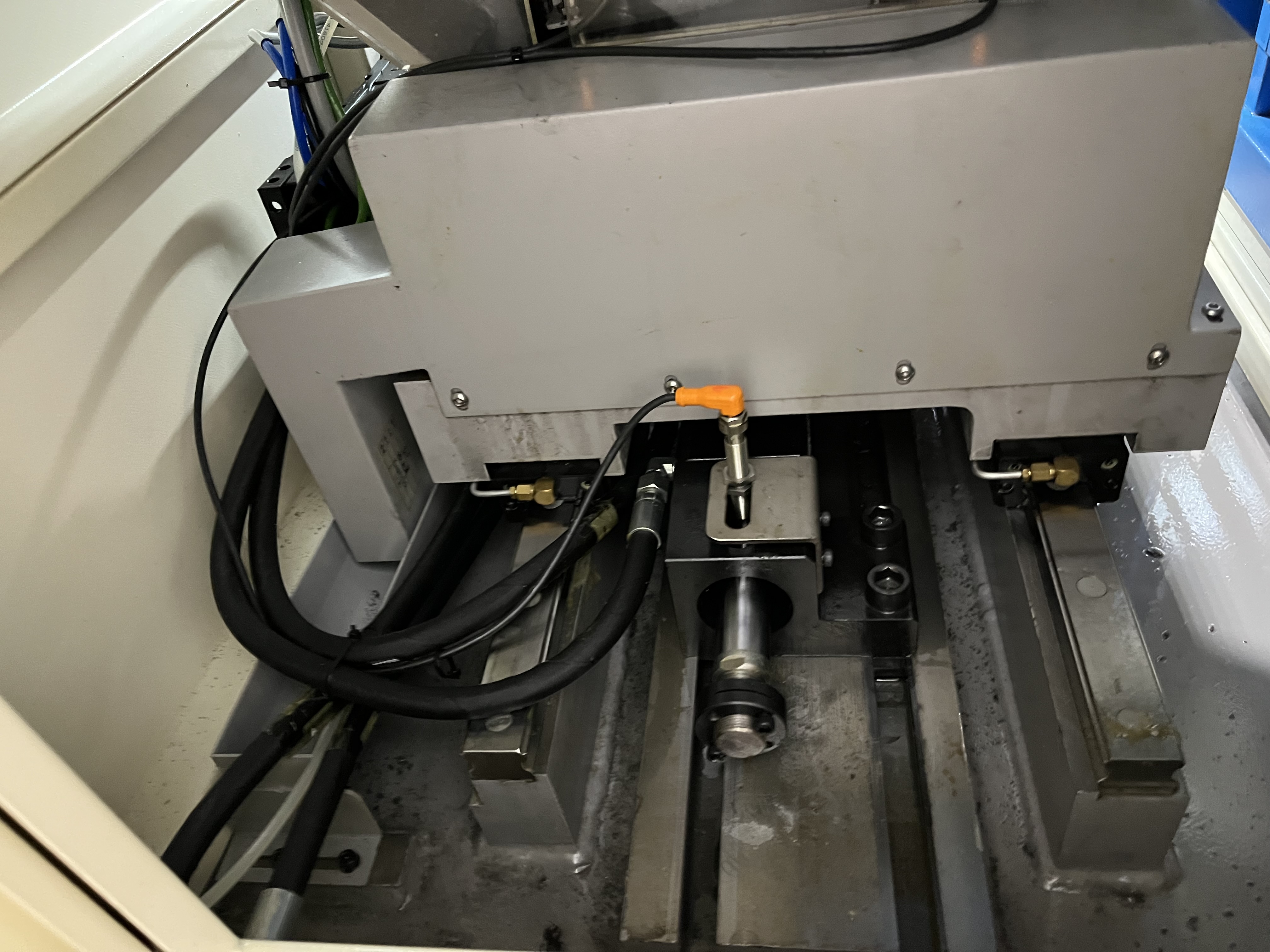
I’ve run both 3-axis and 5-axis deep hole drilling machines. The 5-axis machines cost more — sometimes significantly more — and they’re more complex to program and maintain. But for certain types of work, they’re the only practical option.
Here’s how I think about the decision.
What the Extra Axes Give You
A standard 3-axis deep hole drilling machine (X, Y, Z) can position the drill at any point in a plane and drill straight down. The drill axis is fixed vertically or horizontally.
A 5-axis machine adds rotation around two axes — typically a rotary table (C-axis) and a tilting head (B-axis). This lets you drill at any angle relative to the workpiece. You can position the drill at a compound angle — say 15 degrees off vertical and 30 degrees off horizontal — and drill a hole at that exact angle.
The main benefit is that you can drill angled holes without tilting the part or using angled fixtures. For parts with multiple angled holes, a 5-axis machine saves a lot of setup time.
Where 5-Axis Makes Sense
I’ve seen 5-axis deep hole drilling machines used most effectively in:
Mold cooling channels. Injection molds need angled cooling channels that follow the contour of the mold cavity. A 5-axis machine drills these in one setup — position the drill at the right angle and drill. Without 5-axis, each angled channel requires a separate fixture setup.
Aerospace components. Landing gear parts and structural components often have angled oil holes and cooling passages. The angles are specified on the print and need to be within a tight tolerance. A 5-axis machine holds the angle consistently.
Medical implants. Bone screws and trauma nails need angled holes at precise compound angles. A 5-axis machine drills them without re-fixturing.
Multi-angle valve bodies. Hydraulic and pneumatic valve bodies have ports at various angles. I’ve seen 5-axis machines reduce the setup count on valve bodies from 6 setups to 2.
Where 5-Axis Doesn’t Help
Straight drilling in a grid pattern. If all your holes are at the same angle (usually vertical or horizontal), a 3-axis machine drills them just as fast as a 5-axis. The extra axes add cost without benefit.
High-volume production of simple parts. A dedicated single-angle machine with a fixed drill orientation is simpler, cheaper, and faster.
Small job shops with varied work. Unless a significant portion of your work needs angled holes, the extra complexity of a 5-axis machine adds cost without corresponding benefit.
The Cost Difference
A new 5-axis deep hole drilling machine might cost 60-100% more than a comparable 3-axis machine. A 3-axis machine might be $200,000; a 5-axis from the same builder might be $350,000.
The maintenance costs are higher too. The additional rotary axes have more components that can wear and need servicing.
I’ve seen shops that bought a 5-axis machine for the occasional angled job and then struggled to justify the cost. The machine spent most of its time drilling straight holes on a 5-axis platform that it didn’t need.
What I Recommend
| Your Work | Recommendation |
|---|---|
| Mostly straight holes, occasional angled holes | Buy a 3-axis and fixture the angled jobs |
| More than 30% of holes are angled | Consider 5-axis — the setup savings add up |
| Mold and die work | 5-axis is worth it for cooling channels |
| High-volume production, one part type | Multi-spindle 3-axis is better value |
| Job shop, varied work | Start with 3-axis, upgrade if angled work grows |
I’ve used 3-axis machines to drill angled holes by mounting the part on an angled fixture. It works, but the setup time per angle is 30-60 minutes. If you have 10 angled holes at different angles, that’s 5-10 hours of setup. A 5-axis machine drills all 10 in one setup.
Programming and Post-Processor Considerations
5-axis deep hole drilling requires more sophisticated programming than 3-axis. The CAM system must generate tool paths that account for the rotating axes, and the post-processor must output correct code for the specific machine configuration.
I’ve found that programming a 5-axis deep hole drilling job takes 2-3 times longer than a comparable 3-axis job. The tool orientation changes must be programmed precisely, and the collision avoidance is more complex because the drill can approach the part from any angle.
Post-processor configuration is a common pain point. Each 5-axis machine has a different kinematic configuration — the arrangement of rotary axes varies between builders. A post-processor that works for one machine may not work for another. I’ve spent days debugging post-processor output on a new 5-axis machine.
For shops that do not have in-house CAM programming capability, 5-axis programming is often outsourced. The programming cost adds $500-$2,000 per job depending on complexity.
Fixturing Complexity
5-axis machines reduce fixturing complexity compared to 3-axis machines with angled fixtures, but the fixturing is still important.
On a 3-axis machine, I use dedicated angled fixtures for each hole angle. The fixtures cost $500-$2,000 each and require setup time to align on the machine table. If I have six hole angles, I might have six fixtures.
On a 5-axis machine, I use a single simple fixture that holds the part securely. The machine rotates to achieve the hole angles. The fixture cost is lower, but the fixture must still hold the part rigidly during drilling at odd angles.
The risk on a 5-axis machine is that the part will shift under the cutting forces when drilling at an angle. The axial cutting force is along the drill axis, which may be at an angle to the part clamping. I’ve seen parts that were clamped adequately for vertical drilling shift when drilled at a 45-degree angle. The fix was adding a secondary clamp that engaged only for angled holes.
Real-World Decision Example
I helped a shop with this decision last year. They were drilling valve bodies with 8 hole angles ranging from 0 to 60 degrees. The annual volume was 500 parts.
The 3-axis option: Each part required 5 setups with angled fixtures. Fixture cost was $8,000 total. Setup time per part was 4 hours. Time per part was 6 hours total.
The 5-axis option: One setup. No angled fixtures needed. Setup time per part was 30 minutes. Time per part was 3.5 hours total.
The 5-axis machine cost $150,000 more than the 3-axis. The labor savings were $1,250 per 100 parts (2.5 hours at $50/hour). At 500 parts per year, the annual savings were $6,250. The payback period was 24 years — terrible.
The shop bought the 3-axis machine and never looked back. The 8 angled fixtures were a one-time cost of $8,000, and the operators set them up efficiently once they developed a system.
The math is simple: if the setup savings pay for the machine premium within two years, buy the 5-axis. If not, stick with 3-axis and fixture the angles. Most shops overestimate the complexity of fixturing angled jobs and underestimate the ongoing cost of a 5-axis machine.
Key Takeaways
- Use 5-axis when more than 30% of holes are angled or for complex mold cooling channels
- 5-axis machines cost 60-100% more than comparable 3-axis machines with higher maintenance costs too
- Programming 5-axis deep hole drilling takes 2-3 times longer than 3-axis programming
- 3-axis with angled fixtures is often more cost-effective for low to moderate angled hole volumes
- Calculate payback on the machine premium — if setup savings do not pay back in two years, stick with 3-axis