Deep Hole Drilling

Deep Hole Drilling Tech Blog

Real problems, real solutions, no fluff. I have spent years working across multiple shops running gun drilling, BTA drilling, and ejector drilling machines — setting up jobs, troubleshooting coolant pressure and chip evacuation issues, drilling deep holes in everything from hydraulic cylinders to aerospace titanium. This site is where I share what I have learned.

Gun Drilling: When to Do It In-House vs Send It Out

I have been on both sides of this decision. I have set up in-house gun drilling operations and I have sent work to specialized shops. Both are the right answer in different situations. The decision comes down to four factors: volume, diameter, depth, and how much your time is worth. When In-House Makes Sense In-house gun drilling works best when the conditions are right for it. Here is what I look for: ...

June 16, 2026 · Engineer at the Deep Hole

Heat Buildup in Thin Wall Drilling and How to Reduce It

Heat buildup in thin wall drilling is a problem that affects both the process and the part quality. The thin wall cannot conduct heat away from the cutting zone as fast as a solid section can. The heat accumulates locally, causing thermal expansion that changes the bore diameter during the cut and leaves residual stress in the part afterward. Problem Description When heat accumulates in a thin wall section, the material expands at the cutting zone. The bore diameter temporarily shrinks as the expanded material pushes inward. The drill then cuts a larger diameter than intended because it is cutting into the expanded material. When the part cools, the bore spring back undersize or out of round. ...

June 16, 2026 · Engineer at the Deep Hole

Heat Exchanger Drilling for Food Pasteurization Systems

Food pasteurization systems use heat exchangers to heat and cool products quickly. The tube sheets in these heat exchangers need hundreds of holes drilled in precise patterns to hold the sanitary tubes. I have machined tube sheets for milk pasteurizers, juice processors, and beer brewing systems, and the cleanliness requirements in food-grade work exceed anything I see in industrial hydraulic applications. The material is almost always 316L stainless steel for corrosion resistance and cleanability. The tube sheet is typically 25-50mm thick with holes on a triangular pitch. The hole spacing needs to be accurate within 0.1mm so the tubes slide through without binding. A typical tube sheet for a 20-plate pasteurizer might have 400-600 holes arranged in a 30-degree triangular pattern. ...

June 16, 2026 · Engineer at the Deep Hole

Heat Management in High-Temperature Alloy Drilling

Heat management is the main challenge when drilling high-temperature alloys. These materials retain heat at the cutting edge instead of letting it dissipate through the chip. The heat at the cutting edge can exceed 1000 degrees C in the cutting zone. This heat degrades the tool edge rapidly, and once the cutting edge goes, the tool fails within seconds. I’ve learned that the key is removing heat as fast as it is generated. If you let the heat accumulate, the tool fails within seconds. Here is my approach to keeping the cutting zone cool when drilling superalloys like Inconel 718, Waspaloy, and Rene 41. ...

June 16, 2026 · Engineer at the Deep Hole

Helical Gear Shaft Deep Hole Drilling

Helical gear shafts are used in industrial gearboxes, automotive transmissions, and heavy equipment drive trains. Many of these shafts need a through-hole for lubrication oil to reach the gear meshes or bearing surfaces. In my experience, the drilling quality directly determines whether the gearbox runs quietly for 10,000 hours or fails from oil starvation after 500. Common Gear Shaft Materials and Dimensions The shaft is typically 200-600mm long with a 10-30mm through-hole. The material is usually case-hardening steel like 20MnCr5 or 17CrNiMo6. The drilling is done before heat treatment when the material is soft, around 200-250 HB. ...

June 16, 2026 · Engineer at the Deep Hole

High-Pressure Coolant Seals for Deep Hole Drilling

High-pressure coolant seals are the weak link in every deep hole drilling machine. They operate at the boundary between rotating and stationary components, exposed to abrasive coolant, high pressure, and continuous wear. I have seen seal failures cause coolant leaks that damaged spindle bearings, contaminated gearboxes, and flooded machine enclosures. A single seal failure at the wrong time can cost $15,000 in repairs and three days of downtime. Where Seals Are Used The primary seal locations in a deep hole drilling machine are the rotating union (coolant inducer), the spindle draw tube connections, the coolant pump shaft seal, and the high-pressure hose fittings. Each location has different operating conditions and requires a different seal type. ...
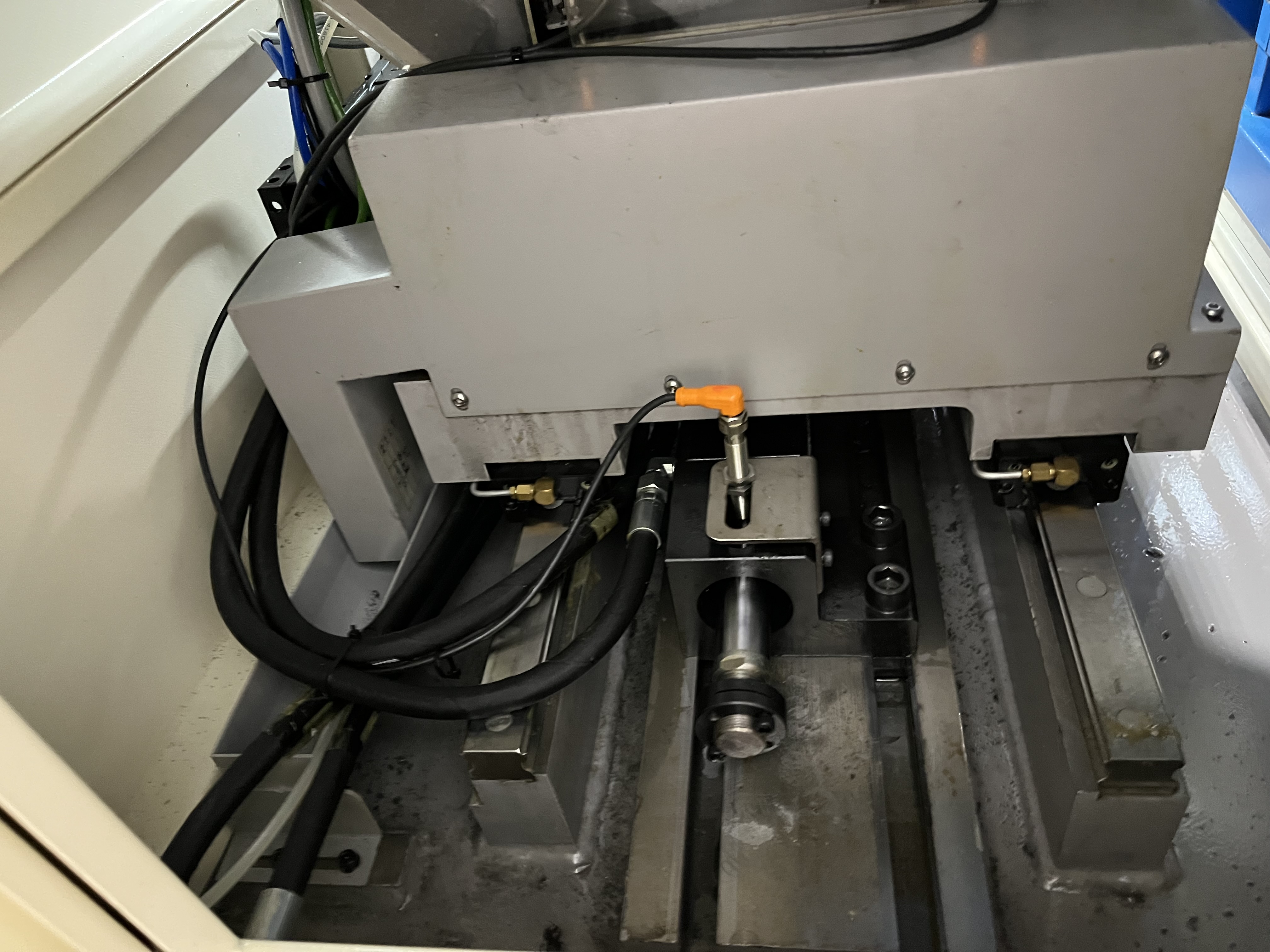
June 16, 2026 · Engineer at the Deep Hole

High-Volume Deep Hole Drilling: Production Cell Design and Cycle Time Optimization

I have spent the better part of my career watching shops try to force job-shop workflows into production environments, and it almost never ends well. High-volume deep hole drilling is not just job-shop work done faster. The entire process architecture changes. When you are running thousands of parts a month instead of a handful of prototypes, every minute of downtime, every inconsistent tool change, every coolant fluctuation multiplies into real cost. Over the last decade, I have designed, tuned, and occasionally had to rescue production cells across automotive, hydraulic component, and aerospace fastener lines. Here is what I have learned about making deep hole drilling work at volume. ...

June 16, 2026 · Engineer at the Deep Hole

How Material Properties Affect Gun Drill Geometry Selection: Aluminum vs Steel vs Cast Iron

Most operators know to change speed and feed when switching materials. Fewer know that the gun drill geometry itself should change. Running an aluminum-optimized drill in cast iron will produce poor tool life and inconsistent hole quality. Here is what changes and why. How Material Properties Drive Geometry Decisions Three material properties determine the optimal gun drill geometry: Chip formation. Materials that produce long, stringy chips (aluminum, low-carbon steel) need geometry that encourages chip breaking. Materials that produce short, broken chips (cast iron, brass) can use geometry optimized for edge strength. ...

June 16, 2026 · Engineer at the Deep Hole

How Measuring Every Guide Bushing Saved a 10,000-Part Production Run

I’ve got a rule that I force on every production run I touch: measure everything before you start, and then measure it again halfway through. Guide bushings, whip guides, drill holders — if it touches the tool or the part, it gets measured. This rule came from a specific job that taught me just how expensive a few tenths of wear can be, and how easy it is to miss a slow decline until it’s too late. ...

June 16, 2026 · Engineer at the Deep Hole

How Measuring Every Tool Caught a Bad Regrind Before It Ruined a Job

About five years into my deep hole drilling career, I developed a habit that seemed paranoid at the time. Every time a reground gun drill came back from the tool grinding service, I measured it before it went into the machine. Tip diameter, shank diameter, overall length, tip geometry, coolant hole clearance — the full treatment. It added about two minutes per tool. I got the idea from a quality engineer who visited our shop for an audit. He watched me grab a reground drill from the crib and load it into the machine without checking it first. “Do you measure your regrinds?” he asked. “No,” I said. “They’ve been doing our regrinds for ten years. They’re always right.” He just nodded and wrote something in his notebook. I don’t know what he wrote, but I started measuring the next week. ...

June 16, 2026 · Engineer at the Deep Hole