Deep Hole Drilling

Deep Hole Drilling Tech Blog

Real problems, real solutions, no fluff. I have spent years working across multiple shops running gun drilling, BTA drilling, and ejector drilling machines — setting up jobs, troubleshooting coolant pressure and chip evacuation issues, drilling deep holes in everything from hydraulic cylinders to aerospace titanium. This site is where I share what I have learned.
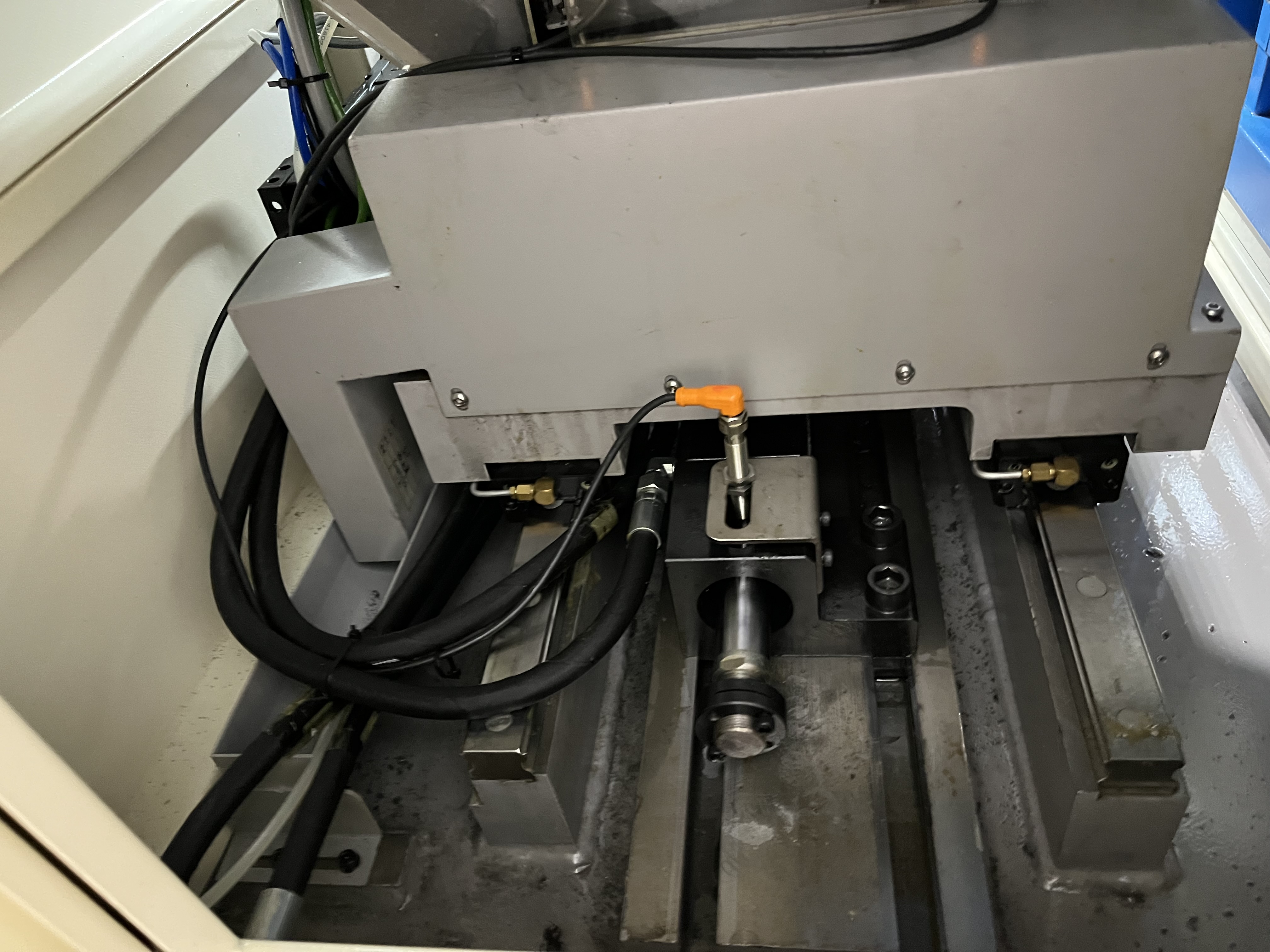
Support Methods for Thin Wall Stainless Steel Tubing

Thin wall stainless steel tubing is used in sanitary, pharmaceutical, and food processing applications. The wall thickness is often 2-5mm with a bore diameter of 20-60mm. The challenge is supporting the tube without collapsing it. I have worked with 304L, 316L, and 2205 duplex tubing across wall thicknesses from 1.5mm to 6mm, and the support method changes for each combination of diameter and wall. The cutting forces from gun drilling push the tube wall inward. If the wall is not supported, the tube collapses. Once collapsed, the tube is scrap — there is no recovering a collapsed thin wall tube. The support method must be rigid enough to resist the cutting forces but compliant enough not to mark or distort the tube surface. ...

June 16, 2026 · Engineer at the Deep Hole

The Customer Blamed Our Tools — Turns Out It Was His Coolant

I got the call on a Tuesday afternoon. Tom from purchasing — I could tell by his voice he was already fed up. “These new gun drills you sent us are garbage,” he said. “We’re barely getting thirty holes per tool. The old ones did sixty easy. I want a refund.” Now, I’ve been around gun drills long enough to know that when someone blames the tool first, the problem is usually somewhere else. A gun drill is a simple thing — a carbide tip brazed to a steel tube with a coolant hole running through the center. When it fails, it’s almost always because something in the system made it fail. But you don’t say that to a customer on the first call. You listen, you apologize, and you offer to come take a look. The customer is never wrong in the first conversation. They’re just describing a symptom. ...

June 16, 2026 · Engineer at the Deep Hole

The Day a New Guy Forgot the Guide Bushing

The new guy’s name was Marcus. He’d been with us for about two weeks. He came from a general machining background — vertical mills, manual lathes, that kind of work — but this was his first exposure to deep hole drilling. He was sharp, asked good questions, and seemed to have a solid grasp of the fundamentals of machining. I was optimistic about him. What I didn’t know at the time was that Marcus had never even seen a guide bushing before. In the general machining world, you don’t use them. A drill chuck holds the drill, the drill goes into the material, and that’s the whole story. The concept of a separate precision guide that supports the drill at the entry point — that’s unique to deep hole drilling and a few other specialized processes. It never occurred to me that he wouldn’t know about bushings because they were so fundamental to everything I did. ...

June 16, 2026 · Engineer at the Deep Hole

The Day I Overtightened a Collet and Cracked a Shank

I had been running gun drills for about three years when I thought I had the tool holding figured out. Tighten the collet until it feels solid, then give it another quarter turn for good measure. That was my system. It had worked fine on every machine I had run, so I did not question it. Then we got a new job running 8mm gun drills in 4340 steel, about 500mm deep. The first few holes went fine. Good chips, consistent surface finish, everything looked normal. Around the fifteenth hole, I heard a noise I had not heard before. It was not the usual cutting sound. It was a sharp crack, like a twig snapping, followed by the spindle stopping hard on a torque alarm. ...

June 16, 2026 · Engineer at the Deep Hole

The Day I Realized the Print Was Wrong, Not the Part

I was running a batch of forty-two hydraulic cylinder barrels for a mining equipment customer. Each barrel was forged 4140 steel, 2 meters long, with a wall thickness of 25mm. The print called for a 100mm bore through the full length. After drilling the first five parts, I pulled the first one off the machine and set it up on the inspection bench. The bore came out at 100.5mm. The tolerance block on the print showed plus or minus 0.2mm on all bore dimensions. By my reading, the part was 0.3mm over the upper limit. I had drilled about thirty thousand bores up to that point in my career, and I knew a 0.3mm oversize condition on a 100mm bore usually meant the drill was cutting slightly over size due to guide bushing wear or a minor misalignment. I flagged the part and told the operator to stop the machine. ...

June 16, 2026 · Engineer at the Deep Hole

The Day I Trusted My Gut Over the Feed Rate and Scrapped a Job

I was running a job in 304 stainless steel, which is not my favorite material to begin with. It work- hardens, it galls, and it has a habit of making you think everything is fine right up until the moment it is not. The part was a flanged fitting, about 300mm long, needing a 16mm through-hole with an Ra 0.4 finish. The feed rate on the setup sheet said 0.08 mm/rev, which seemed aggressive to me for stainless. ...

June 16, 2026 · Engineer at the Deep Hole

The Job Interview Question That Separated the Deep Hole Drillers From the Button Pushers

I was sitting in on interviews for a deep hole drilling position at our shop. We needed someone who could run our BTA machines — not just push the green button, but understand the process well enough to handle the tough jobs, the ones where the parameters aren’t in the manual and you have to figure it out as you go. The pay was good — twenty-eight an hour plus benefits for the right candidate — so we got a lot of applicants. The stack of resumes on the HR manager’s desk was three inches thick. ...

June 16, 2026 · Engineer at the Deep Hole

The Longest Deep Hole I Ever Drilled — Six Feet Through 4140

I’ve drilled a lot of deep holes in my career. Hundreds of them, in every material you can imagine. But there’s one that stands above the rest — a job that pushed me, the machine, and the tool to the absolute limit, and taught me more about preparation than any other job before or since. I should start by explaining what makes a hole “deep.” In gun drilling terms, deep means any hole where the depth is more than ten times the diameter. A 20mm hole drilled 200mm deep — that’s 10:1. Easy. A 20mm hole drilled 600mm deep — 30:1. Getting interesting. A 20mm hole drilled 2000mm deep — 100:1. That’s where most gun drilling applications top out. Past that, you’re in special territory. ...

June 16, 2026 · Engineer at the Deep Hole

The Morning I Forgot to Check the Coolant Level

It was a Monday morning in January, and I was already behind before the spindle even turned. The weekend had been rough — my oldest kid had come down with a fever on Saturday, and my wife and I had been up half the night trading off shifts with a thermometer and a bowl of chicken soup. Sunday was a blur of laundry, grocery shopping, and trying to catch up on sleep that never came. I came into work on about four hours of sleep, running on coffee and determination. ...

June 16, 2026 · Engineer at the Deep Hole

The Night a Gun Drill Fire Almost Burned Down the Shop

July in Houston is brutal. The shop had to be a hundred and ten degrees that night, even with the big industrial fans running at full speed. The air conditioning had given up around three in the afternoon, and by the time the night shift rolled in at six, the whole building felt like a convection oven. Sweat was dripping off the end of my nose onto the machine controls. ...

June 16, 2026 · Engineer at the Deep Hole