Deep Hole Drilling

Deep Hole Drilling Tech Blog

Real problems, real solutions, no fluff. I have spent years working across multiple shops running gun drilling, BTA drilling, and ejector drilling machines — setting up jobs, troubleshooting coolant pressure and chip evacuation issues, drilling deep holes in everything from hydraulic cylinders to aerospace titanium. This site is where I share what I have learned.

The Night Shift Tool Breakage That Changed My Pre-Shift Checklist

It was 1:47 AM on a Wednesday in March, and I was already in trouble before I touched the control panel. The day shift guy, Danny, had flagged the handover log as urgent. “Drill acting weird near the end of the shift,” he wrote. “Reduced feed rate to try to finish the last part. Might need looking at.” The log was sitting on the desk in the break room where he’d left it, next to an empty coffee cup and a half-eaten granola bar. I read it, nodded to myself, and walked straight past the machine to clock in. That decision cost us almost two thousand dollars. ...

June 16, 2026 · Engineer at the Deep Hole

The Night the Apprentice Stayed Late to Prove Himself

His name was Jake, and he was maybe nineteen years old. Fresh out of a two-year trade program at the local community college, green as they come, and eager — almost too eager. He’d been with us for about three months, and every day he showed up fifteen minutes early and stayed fifteen minutes late just to absorb everything he could. He had that hungry look in his eye, the one that says “I want to be good at this more than anything.” ...

June 16, 2026 · Engineer at the Deep Hole

The Saturday I Ran Out of Filter Paper

It was a Saturday night in August, about 11 PM. The shop was running a skeleton crew, just three of us on the floor to keep the machines running through the weekend. I was running a UNISIG BTA system on a job drilling 18mm holes through 700mm of 4140. The job was going well, chips were looking good, and I was on track to finish the batch by Sunday afternoon. ...

June 16, 2026 · Engineer at the Deep Hole

Thermal Compensation Strategies for Deep Hole Drilling

The Thermal Drift Problem Every machine tool changes dimension as it heats up. The spindle grows, the bed expands, the leadscrews lengthen. In deep hole drilling, this thermal drift causes the hole position to shift relative to the part datum. A machine that is perfectly aligned when cold at 7:00 AM can be out of position by 0.10 mm or more by 10:00 AM. The effect is most noticeable on long holes where the spindle position relative to the workpiece changes during the cut. I have measured thermal drift of 0.05-0.15 mm on a 1-meter bed length over a 4-hour production run. On parts with hole position tolerance of 0.10 mm, this drift can push parts out of spec. ...

June 16, 2026 · Engineer at the Deep Hole

Through-Tool Coolant vs Flood Coolant for Deep Hole Drilling

Through-tool coolant delivers coolant through the center of the drill directly to the cutting edge. Flood coolant sprays coolant over the outside of the drill and relies on flow to reach the cutting zone. In deep hole drilling, the choice between these two methods determines whether the process succeeds or fails. How Through-Tool Coolant Works For gun drilling, through-tool coolant is essential. Coolant enters through a rotating union at the spindle, travels down the center of the gun drill tube, and exits at the cutting edge. The coolant cools the cutting edge and then flushes chips back along the external flute of the drill. ...

June 16, 2026 · Engineer at the Deep Hole

Thru-Spindle Coolant System Maintenance for Deep Hole Drilling

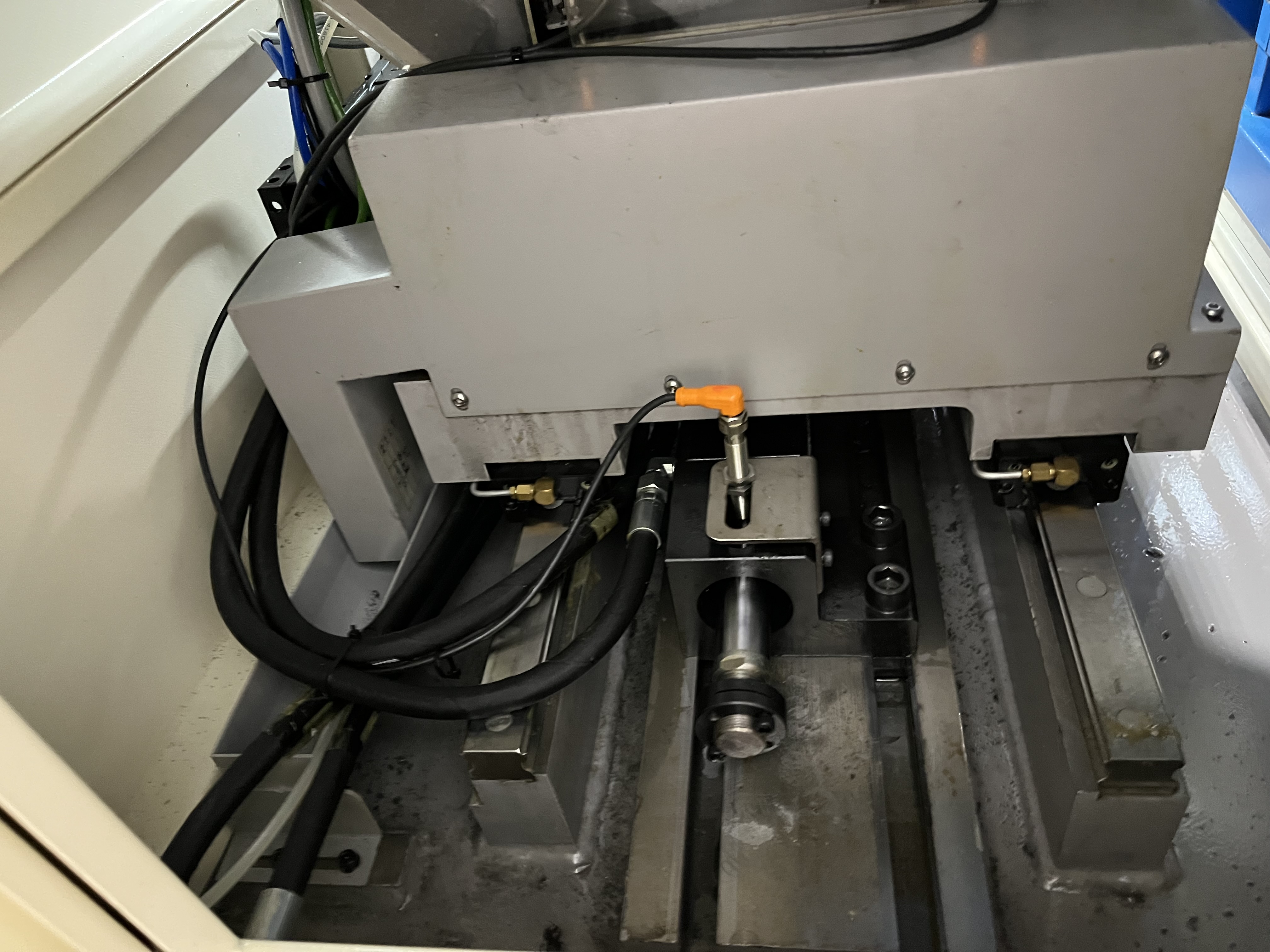
The thru-spindle coolant system is the circulatory system of a deep hole drilling machine. When it fails, you lose coolant pressure, which means chip evacuation stops, which means a broken drill in the bore. I have seen repair bills above $15,000 for a single rotating union failure, not counting the downtime. Keeping this system running is not complicated, but it does require consistent attention. Components of the Thru-Spool System The typical setup includes a rotating union (sometimes called a coolant inductor) mounted at the top or rear of the spindle, a draw tube running through the spindle bore, and sealing elements at both ends. Some machines use a stationary coolant gland and a rotating adapter. Either way, three critical components need regular inspection. ...
June 16, 2026 · Engineer at the Deep Hole

Tie Bar Deep Hole Drilling for Injection Molding Machines

Injection molding machine tie bars are long, heavy-duty rods that guide the moving platen and carry the clamping force. Some tie bars need a through-hole for the clamping mechanism or for lubrication. In my experience, the through-hole concentricity is the single most critical factor determining whether the tie bar performs reliably over years of cycling. Tie Bar Specifications and Material Properties A typical tie bar is 2-5 meters long with a 20-50mm through-hole. The material is high-strength steel like 42CrMo4, often induction-hardened on the OD. The drilling is done before hardening because the hardened surface is too tough for efficient drilling. ...

June 16, 2026 · Engineer at the Deep Hole

Tool Load Monitoring to Prevent Gun Drill Breakage

Tool load monitoring tracks the spindle load during drilling and alerts the operator when the load exceeds a threshold. It catches problems before the drill breaks. In my experience, load monitoring saves more tools than any other preventive measure I have implemented in my shop. I set up the monitoring on the CNC control. The control reads the spindle drive current and compares it to the baseline measured during the first cycle with a fresh tool. I set the alarm threshold at 120% of baseline and the stop threshold at 150%. These numbers are starting points — I adjust them for each material and application. ...

June 16, 2026 · Engineer at the Deep Hole

Tool Presetting for Deep Hole Drilling Operations

Tool presetting is one of those steps that operators skip to save five minutes, then spend two hours recovering from the crash that follows. In deep hole drilling, the tool setting accuracy directly determines bore diameter, surface finish, and tool life. I have made a habit of measuring every tool before it goes into the spindle, and the data has shown me patterns I never would have caught otherwise. Why Presetting Matters for Deep Hole Drilling A gun drill with 0.02 mm runout at the tip will produce a bore 0.03 to 0.05 mm oversize, depending on the material and feed rate. That may not sound like much, but if your tolerance is ±0.025 mm, you are already out of spec. The relationship between runout and bore quality is nonlinear. I have seen a 0.01 mm increase in tip runout produce a 0.025 mm increase in bore diameter. ...

June 16, 2026 · Engineer at the Deep Hole

Tool Wear Monitoring in Deep Hole Drilling: Spindle Load, Acoustic Emission, and What I Actually Use

I have broken more gun drills than I care to count. Every one of those breakages happened inside the hole where I could not see it coming. That is what drove me to build a real monitoring strategy — not just watching a spindle load bar on the control, but layering multiple signals so I catch wear, chip packing, and material anomalies before they snap the tool. Here is what I have settled on after years of testing different approaches. ...

June 16, 2026 · Engineer at the Deep Hole