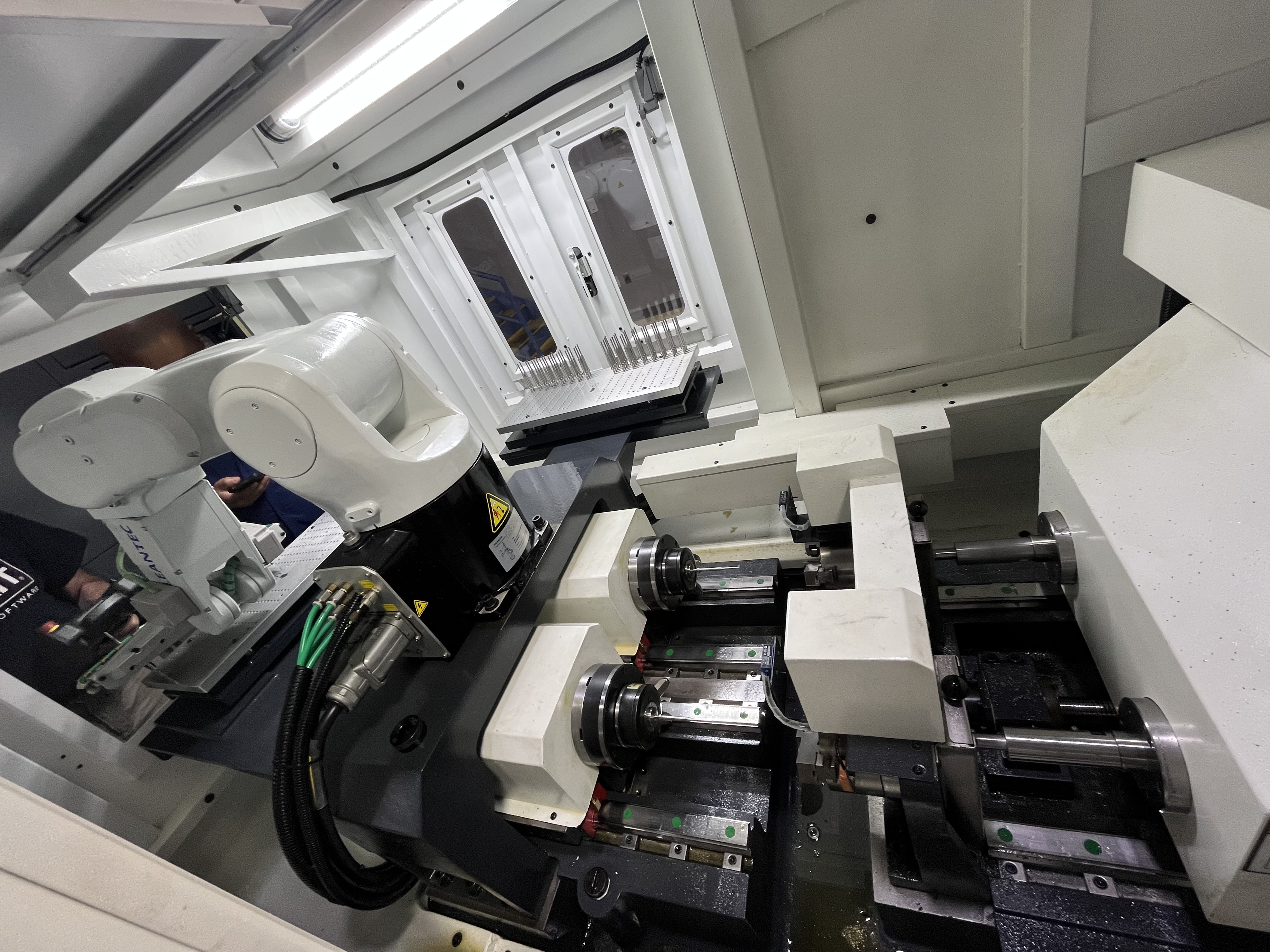
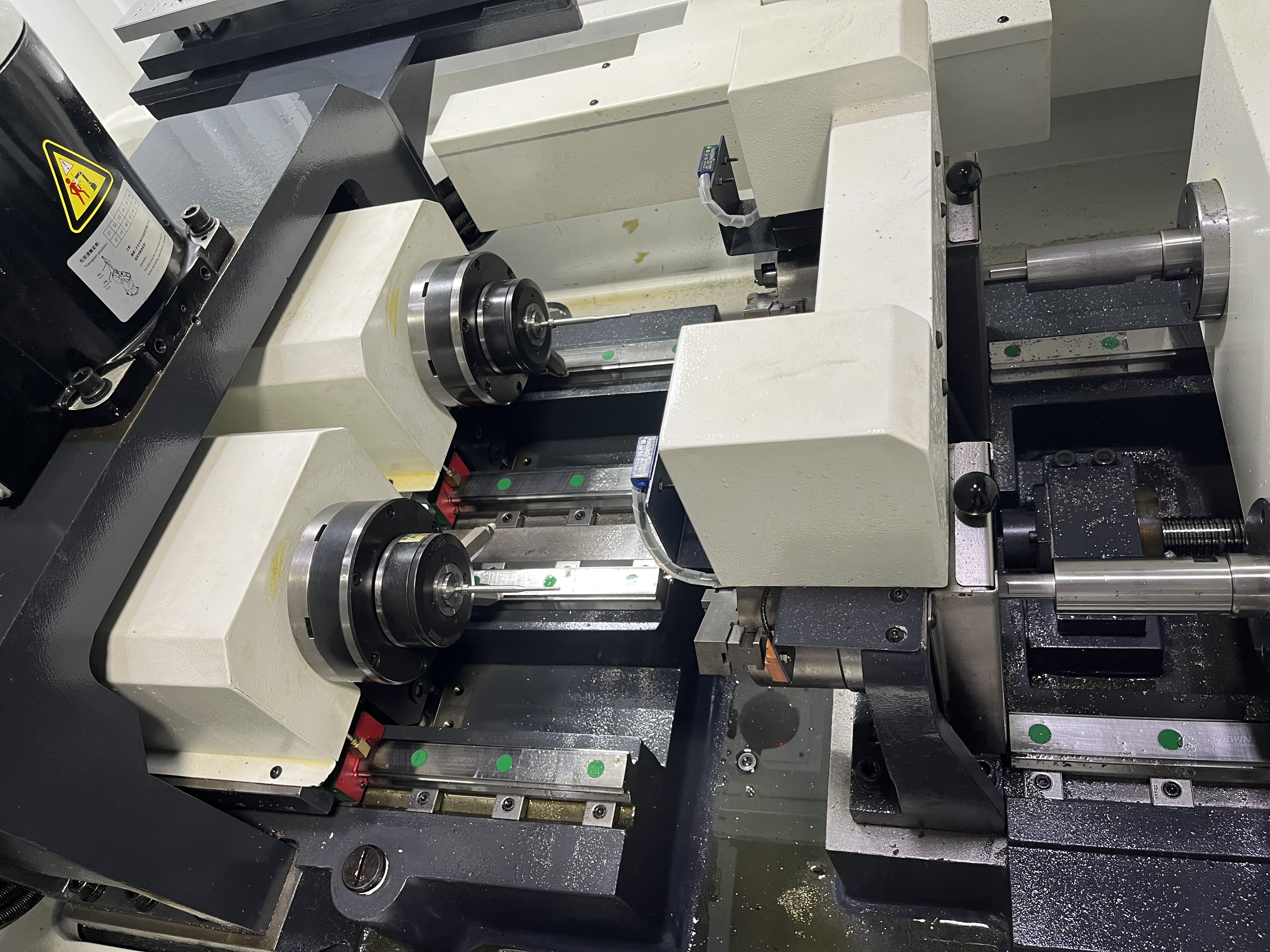
Real problems, real solutions, no fluff. I have spent years working across multiple shops running gun drilling, BTA drilling, and ejector drilling machines — setting up jobs, troubleshooting coolant pressure and chip evacuation issues, drilling deep holes in everything from hydraulic cylinders to aerospace titanium. This site is where I share what I have learned.
Single Lip vs Double Lip Gun Drills: What Is the Difference
I use single lip drills for most work and double lip for high production. The choice between these two gun drill types depends on the application requirements, the material being drilled, and the production volume. Here is a detailed comparison of single lip vs double lip gun drills based on my experience. Single Lip Gun Drills Single lip gun drills have one cutting edge and one chip flute. Coolant is delivered through a single hole in the tip. The single cutting edge is supported by guide pads that bear against the bore wall and keep the drill tracking straight. ...
Skiving and Roller Burnishing: Combined Finishing for Deep Holes
I use skiving and roller burnishing for fast finishing of hydraulic cylinder bores. Skiving and roller burnishing is a combined process that cuts the bore to final size and then burnishes the surface in a single pass. It replaces honing on many applications and produces a mirror-like finish in less time. How the Combined Process Works The skiving head carries cutting inserts that remove the bulk of the stock. Behind the cutting inserts, a set of hardened rollers presses against the bore surface. The rollers apply high contact pressure that plastically deforms the surface peaks into the valleys. ...
SPC for Deep Hole Drilling: Statistical Process Control Guide
Why SPC Belongs in Deep Hole Drilling Statistical process control transforms deep hole drilling from a reactive process to a predictive one. Instead of finding out a part is bad when you measure it after the cycle, SPC tells you the process is trending toward a problem before the part is made. I started using SPC on a hydraulic cylinder job that was running 500 parts per month. The rejection rate was 3% from bore diameter drift. The problem was not that the process was unstable — it was that I could not see the drift until I measured the finished part. ...
Spindle Design for Deep Hole Drilling Machines
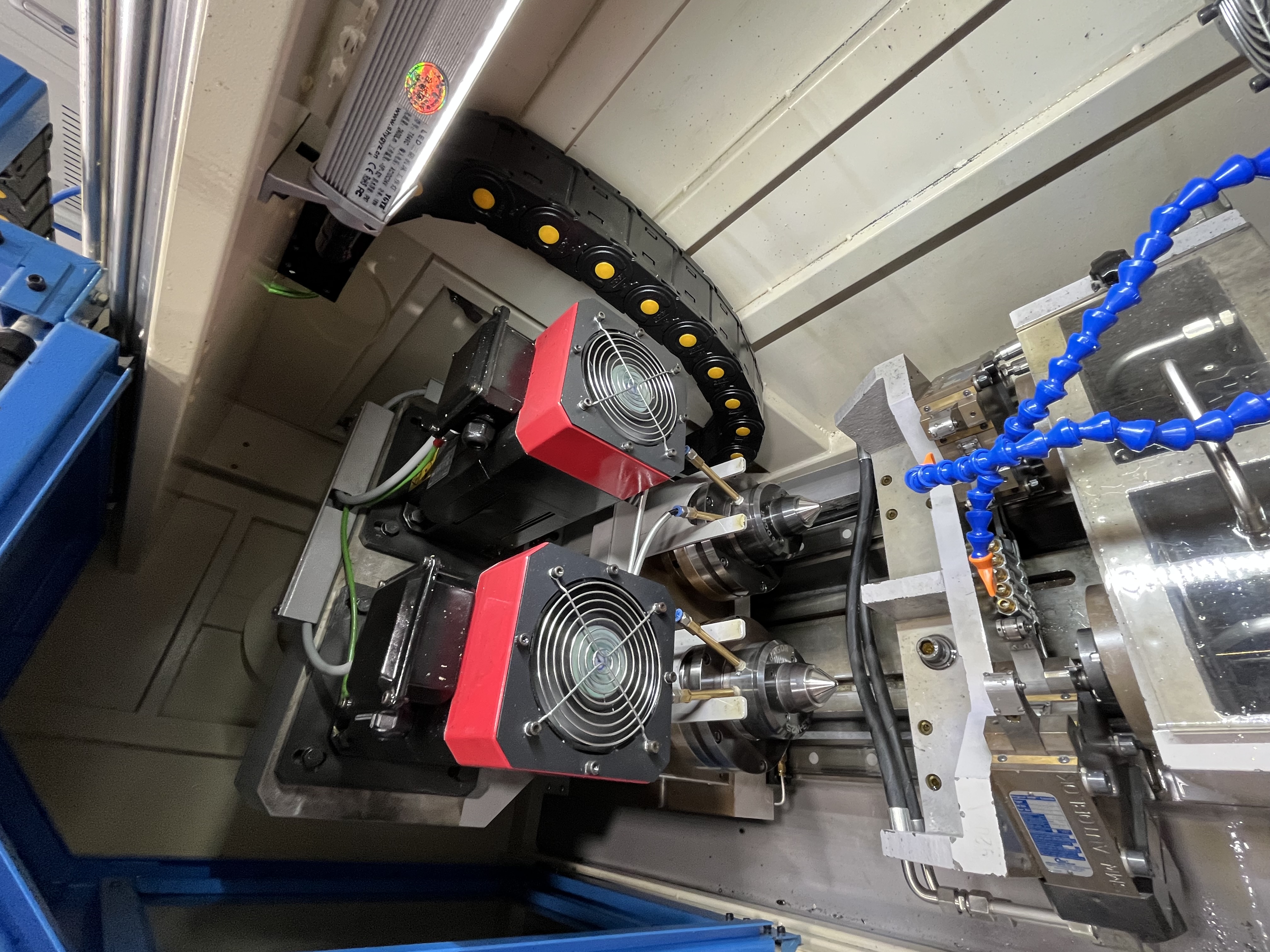
The spindle is the most critical component of a deep hole drilling machine. The cutting tool is mounted in the spindle, and the spindle’s condition determines the quality of the hole. I’ve worked with spindles ranging from high-speed gun drilling spindles to heavy-duty BTA spindles. I’ve personally rebuilt over 30 spindles across five different machine brands. Each type has different design requirements. Gun Drilling Spindles Gun drilling spindles need high speed and moderate torque. A typical gun drilling spindle operates at 3000-12,000 RPM with enough torque to drive a drill from 1mm to 30mm diameter. ...
Step Drilling Deep Holes: Techniques and Precautions
I use step drilling when the bore needs multiple diameters along its length. Step drilling creates a bore with different diameters at different depths, like a counterbore for a bolt head or a stepped shaft bore for hydraulic applications. It can also help manage chip evacuation and tool deflection in deep holes. When to Use Step Drilling vs Single Diameter Step drilling is not always the right choice. I use it in specific situations where a single-diameter hole will not work. Here is how I decide. ...
Supplier Variation: Why Different Steel Batches Drill Differently
The Reality of Material Variation I have seen the same steel grade from the same supplier drill differently from batch to batch. The chemistry is the same on the cert, but the material behaves differently on the machine. This is not a defect — it is a reality of steel making. Steel production is not perfectly repeatable. The melting temperature varies slightly, the cooling rate after rolling varies, and the chemistry has allowable ranges within the specification. These small variations add up to measurable differences in machinability. ...
Surface Finish Defects in Gun Drilling: Causes and Solutions
Surface finish defects in gun drilling are the most common reason for part rejection that I encounter. The bore surface must meet the specified roughness and be free of visible defects. When the finish is wrong, the part is scrap or needs rework. I have developed a systematic approach to identifying and fixing surface finish problems by looking at the defect pattern. Problem Description The surface finish of a gun-drilled bore depends on the tool condition, cutting parameters, coolant system, and machine rigidity. A defect in any of these areas shows up on the bore surface as a characteristic pattern. The pattern tells me which area to investigate. ...
Surface Roughness Conversion Chart for Deep Hole Drilling
Why Surface Roughness Units Matter In my years of deep hole drilling, I have seen countless specification sheets where the customer calls out surface finish in a unit the shop floor does not use regularly. European prints often specify Rz, aerospace jobs use RMS from the old MIL standards, and medical device prints stick with Ra. If you convert wrong, you scrap parts. I keep this conversion chart posted in the inspection area for quick reference. The conversions here are based on the ISO 1302 standard and verified against actual profilometer readings on gun-drilled and BTA-drilled bores. ...
Surface Roughness Measurement in Deep Hole Drilling
I use a contact profilometer with an extended probe for measuring surface roughness inside deep holes. The probe reaches into the bore and traces the surface profile along a measurement line. Getting a reliable reading in a deep, narrow hole takes the right equipment and a consistent procedure. Equipment for Deep Bore Roughness Measurement A standard profilometer with a short probe arm works fine on shallow, accessible surfaces. Deep holes need extension rods that carry the stylus into the bore. I use a profilometer with modular extension rods in 100 mm, 300 mm, and 500 mm lengths. Anything deeper than 500 mm requires custom extensions, and the accuracy starts to drop off. ...
TCO Analysis for Deep Hole Drilling Machines
I estimate total cost of ownership every time I compare machines for a production application. The purchase price is only part of the picture. Over a ten-year machine life, the operating and maintenance costs often exceed the initial purchase price by a wide margin. The TCO Breakdown That Matters For a mid-size gun drilling machine running two shifts over 10 years, the cost distribution looks like this: Cost Category Percentage of TCO Typical 10-Year Cost (Mid-Size Machine) Purchase price 30-40 percent $150,000-250,000 Installation and rigging 3-5 percent $15,000-30,000 Cutting tools 15-25 percent $75,000-150,000 Coolant and filtration 8-12 percent $40,000-70,000 Power consumption 5-8 percent $25,000-50,000 Planned maintenance 10-15 percent $50,000-90,000 Unplanned repairs 5-10 percent $25,000-60,000 Training and support 2-5 percent $10,000-30,000 I have seen too many shops focus on the purchase price alone. A machine priced 20 percent below the competition but with 30 percent higher tooling costs will cost more within three years. ...