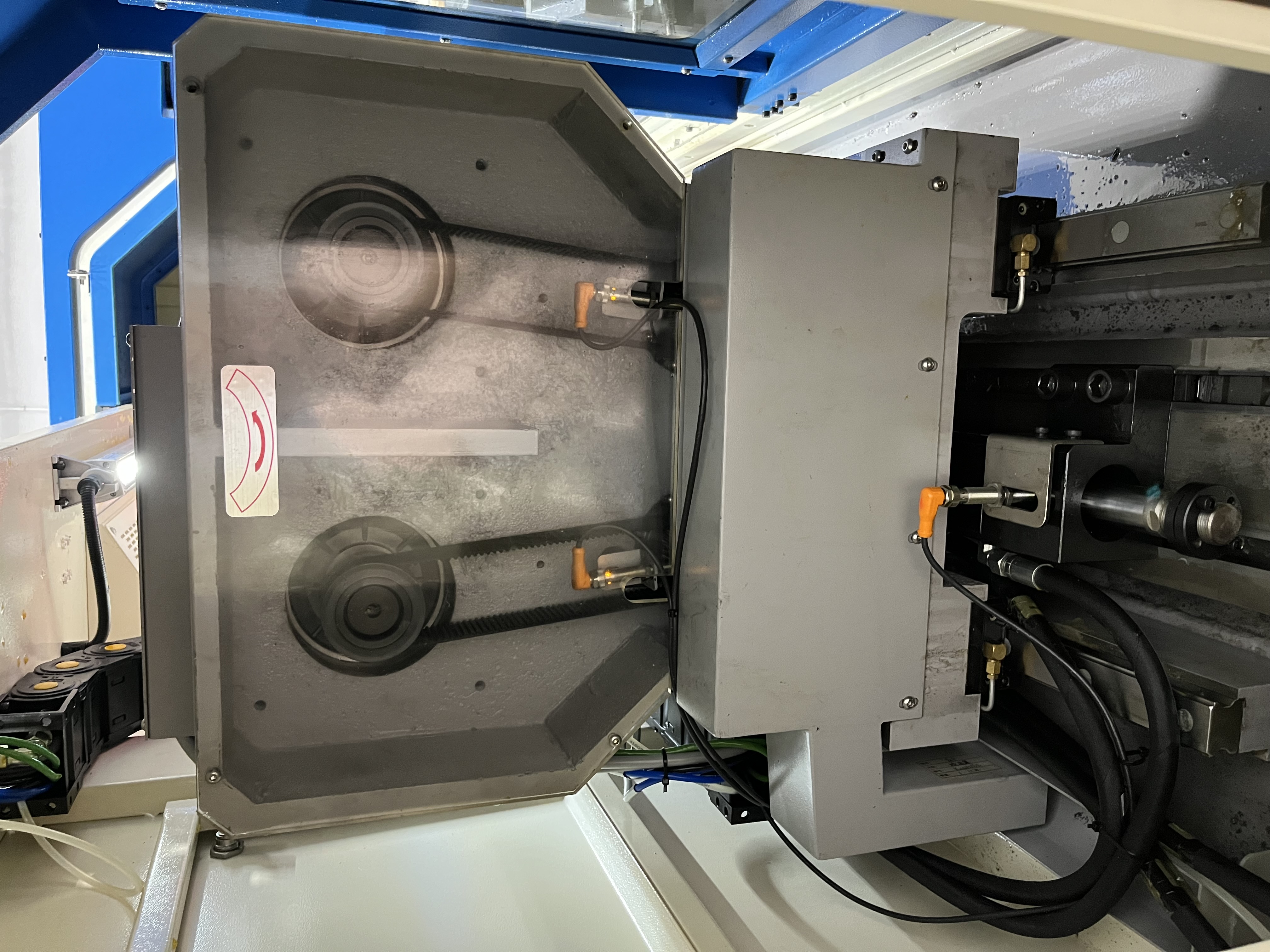
Chip removal systems automatically move chips away from the machine and into a collection bin. Without a chip removal system, the operator spends hours each shift shoveling wet, heavy chips from the coolant tank. An automated chip conveyor is one of the best investments I have made for production efficiency.
Auger Systems: Simple and Reliable
Auger systems use a helical screw rotating in a steel trough to move chips horizontally or at a slight incline. The auger is simple, reliable, and inexpensive. It has one moving part, which means little can go wrong.
I use auger systems for gun drilling applications where the chips are short, broken, and free-flowing. The auger screw grabs the chips and pushes them along the trough to a discharge point.
| Feature | Auger System | Hinged Belt Conveyor |
|---|---|---|
| Initial cost | $3,000-8,000 | $8,000-20,000 |
| Moving parts | 1 (screw) | 50+ (belt links + chain) |
| Chip types | Short, broken only | All chip types |
| Incline capability | Limited to 15 degrees | Up to 60 degrees |
| Maintenance interval | Annual | Monthly |
| Typical lifespan | 10+ years | 5-8 years |
The limitation of augers is that long, stringy chips wrap around the auger screw and jam it. I learned this the hard way when a customer switched materials and the new material produced stringy chips. The auger wrapped itself into a solid mass in under an hour.
Hinged Belt Conveyors: Versatile but Costlier
Hinged belt conveyors use a series of interlocking steel plates that travel up an incline to discharge chips into a bin. The belt moves continuously, carrying chips up and out of the coolant tank.
I recommend hinged belt conveyors for production machines running two or more shifts. The extra cost is justified by the reduced labor for chip handling and the ability to handle any chip type. A hinged belt conveyor can move stringy steel chips, cast iron powder, aluminum curls, or any mix of chip types.
The conveyor size must match the chip volume. I follow this rule:
| Production Rate | Minimum Conveyor Capacity | Recommended Type |
|---|---|---|
| Under 5 kg/hr | 10 kg/hr | Auger or belt |
| 5-20 kg/hr | 25 kg/hr | Hinged belt |
| 20-50 kg/hr | 60 kg/hr | Heavy-duty hinged belt |
| Over 50 kg/hr | 100 kg/hr | Steel belt with chip crusher |
For a gun drilling machine producing 5 kg of chips per hour, the conveyor should be rated for at least 10 kg per hour. The extra capacity handles peak production and prevents jams when chip volume spikes.
Coolant Recovery and Chip Drying
Chips come out of the machine covered in coolant. A conveyor alone lets the coolant drain back into the tank, but some coolant clings to the chips. I add a chip centrifuge to dry chips before recycling.
A chip centrifuge spins the coolant out of the chips at 500-1,500 RPM. The results:
| Chip Condition | Coolant Content | Scrap Value |
|---|---|---|
| Wet, as-drilled | 15-25 percent coolant by weight | Low (contaminated scrap) |
| Gravity-drained on conveyor | 5-10 percent coolant | Medium |
| Centrifuge-dried | 1-3 percent coolant | High (clean scrap) |
The centrifuge reduces coolant loss by 80-90 percent compared to gravity draining alone. At $8-12 per gallon for coolant concentrate, the centrifuge pays for itself within 12-18 months on a two-shift operation.
Conveyor Maintenance Schedule
Conveyor maintenance is often overlooked until something breaks. A broken conveyor belt stops production because chips accumulate in the machine and block the coolant return.
My maintenance schedule:
| Item | Interval | What I Check |
|---|---|---|
| Belt tension | Weekly | Slack in the belt, tracking alignment |
| Drive chain | Monthly | Wear, lubrication, tension |
| Auger bearings | Quarterly | Grease fittings, seal condition |
| Hinged belt links | Monthly | Broken or bent links |
| Discharge chute | Weekly | Buildup, blockages |
| Coolant return screen | Shiftly | Clean clogs |
I keep spare belt links and a spare auger screw in stock. The cost of a spare auger screw is about $500. The cost of a production line stopping for two days while a replacement ships is $5,000-10,000 in lost production.
Key Takeaways
A chip removal system is not an accessory on a production deep hole drilling machine but a core component. Augers work well for short-chipping materials and low volumes. Hinged belt conveyors handle everything but cost more upfront. I now add a chip centrifuge to every production system because the coolant savings and scrap value improvement pay back the investment quickly. Whatever system I choose, I maintain it regularly and keep critical spares on hand.