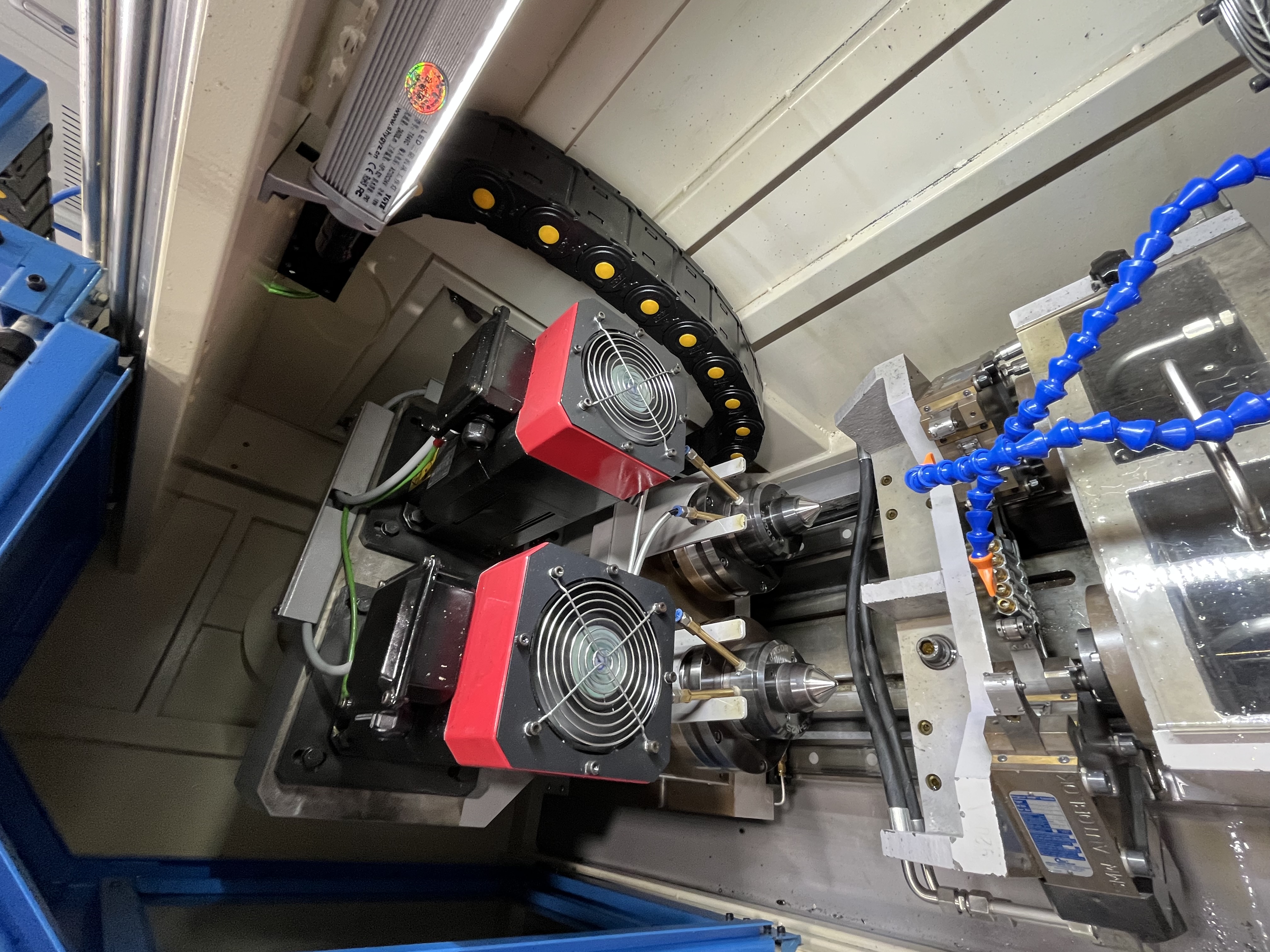
Gun Drilling Brass, Bronze, and Copper Alloys: Soft Materials, Specific Challenges
I have spent years behind gun drilling machines, and if there is one thing I have learned it is that “easy to machine” does not mean easy to gun drill. Brass, bronze, copper, and beryllium copper are the classic examples. They are soft, they are gummy, and they will fight you in ways that steel never does. This article covers what I have found actually works.
Differences Between Brass, Bronze, Copper, and Beryllium Copper for Deep Hole Drilling
Each of these alloys behaves differently under the cut, and treating them the same is a fast track to scrapped parts.
Brass is the most forgiving of the group. Its zinc content creates a naturally short, brittle chip. Free-machining brasses like C36000 let me push speeds and feeds without worrying about chip evacuation. The catch is work-hardening — if the insert dulls even slightly, the surface work-hardens instantly and the next part will fight back.
Bronze is trickier. Phosphor bronze and aluminum bronze are tougher than brass and more abrasive. They wear tooling faster and produce a tighter, coarser chip that packs easily. I treat bronze closer to a low-carbon steel than to brass on the machine.
Copper (pure, C101 through C110) is the worst of the bunch for chip control. It is extremely ductile and produces a long, stringy, continuous chip that wraps around the tool and packs in the chip flute. Pure copper also has high thermal conductivity, which pulls heat away from the cutting zone fast — sounds good, but it means the chip does not soften enough to break on its own.
Beryllium copper (C17200, C17510) deserves its own category. It combines high strength with decent thermal properties, but the beryllium content introduces serious health considerations. Chips and dust must be contained with proper coolant filtration and ventilation — no dry machining, ever. Tool wear is higher than any other copper alloy I work with. For a full breakdown, see my dedicated article on drilling beryllium copper.
Chip Formation in Soft Alloys
In steel, the chip breaks because the heat in the shear zone makes it brittle enough to curl and fracture. In copper alloys, the chip stays ductile all the way through. It does not want to break. Instead it forms a long, continuous ribbon that fills the chip flute, generates back-pressure, and eventually seizes the drill.
The chip morphology varies by alloy. Brass gives a short, segmented chip that is usually fine. Bronze gives a thicker, more broken chip but with sharp edges that abrade the bushings and the drill head. Copper gives the worst — a smooth, unbroken ribbon that can be several feet long before it finally snags.
I have found two things that help. First, a chip breaker geometry on the insert — a notch or a step on the cutting edge that mechanically weakens the chip. Second, a high coolant flow rate that physically flushes the chip before it can accumulate. No amount of coolant chemistry will fix a chip that physically cannot fit through the flute.
Coolant Strategy: Lubricity vs Cooling
Standard gun drilling relies on high-pressure coolant to clear chips and cool the cut. With copper alloys, the balance shifts toward lubricity.
Copper’s high thermal conductivity means the cutting zone stays cooler than in steel at equivalent speeds. Over-cooling is rarely a problem. The real issue is friction and galling. The chip rubs against the drill head and the bushing, and when it gets hot enough, copper transfers onto the tool steel — built-up edge.
| Alloy | Surface Speed (SFM) | Feed (IPR) | Coolant Type | Expected Finish |
|---|---|---|---|---|
| Brass (C36000) | 200 – 350 | 0.001 – 0.003 | Synthetic, 10% | 16 – 32 Ra |
| Bronze (C54400) | 120 – 200 | 0.001 – 0.002 | Semi-synthetic, 10% | 32 – 63 Ra |
| Copper (C101) | 100 – 180 | 0.0008 – 0.002 | Oil-based, 15 – 20% | 32 – 63 Ra |
| Beryllium Copper (C17200) | 80 – 150 | 0.0008 – 0.0015 | Semi-synthetic, 12% | 32 – 63 Ra |
I use a high-lubricity semi-synthetic coolant at 10–12% concentration for most of these alloys. For pure copper, I go heavier — 15–20% oil-based emulsion — because lubricity is the dominant need. The coolant pressure should stay at 1,000–1,500 PSI for brass and bronze, and at least 1,500 PSI for pure copper to break and clear those stringy chips.
Parameter Recommendations
The table above gives my starting points. A few nuances worth noting.
Brass likes speed. I have run C36000 at 350 SFM without issue, but I back off to 250 SFM for leaded or high-zinc variants to avoid edge micro-chipping.
Bronze is more sensitive to feed than speed. Too light a feed causes rubbing and work-hardening. Too heavy a feed overloads the chip flute. I stay in the middle of the feed range and adjust speed to control tool life.
Pure copper needs light feeds and moderate speeds. High speed melts the chip. High feed overloads the flute. There is a narrow sweet spot and it is worth dialing in with a test piece before running production.
Beryllium copper is the slowest. Low speed, light feed, and I change inserts more frequently than with any other material. The tool wear is not dramatic — it is steady and cumulative — but if I push it, the insert fails without warning.
Surface Finish Considerations
I see torn surface most often in pure copper and annealed brass. The root cause is almost always built-up edge forming on the outer corner of the insert and then breaking off, leaving a gouge in the bore wall.
The fix is threefold: increase coolant lubricity, increase speed (to push past the BUE temperature range), and verify the insert is sharp. A worn insert is a BUE magnet.
Ra values are generally achievable:
- Brass: 16 – 32 Ra consistently with sharp tooling and proper coolant.
- Bronze: 32 – 63 Ra. The abrasive nature of bronze means the finish degrades gradually as the tool wears.
- Copper: 32 – 63 Ra, but the finish is less predictable if chip packing occurs. A chip that wraps around the drill head will score the bore wall on extraction.
- Beryllium copper: 32 – 63 Ra with fresh inserts. Surface tears are less common than in pure copper but tool-life-driven finish drift is real.
I always check the first few inches of the bore with a profilometer and again at full depth. The finish at entry often differs from the finish at depth because of changes in chip load and coolant effectiveness down the hole.
Common Problems
Here is the troubleshooting table I keep on the shop wall. If you recognize any of these, you are not alone.
| Problem | Cause | Fix |
|---|---|---|
| Chip packing in flute | Stringy chip, low coolant pressure, dull insert | Increase coolant pressure above 1,500 PSI; switch to chip-breaker insert geometry; verify insert sharpness |
| Built-up edge (BUE) | Friction between chip and insert face; insufficient lubricity | Increase coolant concentration to 15%+; switch to polished insert face; raise speed to move past BUE zone |
| Torn or gouged surface | BUE breaking off and dragging through the cut; chip wrap on extraction | Address BUE first (lubricity, speed, sharp tool); increase coolant flow; verify guide bushing alignment |
| Oversize hole | Worn outer corner of insert; excessive runout; misaligned bushing | Check insert for edge wear at the corner radius; dial in concentricity within 0.0005"; replace or adjust guide bushing |
| Work-hardened zone near entry | Rubbing from insufficient feed on first engagement | Increase feed rate through the entry zone; ensure coolant reaches the cutting edge on break-through |
I also see brass-specific problems with galling on the guide bushing. The solution is a polished carbide bushing bore and plenty of coolant directed at the bushing-to-workpiece interface. For bronze, the abrasive swarf wears out the bushing faster than expected — I replace bushings more frequently than I would for steel.
Related Reading
For more on drilling other non-ferrous materials, see my guide on gun drilling aluminum.
Key Takeaways
- Brass is friendly; bronze is abrasive; pure copper is gummy; beryllium copper is hazardous and hard on tooling. Do not treat them the same.
- Chip control is the number one challenge. Use chip-breaker inserts and high coolant pressure, especially for pure copper.
- Coolant strategy should favor lubricity over cooling. Copper alloys do not need aggressive cooling, but they do need lubrication to prevent BUE and galling.
- Surface finish problems trace back to BUE more often than to tool wear. Fix the BUE, and the finish follows.
- Never run beryllium copper dry. Chip containment, filtration, and ventilation are non-negotiable.
- Test parameters on a scrap piece before running production. The sweet spot for copper alloys is narrower than for steel, and the cost of a scrapped deep hole is high.