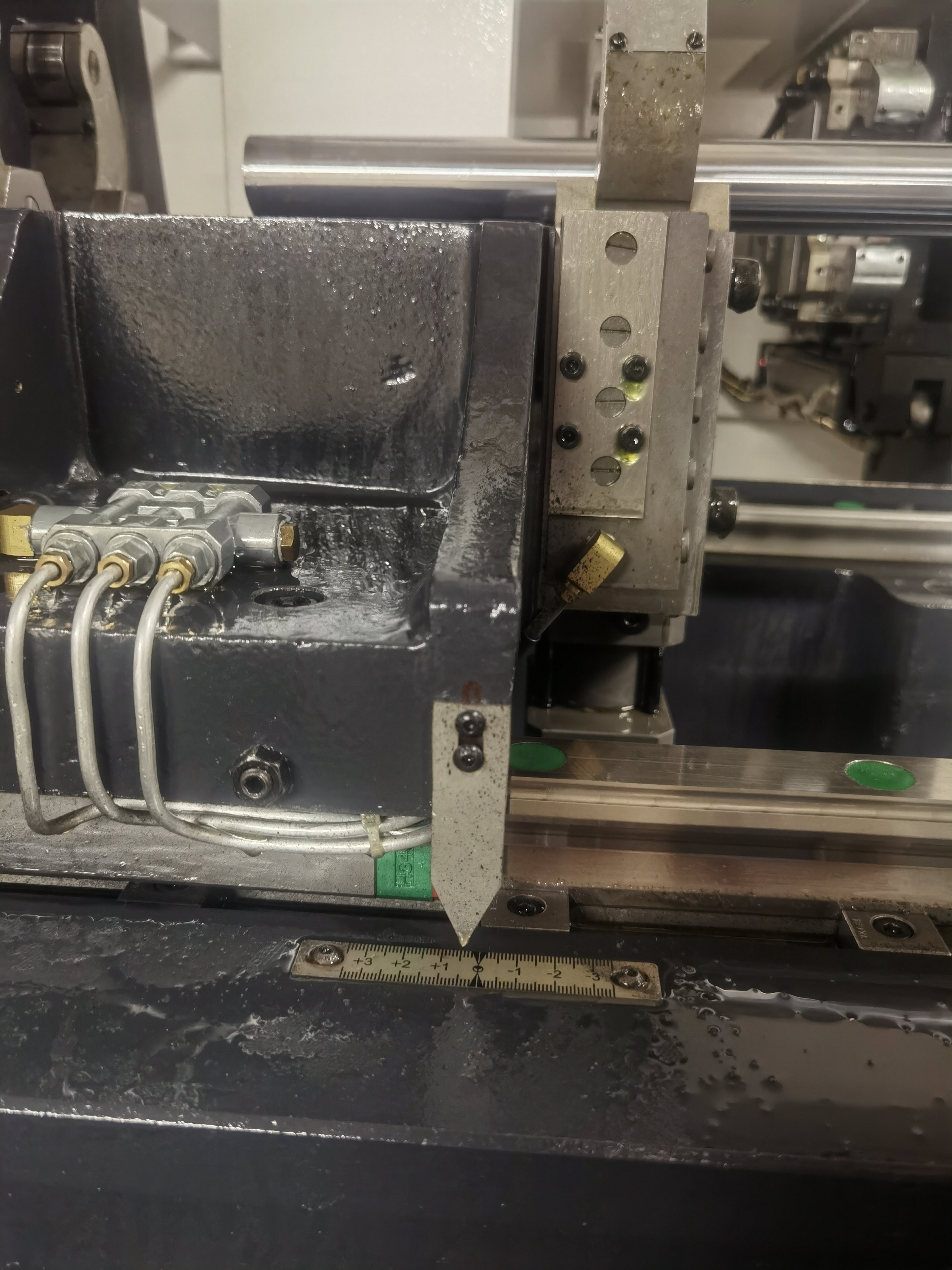
I use chip conveyors on production deep hole drilling machines to avoid stopping for chip removal. Deep hole drilling produces a lot of chips — a 50 mm BTA drill running at 0.15 mm/rev generates about 5 kg of steel chips per meter drilled. Without a chip conveyor, the operator spends more time shoveling chips than running the machine. That cost adds up fast on a two-shift operation running multiple deep hole drilling machines.
Chip management in deep hole drilling is not an afterthought — it is a system design decision that affects uptime, coolant quality, and tool life. I have learned through trial and error that the wrong conveyor type for a given material can cost more in maintenance downtime than the conveyor itself.
Chip Volume Calculation
Before selecting a conveyor, I calculate the expected chip volume from the deep hole drilling operation. The formula is straightforward:
Chip Mass (kg/hr) = Drill Diameter (mm) x Feed (mm/rev) x Speed (RPM) x Material Density (kg/mm³) x 60
For a practical example, here is what I use for common deep hole drilling scenarios:
| Drill Dia (mm) | Feed (mm/rev) | RPM | Material | Removal Rate (kg/hr) | Conveyor Capacity Needed |
|---|---|---|---|---|---|
| 20 (gun drill) | 0.04 | 3000 | Steel (7.85 g/cm³) | 7.5 | 10 kg/hr rated |
| 30 (BTA) | 0.08 | 2000 | Steel | 36 | 45 kg/hr rated |
| 50 (BTA) | 0.15 | 1500 | Steel | 132 | 150 kg/hr rated |
| 80 (BTA) | 0.20 | 1000 | Steel | 302 | 350 kg/hr rated |
| 20 (gun drill) | 0.08 | 4000 | Aluminum (2.7 g/cm³) | 10.4 | 15 kg/hr rated |
| 30 (BTA) | 0.05 | 1800 | Cast iron (7.2 g/cm³) | 29 | 40 kg/hr rated |
I size the conveyor with a 25% safety margin over the calculated maximum chip volume. For the 50 mm BTA drill example, I would select a conveyor rated for at least 150 kg/hr even though the calculated rate is 132 kg/hr. The margin accounts for interrupted cuts and chip volume spikes when the drill enters or exits the workpiece.
Matching Conveyor Type to Material
The chip type determines the conveyor design. I have used four main conveyor types in deep hole drilling, and each has a specific application where it performs best.
Hinged belt conveyors work well for steel and stainless steel chips from gun drilling. The belt has interlocking metal plates that carry the chips up an incline and dump them into a bin. I run the belt speed at 2-3 m/min for typical steel chip loads. The limitation is that fine particles fall through the belt gaps and accumulate in the coolant sump.
Scraper-type conveyors are my go-to for the short, broken chips that deep hole drilling typically produces. Steel blades drag the fine material along the bottom of the coolant tank and out of the machine. These capture particles that would bypass a hinged belt system. I use scraper conveyors on machines that run mixed materials.
Magnetic conveyors are essential for cast iron deep hole drilling. Cast iron produces fine powder that leaks through belt gaps. The magnetic drum pulls the fines out of the coolant and drops them into the scrap bin. I use a magnetic separator with 10,000 gauss field strength for cast iron fines down to 5 microns. The limitation is ferrous materials only — magnetic conveyors do nothing for aluminum or brass.
Auger conveyors work well as a first-stage system under the machine table. The rotating screw pushes chips along a trough and feeds them into a secondary conveyor or bin. I use augers in tight spaces where a full conveyor system would not fit. The auger feeds chips into the main scraper or magnetic conveyor for discharge.
Conveyor Comparison Table
| Conveyor Type | Best For | Chip Size | Fine Particle Handling | Material Restriction | Maintenance Interval |
|---|---|---|---|---|---|
| Hinged belt | Steel, stainless, general steel chips | 1-15 mm | Poor — fines pass through belt gaps | None | Monthly belt inspection |
| Scraper | Short broken chips, gun drilling fines | 0.1-5 mm | Good — captures most fines | None | Quarterly scraper bar replacement |
| Magnetic | Cast iron, ferrous fines only | 0.005-5 mm | Excellent for ferrous | Ferrous only | Weekly drum cleaning |
| Auger | First-stage under-table collection | 0.5-10 mm | Good — enclosed trough | None | Monthly auger inspection |
| Filtering drum | All deep hole drilling applications | 0.05-15 mm | Excellent — filters to 50 microns | None | Monthly drum cleaning |
Deep hole drilling rarely relies on a single conveyor type. The best setups use a hybrid approach — an auger under the machine table feeds into a scraper or magnetic conveyor, which then discharges through a filtering system that cleans the coolant before it returns to the high-pressure pump.
Central Systems vs Individual Conveyors
For shops running multiple deep hole drilling machines, a central chip removal system is worth considering. The system uses an underground trough with augers that move chips to a central collection point. The initial cost is $50,000 to $150,000 for a three-machine system, but the labor savings are significant.
I installed a central system in a shop that ran four BTA machines on two shifts. Before the central system, each operator spent 30 minutes per shift shoveling chips. After the central system, that labor went to zero. The payback period was 14 months on a $120,000 installation.
For single machine setups, I use a standalone conveyor with a 500-liter chip bin. The operator empties the bin once per shift on production jobs. I size the bin to hold at least one full shift of chip generation, which means the operator never has to stop the deep hole drilling machine to deal with chips. A bin that requires mid-shift emptying interrupts production and reduces machine utilization.
Coolant Filtration Integration
Chip management connects directly to coolant filtration in deep hole drilling. The conveyor removes the large chips, but the fines pass through and accumulate in the coolant. Without proper filtration, fines build up and cause three problems: they wear out the coolant pump seals faster, they clog the coolant nozzles on the drill head, and they recirculate through the cutting zone causing abrasive wear on the guide pads.
I use a paper bed filter or a hydrocyclone to remove fines down to 10-20 microns. The paper bed filter works well for steel and cast iron where the fines are ferrous and settle readily. The hydrocyclone works better for aluminum and non-ferrous materials where the fines are lighter and stay suspended in the coolant.
I check the coolant clarity weekly by looking at a sample in a clear bottle. If I cannot see through 50 mm of coolant, the filters need attention. I track filter replacement frequency on a spreadsheet and replace paper rolls before they clog completely. A clogged filter causes the coolant flow to drop, which reduces chip evacuation and increases the risk of tool breakage.
For more on how chip form affects conveyor choice, see the chip breaking strategies article. The chip shape produced at the cutting edge determines which conveyor type will handle it effectively. Also see the coolant temperature article for how coolant filtration affects chiller performance and thermal stability.
Key Takeaways
- Calculate chip volume before selecting a conveyor — use mass = diameter x feed x RPM x density, then add 25% safety margin.
- Hinged belt conveyors work for most steel deep hole drilling jobs, but scraper conveyors are better for the fine, broken chips typical of gun drilling.
- Magnetic conveyors are necessary for cast iron deep hole drilling — use a 10,000 gauss separator for fines down to 5 microns.
- Auger conveyors work well as a first-stage system feeding into a secondary scraper or magnetic conveyor.
- Central chip systems pay for themselves in labor savings within 12-18 months in multi-machine shops.
- Chip conveyors remove large chips but filtration (paper bed or hydrocyclone) is needed for fines down to 10-20 microns.
- Size the chip bin for at least one full shift of production to avoid mid-shift stops on your deep hole drilling machine.
- Check coolant clarity weekly — cloudy coolant causes guide pad wear and shortens gun drill life.
- A 50 mm BTA drill generates 132 kg/hr of steel chips — design the management system for the largest drill, not the average.