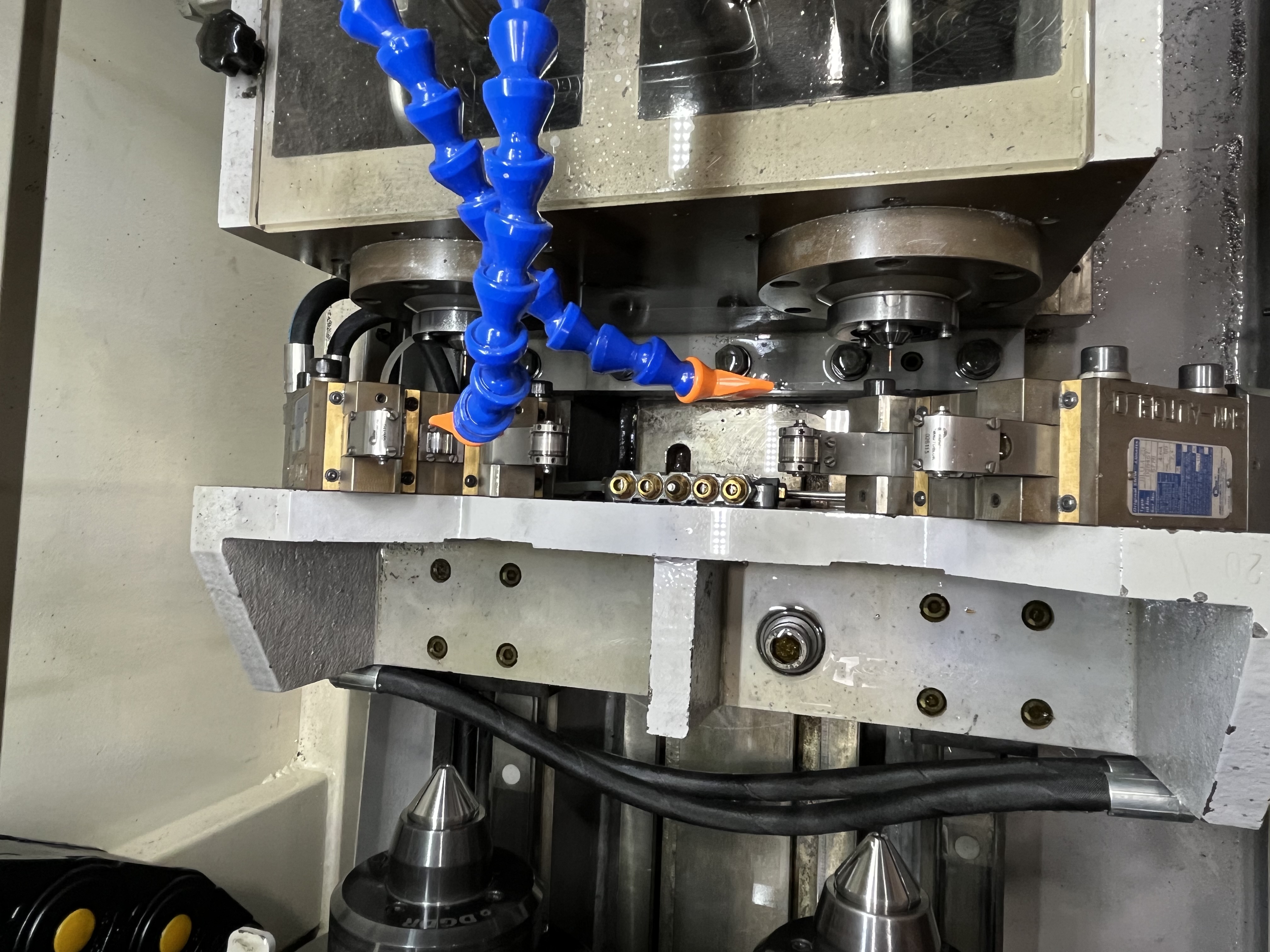
Over the years I have been asked the same questions repeatedly by new operators, engineers, and shop managers. Here are the answers, with links to detailed articles for each topic.
1. What qualifies as a deep hole?
A hole is considered deep when the depth-to-diameter ratio (L/D) exceeds 10:1. Below that, standard twist drills can handle the job. Above 10:1, you need specialized tooling and coolant systems.
Full article: Deep Hole Drilling vs Conventional Drilling
2. What is the difference between gun drilling and BTA drilling?
Gun drilling uses a single-lip tool with coolant through the center and chips exiting through an external V-flute. BTA drilling uses a multi-edge head with chips exiting through the center of the tool. Gun drilling is best for diameters under 20mm. BTA is faster for larger diameters.
Full comparison: Gun Drilling vs BTA vs Ejector
3. What coolant pressure do I need?
For gun drilling: 1000-2000 psi depending on diameter. Below 600 psi, chip evacuation becomes unreliable. For BTA: 200-500 psi is typical. The required pressure increases as diameter decreases.
Full article: Coolant Requirements by Diameter
4. What surface finish can I expect?
Gun drilling typically produces Ra 0.1-0.8μm as-drilled. BTA produces Ra 0.4-3.2μm. The finish depends on feed rate, tool condition, and material.
Full article: How to Improve Gun Drilling Surface Finish
5. How straight can a deep hole be?
Gun drilling typically achieves 0.05-0.3mm straightness per meter. With counter-rotation, 0.05-0.15mm/m is possible. BTA achieves 0.1-0.5mm/m.
Full article: Deep Hole Straightness Mechanics
6. Can I gun drill on a standard CNC machine?
Yes, with limitations. You need high-pressure coolant (1000+ psi), through-spindle coolant or a rotary inducer, and a rigid setup. Dedicated machines are better for production, but standard CNCs work for short runs.
Full article: Evaluating Your Machine for Gun Drilling
7. Do I need a pilot hole?
Yes. Gun drills need either a pilot hole or a guide bushing to start. The pilot should be 0.01-0.02mm larger than the drill and flat-bottomed.
Full article: Pilot Holes for Gun Drilling
8. Why does my gun drill keep breaking?
The most common cause is inadequate coolant pressure. Other causes: worn guide bushing, incorrect feed rate, chip packing, or excessive runout.
Troubleshooting guide: Drill Walking Systematic Diagnosis
9. How often should I regrind a gun drill?
Every 150-250 holes for steel applications, depending on diameter and material. Regrind when surface finish degrades or spindle load increases 20%+.
Full article: Gun Drill Regrinding Guide
10. Which is better: carbide or HSS gun drills?
Carbide for production (faster speeds, longer tool life, better finish). HSS for prototypes, small diameters under 1mm, and interrupted cuts where carbide would chip.
Full article: Carbide vs HSS Gun Drills
11. What oil should I use for gun drilling?
Straight cutting oil with EP additives (sulfurized or chlorinated). Water-based coolants do not provide enough lubricity for reliable gun drilling. Minimum 2.5% sulfur content for steel.
Full article: Oil vs Water-Based Coolant
12. How do I fix hole deviation?
Check the guide bushing first — worn bushings cause 40% of deviation problems. Then check entry condition, then reduce feed rate. True machine alignment problems are rare.
Full article: Drill Walking Systematic Diagnosis
13. What is the maximum depth I can drill?
Gun drilling can reach L/D ratios of 400:1 with proper setup. BTA and ejector drilling typically reach 100:1. Practical limits depend on machine rigidity, coolant system, and material.
Full article: What Is Gun Drilling
14. How do I measure a deep hole diameter?
Use a bore gauge for diameters over 6mm. Use air gauging for smaller diameters. Measure at three depths — entry, midpoint, and exit — to detect taper.
Full article: How to Measure Deep Hole Diameter
15. What causes bell-mouth at the entry?
Worn guide bushing, excessive runout, or incorrect entry feed rate. The bushing clearance should be 0.003-0.008mm for drills under 20mm.
Full article: Oversized Hole and Bell Mouth Solutions
16. When should I send work out vs do it in-house?
Send it out for small diameters under 3mm, exotic materials, or L/D over 200:1. Do it in-house for high-volume standard parts in steel or aluminum.
Full article: Build vs Buy Decision
17. How do I select the right gun drill?
Match tip diameter to the required hole size (0.01-0.03mm oversize). Select shank diameter to fit your toolholder. Choose overall length to exceed hole depth. Match point angle and coating to the material.
Full article: Gun Drill Sizing and Selection
18. What causes oversize holes?
The most common cause is tool runout. A 0.02mm runout at the drill tip produces approximately 0.02mm oversize holes. Worn guide bushings and incorrect tip oversize also contribute.
Full article: Gun Drill Runout Effects
19. How do I train a new operator?
Start with machine fundamentals and safety. Progress to setup and workholding, then production running with parameter adjustment, then problem recognition. Allow 4 weeks for basic competency.
Full article: Training Program for Operators
20. What is counter-rotation?
Counter-rotation spins the workpiece in the opposite direction to the drill. This produces the straightest holes by canceling lateral forces. It requires a machine capable of rotating both the workpiece and the tool.
Full article: Counter-Rotation Technology