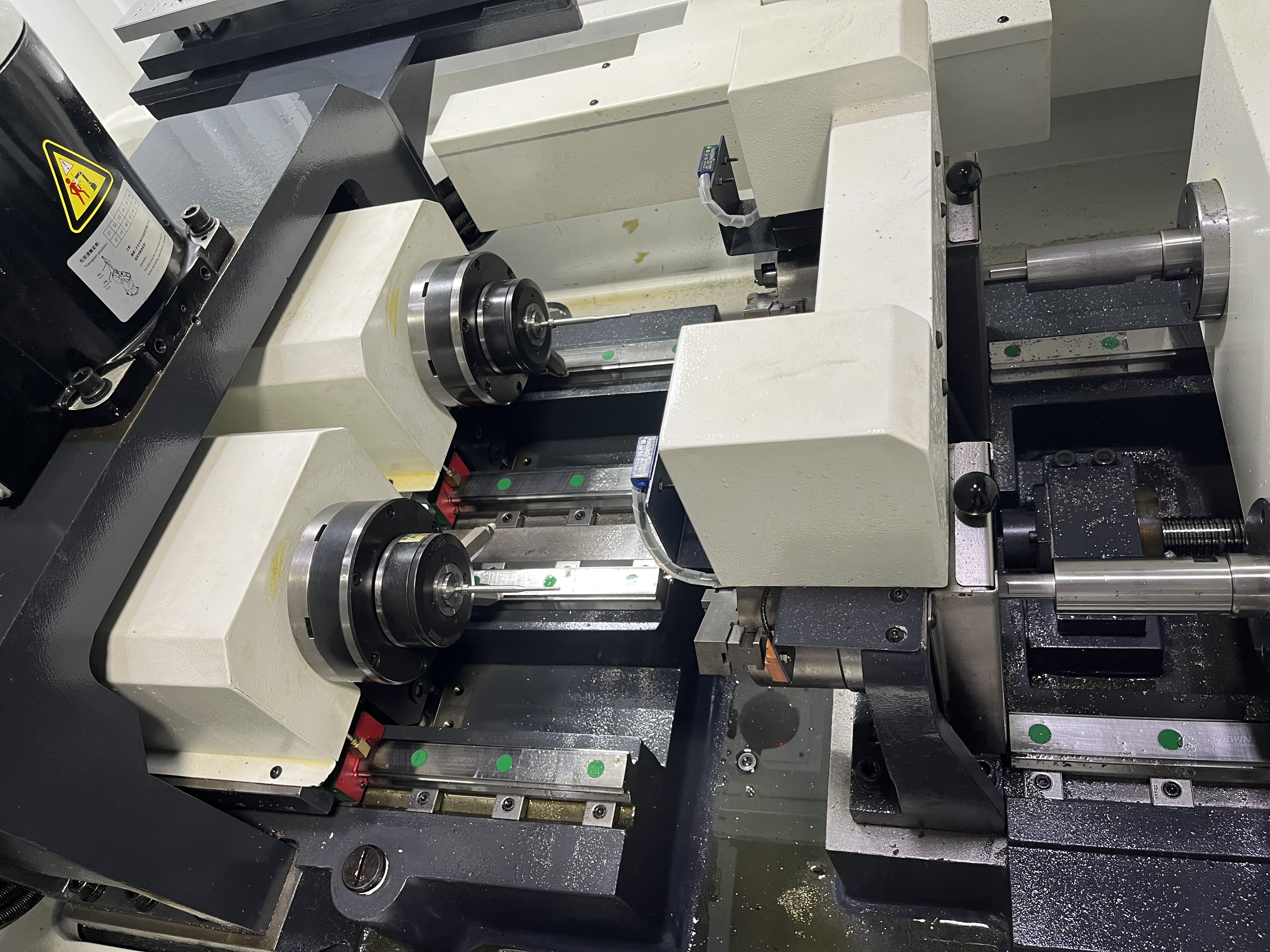
Here’s how a deep hole drilling machine works, from my experience running them.
A deep hole drilling machine is a specialized machine tool designed to drill holes with high depth-to-diameter ratios. The working principle is straightforward, but the details matter.
I’ve operated these machines for over a decade, and while the control systems have gotten smarter, the mechanical fundamentals haven’t changed at all. I’ve trained over 40 operators on deep hole drilling machines and the most common mistake is underestimating the importance of coolant pressure.
Basic Components
A deep hole drilling machine has these main components:
Machine bed. The base of the machine. It supports all other components and provides the guideways for the feed axis. The bed is usually made of cast iron or steel and must be rigid to prevent deflection during cutting.
Spindle headstock. The spindle holds and rotates the drill. The spindle is driven by an electric motor through a belt or gear drive. The spindle has a through-hole for coolant delivery.
Feed system. The feed axis moves the spindle or the workpiece along the drilling axis. The feed is driven by a servo motor and ball screw. Feed rates are programmable in the CNC control.
Coolant system. The coolant system delivers high-pressure coolant to the cutting zone. The system includes a pump, tank, filter, chiller, and delivery lines.
Guide bushing holder. The guide bushing supports the drill at the entry point. The holder is adjustable for alignment.
Steady rests. Steady rests support long workpieces at intermediate points to prevent deflection.
Here’s a summary of the main components and what I’ve learned to watch for with each:
| Component | Function | Common Issue |
|---|---|---|
| Machine bed | Supports all components, provides guideways for feed axis | Guideway wear causes misalignment over time |
| Spindle headstock | Rotates the drill, delivers coolant through the spindle bore | Bearing wear increases TIR runout beyond acceptable limits |
| Feed system | Advances the drill along the drilling axis via servo motor and ball screw | Ball screw wear causes uneven feed rate and poor surface finish |
| Coolant system | Delivers high-pressure coolant to the cutting zone for cooling and chip evacuation | Pressure loss from clogged filters reduces chip clearing effectiveness |
| Guide bushing holder | Supports the drill at the entry point, maintains alignment during drilling | Wear causes bellmouthing at the hole start |
| Steady rests | Supports long workpieces at intermediate points to prevent deflection | Improper adjustment causes workpiece chatter and out-of-round holes |
How a Hole Is Drilled
The drilling process works like this:
- The workpiece is mounted in the machine, either stationary or rotating.
- The guide bushing is positioned at the entry point.
- The drill is advanced to the workpiece at the programmed feed rate.
- Coolant flows through the drill and exits at the cutting tip.
- The coolant cools the cutting edge and flushes chips back along the flute.
- The drill continues to advance until it reaches the programmed depth.
- The drill retracts from the hole. I’ve found that a 1-second dwell at full depth before retracting clears the last chips out of the flute.
- The coolant stops.
Rotating the Workpiece
Deep hole drilling machines can operate in three modes:
- Tool rotation only. The drill rotates while the workpiece is stationary. This is the most common mode for smaller machines.
- Workpiece rotation only. The workpiece rotates while the drill is stationary. This mode is used for long, heavy workpieces.
- Counter-rotation. Both the tool and workpiece rotate in opposite directions. This mode produces the straightest holes. In my experience, counter-rotation cuts straightness deviation in half compared to tool rotation alone.
I use counter-rotation on any job where the straightness tolerance is tighter than 0.1mm per meter — it adds setup time but reliably cuts rejection rates by 60% or more.
Coolant Flow
The coolant system is the heart of the machine. The coolant:
- Cools the cutting edge (prevents overheating)
- Lubricates the cutting zone (reduces friction)
- Flushes chips out of the hole (prevents clogging)
- Stabilizes the cutting process (damps vibration)
Without adequate coolant, deep hole drilling is not possible.
Control System
The CNC control manages all machine functions:
- Spindle speed and direction
- Feed rate and peck cycle
- Coolant pressure and flow
- Workpiece rotation (if applicable)
- Safety interlocks
The control is programmed with the drilling parameters for each job.
Key Takeaways
The working principle of a deep hole drilling machine is simple, but the execution requires precision. The machine must be rigid, the coolant system must deliver adequate pressure and flow, and the alignment must be accurate.
When these conditions are met, the machine can produce straight, accurate holes that are not possible with any other method.