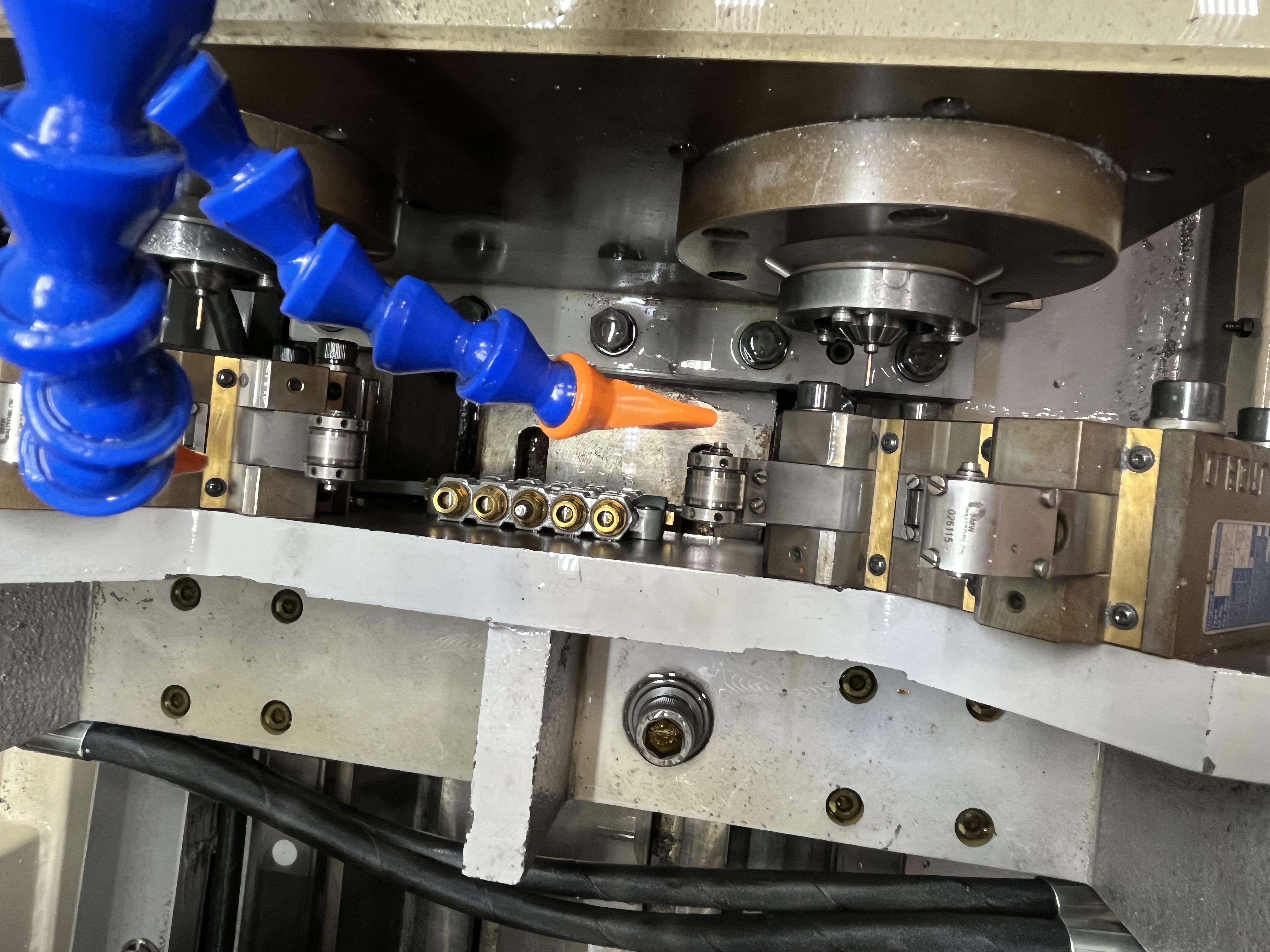
I select drill tubes based on diameter and length for the job. The drill tube connects the BTA cutting head to the machine spindle. It must be straight, rigid, and properly maintained to produce straight holes. A bad tube produces a bad bore no matter how good the cutting head is.
Tube Diameter Selection
The tube diameter is determined by the hole size and the coolant flow requirement. The tube OD needs to be about 8-12mm smaller than the bore diameter to allow coolant to flow through the annulus between the tube and the bore wall. If the tube is too small, the coolant flow is restricted and chip evacuation suffers.
The tube ID determines the chip passage size. The chips travel through the inside of the tube, so the ID must be large enough to pass the largest expected chip. For a 20mm bore, I use a tube with 12mm ID. For a 40mm bore, I use a tube with 25mm ID.
| Bore Diameter | Tube OD | Tube ID | Annulus Gap | Coolant Flow at 1000 psi |
|---|---|---|---|---|
| 15mm | 8mm | 5mm | 3.5mm | 15 L/min |
| 20mm | 12mm | 8mm | 4mm | 25 L/min |
| 30mm | 20mm | 14mm | 5mm | 45 L/min |
| 40mm | 28mm | 20mm | 6mm | 70 L/min |
| 60mm | 45mm | 34mm | 7.5mm | 120 L/min |
I calculate the annulus cross-sectional area and verify it is at least 1.5 times the tube ID cross-sectional area. This ratio ensures the coolant can flow into the annulus and return through the tube without excessive back pressure.
Standard Tube Sizing by Drill Diameter
BTA drill tubes follow standardized sizing. Here is the mapping I use when selecting tubes for a new job:
| Tube Size | Tube OD (mm) | Tube ID (mm) | Drill Diameter Range (mm) | Typical Application |
|---|---|---|---|---|
| 797 | 14.00 | 9.00 | 15.63 - 16.71 | Small BTA, valve guide holes |
| 798 | 15.00 | 10.00 | 16.72 - 17.67 | Hydraulic component bores |
| 799 | 16.00 | 10.50 | 17.53 - 18.92 | Standard BTA range |
| 800 | 17.00 | 11.50 | 18.93 - 20.01 | Common for 20 mm nominal bores |
| 801 | 18.00 | 12.00 | 20.02 - 21.81 | Medium BTA applications |
| 802 | 20.00 | 13.00 | 21.82 - 24.10 | General purpose BTA |
| 803 | 22.00 | 14.00 | 24.11 - 26.40 | Larger BTA, structural parts |
The drill head diameter is always slightly larger than the tube OD to create the annular gap for coolant flow. I double-check this match before ordering — ordering a tube that is too large for the drill head wastes the annular clearance and restricts coolant.
Tube Length and Connections
The tube length determines the maximum drilling depth. Tubes come in standard lengths, usually 1.5m or 2m. Multiple tubes connect together for deeper holes. The maximum practical depth with tube extensions is about 100 times the bore diameter.
Connection Types
I use three types of tube connections depending on the application:
| Connection Type | Cycle Life | Assembly Time | Best For | Torque Capacity |
|---|---|---|---|---|
| 4-start thread | ~500 cycles | 2-3 minutes | Standard BTA setups | Moderate |
| Single-start thread | ~500 cycles | 2-3 minutes | Skiving and burnishing | Moderate |
| Flanged (4-bolt) | 2,000+ cycles | 5-8 minutes | Large diameters (>100 mm), high torque | High |
Threaded connections are faster to change but wear out after about 500 connect-disconnect cycles. Flanged connections last longer but take more time to bolt together. For production runs with frequent tool changes, I prefer threaded connections. For deep holes with high torque requirements, I use flanged connections.
I inspect the connection threads before each use. A damaged thread can cause the tube to separate at depth, which means fishing the tube out of the bore — a job that takes 2-4 hours. I use a thread gauge to check for wear and replace tube sections when the thread fit becomes loose.
Material Selection and Straightness
Most BTA drill tubes are made from alloy steel with proper heat treatment. I have seen tubes made from 4140, 4340, and similar chromium-molybdenum alloys. The tube material needs enough hardness to resist wear from chip abrasion but enough toughness to handle the bending loads during drilling.
| Material Property | Requirement | Why It Matters |
|---|---|---|
| Yield strength | 600 MPa minimum | Resists bending under cutting load |
| Surface hardness | 35-45 HRC | Resists wear at steady rest contact points |
| ID surface finish | Ra 1.6 or better | Reduces chip friction inside the tube |
| Wall thickness variation | +/- 0.1 mm | Maintains consistent coolant flow area |
Straightness is critical. I check tube straightness at least monthly by rolling the tube on a flat surface. A tube that is bent by more than 0.5mm over its length produces a curved bore. The curvature transfers to the cutting head and the hole follows the tube.
The industry standard for BTA tube straightness is 0.01 mm per 100 mm of length. For a 2-meter tube, that means total deviation should not exceed 0.2 mm. I have sent tubes back to the manufacturer that exceeded this spec — a bent tube is unusable for precision deep hole drilling.
The tube OD wears at the points where it contacts the steady rests. I measure the OD at the wear points with a micrometer and replace the tube when the wear exceeds 0.5mm. A worn tube can collapse under coolant pressure — I have seen a tube with 1mm of wall loss buckle at 800 psi.
Tube storage matters too. I store tubes vertically in racks to prevent sagging between supports. A tube stored horizontally on widely spaced supports develops a permanent bend over time. The vertical rack holds the tubes by the flanges and keeps them straight.
For coolant system considerations with BTA tubes, see ejector drilling troubleshooting. For more on tube maintenance intervals, see my guide on BTA drilling machine maintenance.
Key Takeaways
- Select tube OD so the annulus gap is at least 3mm for coolant flow.
- Verify the annulus area is 1.5x the tube ID area to avoid back pressure issues.
- Standard BTA tube sizes map to specific drill diameter ranges — verify before ordering.
- Choose 4-start thread for standard production, flanged for high-torque applications.
- Inspect connection threads before each setup — a failed thread at depth means hours of recovery time.
- Check tube straightness monthly — 0.5mm bend causes curved bores.
- Store tubes vertically to prevent permanent sagging bends.
- Verify tube material yield strength is 600 MPa minimum for deep hole drilling loads.