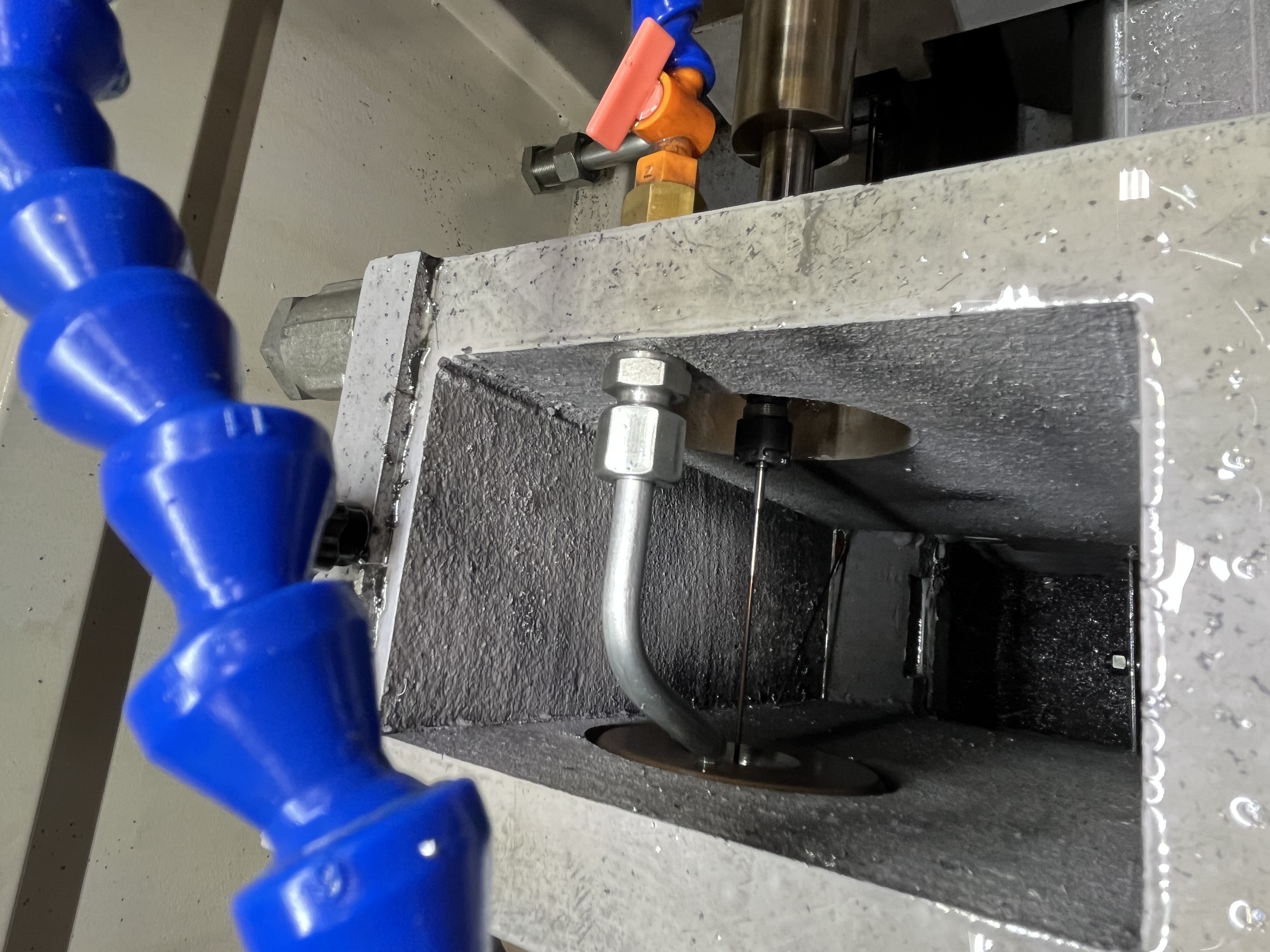
The way you hold a gun drill determines the runout at the cutting tip. Runout affects hole diameter, straightness, surface finish, and tool life. I have used all three holding methods extensively and know the trade-offs.
I choose the holding method based on the tolerance requirements and the number of diameter changes in the job. Here is my detailed comparison.
Collet Holders
Collets provide the most concentric holding of any method. A collet grips the drill shank evenly around its full circumference. Runout at the collet is typically 0.005-0.01mm if the collet is clean and the shank is ground accurately.
I use collets for precision work where hole position and straightness matter most. The trade-off is that each collet fits only one shank diameter. A set of collets for the common sizes — 8mm, 10mm, 12mm, 16mm, 20mm — costs about $400-600.
Collet quality varies significantly between manufacturers. I have tested several brands and found that the more expensive collets give consistently better runout. A high-quality collet holds 0.003mm runout at the nose. A budget collet might hold 0.015mm.
Here is my comparison of collet types:
| Collet Type | Typical Runout (mm) | Cost Range | Best For |
|---|---|---|---|
| ER collet | 0.005-0.015 | $15-40 each | General gun drilling |
| TG collet | 0.005-0.010 | $25-60 each | Medium tolerance |
| Shrink-fit holder | 0.003-0.005 | $150-300 each | High precision |
| Hydraulic chuck | 0.003-0.008 | $300-500 each | Production runs |
The collet nut and collet taper must be clean for accurate runout. I clean the taper with a cotton swab and alcohol before every tool change. A single chip in the taper can increase runout to 0.03mm.
Chuck Holders
Chucks are more flexible than collets — they can hold a range of diameters without changing the holder. A typical drill chuck holds a 10:1 diameter range. The runout is higher, typically 0.01-0.03mm.
I use chucks for general work where the tolerance is not critical. A keyless chuck is convenient for quick tool changes. A keyed chuck provides better grip and less runout than a keyless chuck.
Chucks are useful in these situations:
- Prototype work with frequent diameter changes
- Secondary operations where the part is already roughed
- Fixture building where precision is less critical
- Quick setups where stopping to change collets costs time
The main disadvantage of chucks is the runout. At 0.03mm runout at the chuck, the drill tip can run out 0.05-0.08mm due to the drill length amplifying the error. This affects hole diameter and straightness.
I also find that chucks lose grip at higher speeds. A drill chuck rated for 3000 RPM max will slip if pushed to 5000 RPM. Collets do not have this limitation.
Sleeve Holders
Sleeve holders are used for large-diameter drills, typically over 20mm. The sleeve fits over the drill shank and the sleeve is held in the spindle or a collet. The OD of the sleeve matches a standard size that fits your spindle.
Sleeves serve two purposes. First, they allow using a large drill in a smaller spindle. Second, they protect the spindle from damage if the drill breaks — the sleeve absorbs the impact.
I use sleeves when the drill shank diameter does not match my spindle’s standard sizes. For example, a 25mm BTA drill with a 20mm shank goes into a sleeve that adapts it to the 25mm spindle bore.
Sleeve runout depends on the manufacturing quality. A precision-ground sleeve holds 0.005-0.01mm runout. An off-the-shelf sleeve might hold 0.02-0.03mm.
How Holding Method Affects Hole Quality
The holding method has a direct effect on the hole. Here is what I have measured:
| Holding Method | Runout at Tool Tip (mm) | Hole Diameter Variation (mm) | Straightness over 200mm (mm) |
|---|---|---|---|
| Shrink-fit | 0.005-0.01 | 0.005-0.01 | 0.01-0.02 |
| ER collet | 0.01-0.02 | 0.01-0.015 | 0.02-0.03 |
| Hydraulic chuck | 0.008-0.015 | 0.008-0.012 | 0.015-0.025 |
| Keyed chuck | 0.02-0.04 | 0.015-0.03 | 0.03-0.06 |
| Keyless chuck | 0.03-0.06 | 0.02-0.04 | 0.05-0.10 |
For aerospace and medical work where tolerances are tight, I use shrink-fit holders or high-quality ER collets. For general machine shop work, ER collets are my go-to.
Key Takeaways
- Collets provide the best runout — use them for precision work
- Shrink-fit holders give the best results but cost the most
- Chucks are flexible but introduce 2-3x more runout than collets
- Sleeves adapt large drills to standard spindles
- Clean the collet taper before every tool change
- The holding method determines tip runout, which directly affects hole quality
- Match the holding method to the tolerance requirements, not the convenience
For more on getting the best results from your tooling, see my guide on planning a deep hole drilling job.