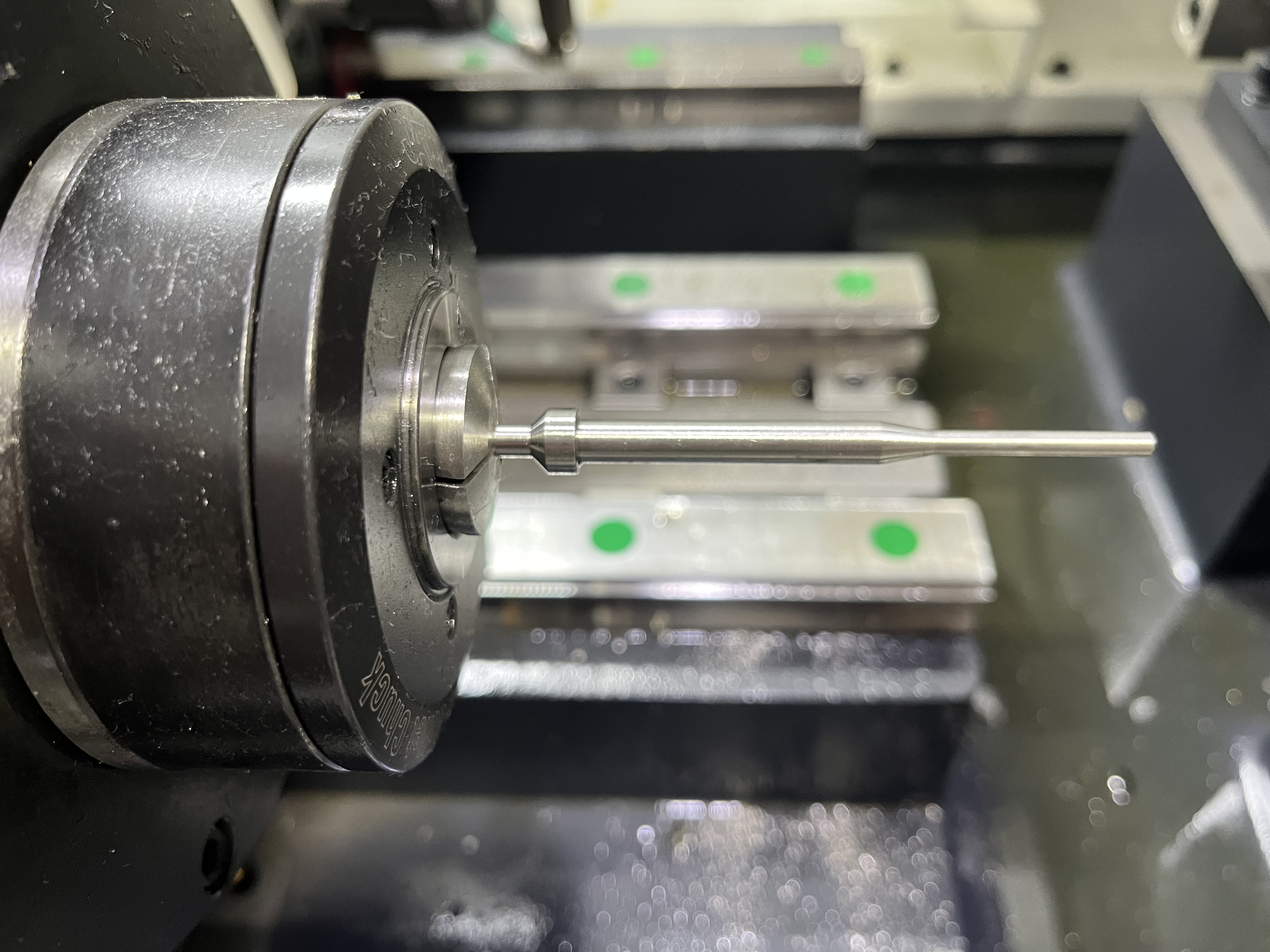
Every time I talk to a shop that wants to start gun drilling, the question comes up: how much coolant pressure do I really need? The manufacturer’s spec sheet usually says 1000-2000 psi. But real-world results vary depending on diameter, depth, and material.
Here is what I have found works — and what does not.
Pressure vs Flow: What Matters for Chip Evacuation
Coolant does two jobs in gun drilling: it lubricates the cutting edge and it pushes chips back along the flute. Lubrication needs pressure. Chip evacuation needs flow. You need both.
A common mistake is installing a high-pressure pump that delivers low volume. The pressure gauge reads 1000 psi, but the flow is only 2 GPM. The drill edge gets lubricated, but the chips do not move. They pack, torque spikes, and the drill breaks.
I check both pressure and flow. Pressure at the tool tip (not at the pump), and flow by measuring how much coolant comes out of the drill in a given time. I cover measurement in Coolant Flow Rate vs Pressure.
Minimum Pressure by Drill Diameter
| Drill Diameter | Minimum Pressure | Recommended Pressure | Minimum Flow |
|---|---|---|---|
| Under 3mm | 1500 psi | 2000-3000 psi | 0.5 GPM |
| 3mm to 6mm | 1000 psi | 1500-2000 psi | 1-2 GPM |
| 6mm to 12mm | 600 psi | 1000-1500 psi | 3-5 GPM |
| 12mm to 20mm | 400 psi | 600-1000 psi | 5-10 GPM |
| 20mm to 30mm | 300 psi | 400-800 psi | 10-15 GPM |
| Over 30mm | 200 psi | 300-600 psi | 15-25 GPM |
These numbers assume standard steel (4140, 1045). For stainless steel, titanium, or superalloys, add 30-50% to both pressure and flow.
Below these minimums, chip evacuation becomes unreliable. You can get away with lower pressure on shallow holes under 20:1 L/D, but anything deeper will eventually pack chips.
How I Determine the Right Pressure for a Job
I start at the recommended pressure for that diameter and adjust based on chip appearance:
- Short, broken chips at the recommended pressure — ideal. Leave it there.
- Long, stringy chips — pressure is adequate but feed may be too low. Increase feed or adjust chip breaker.
- Fine dust or powder — pressure is too high relative to feed, or the drill is dull.
- No chips coming out — pressure or flow is insufficient. Chips are packing. Stop immediately.
I check chips every 5-10 parts when setting up a new job. Once the parameters are right, I note the pressure and flow readings and use them as a baseline.
The Pressure Drop Problem
The pressure at the pump is not the pressure at the tool tip. Every joint, hose, and fitting creates a pressure drop. In a typical gun drilling setup, the drop from pump to tip can be 20-40%:
| Component | Typical Pressure Drop |
|---|---|
| Pump to machine base | 5-10% |
| Machine piping | 5-10% |
| Rotary union / inducer | 5-10% |
| Drill shank to tip | 5-15% |
| Total from pump to tip | 20-40% |
If the pump gauge reads 1000 psi, the tool tip may only see 600-800 psi. I install a pressure gauge as close to the drill holder as possible. The difference between pump pressure and holder pressure tells me how much loss the system has.
A sudden increase in pressure drop indicates a blockage — a chip stuck in the line, a filter loading up, or a rotary union seal failing. I cover leak diagnosis in Coolant Leak Detection.
Coolant Types and Their Effect on Pressure Requirements
Oil-based coolants lubricate better than water-based, which means they can evacuate chips more efficiently at the same pressure. Water-based coolants need higher pressure to achieve the same chip evacuation because they have less lubricity.
| Coolant Type | Pressure Adjustment vs Oil Baseline | Best For |
|---|---|---|
| Straight oil (sulfurized) | Baseline (1x) | Most gun drilling |
| Straight oil (chlorinated) | Baseline (1x) | Stainless, tough materials |
| Soluble oil (10%+ conc.) | 1.2-1.5x | Light duty only |
| Semi-synthetic | 1.5-2x | Not recommended |
| Full synthetic | Not recommended | Avoid for gun drilling |
I use sulfurized oil for 90% of my gun drilling work. It provides the lubricity needed for chip evacuation and tool life. I cover coolant chemistry in Coolant Additives Guide.
What to Do If Your Machine Cannot Deliver the Pressure
If your existing machine cannot deliver the minimum pressure for your drill diameter, you have three options:
- Add a booster pump. A hydraulic pressure booster can multiply your existing coolant pressure by 3-5x. Cost is typically $2000-5000 installed.
- Use a larger diameter drill. Larger drills need lower pressure. If you can redesign the hole to use a 12mm drill instead of 6mm, your pressure requirement drops from 1000 psi to 600 psi.
- Send it out. For short runs or small diameters, outsourcing to a shop with proper high-pressure equipment is often cheaper than upgrading. I cover this in In-House vs Outsource.
Key Takeaways
- Minimum coolant pressure varies by diameter from 200 psi (30mm+) to 2000 psi+ (under 3mm). Check your pump rating against your smallest drill.
- Flow matters as much as pressure. Measure both, not just pressure.
- Pressure at the pump can be 20-40% higher than at the tool tip. Measure as close to the drill as possible.
- Oil-based coolants need less pressure than water-based. Use oil for gun drilling.
- If your machine cannot deliver adequate pressure, a booster pump is the most cost-effective upgrade.