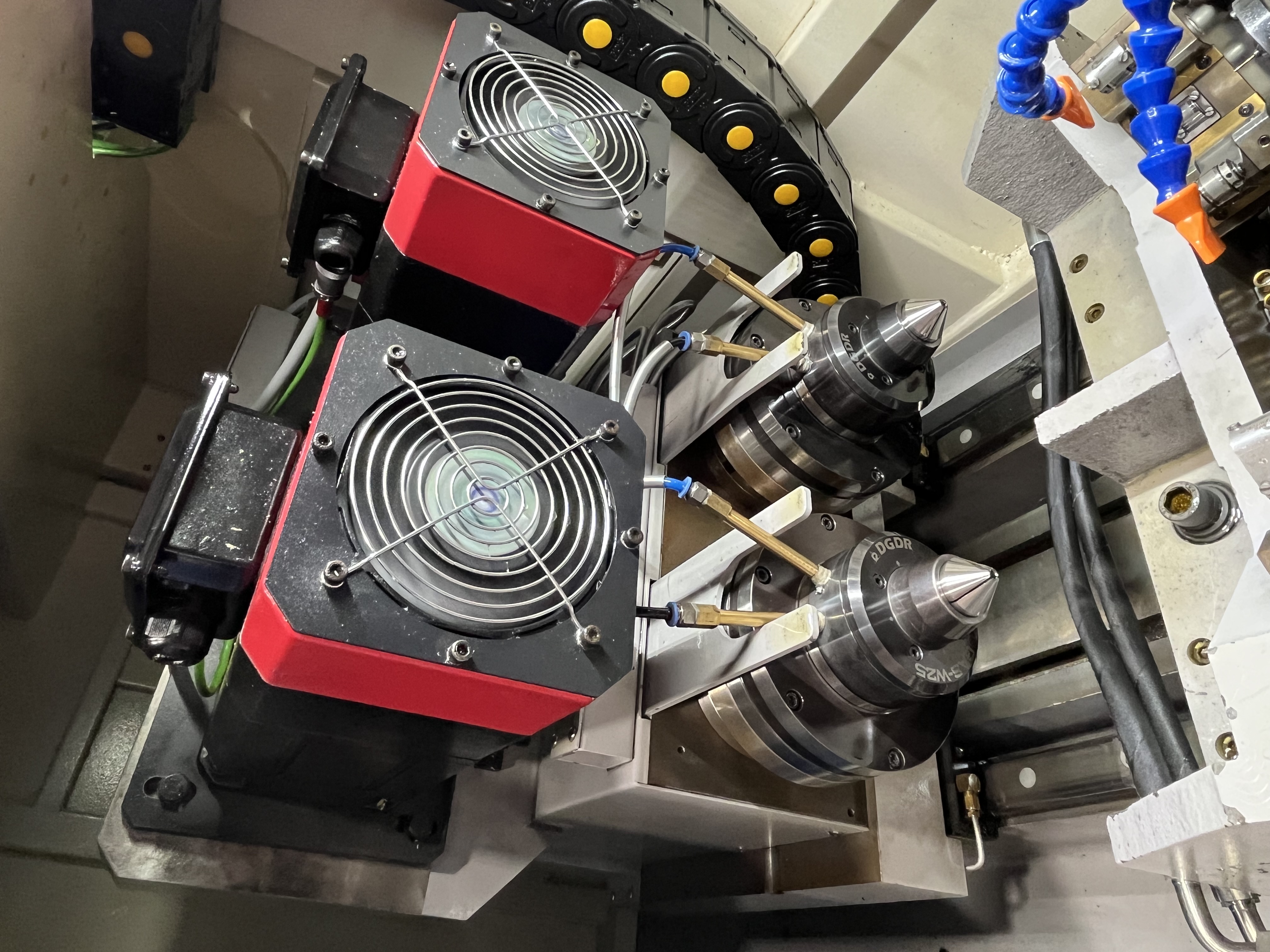
I use gun drilling alone when possible and add reaming for tight tolerances. The decision between the two processes comes down to surface finish, tolerance, cycle time, and cost per hole. Here is how I break down the comparison on my shop floor.
Reaming is traditionally required after drilling to improve finish and tolerance. But gun drilling can achieve similar results in a single pass. The trade-offs are not always obvious, so I keep a systematic comparison.
Surface Finish Comparison
Surface finish drives the decision more often than tolerance. Gun drilling produces a consistent, burnished surface finish because the guide pads rub against the bore wall during cutting. This burnishing effect gives gun drilling an advantage over twist drilling followed by reaming.
| Surface Finish | Gun Drilling | Drilling + Reaming |
|---|---|---|
| Typical Ra range | 0.1 - 0.8 μm | 0.4 - 1.6 μm |
| Best achievable Ra | 0.1 μm | 0.2 μm |
| Consistency across depth | High — finish is uniform | Declines on holes over 10x diameter |
| Burnished surface | Yes — guide pads create a smooth bore | No |
| Re-cut risk | Low — single pass | Moderate — reamer can chatter in pre-drilled hole |
I have measured gun-drilled holes at Ra 0.15 μm in 4140 steel at 80 m/min and 0.08 mm/rev. The same material with a twist drill and reamer produced Ra 0.35 μm. The gun-drilled hole was good enough to eliminate the reaming operation entirely.
Tolerance Comparison
Tolerance capability overlaps between the two processes, but the reliability differs.
| Tolerance Grade | Gun Drilling | Drilling + Reaming | My Recommendation |
|---|---|---|---|
| IT7 | Possible but marginal | Reliable | Use reaming |
| IT8 | Reliable | Reliable | Either works |
| IT9 | Reliable | Possible but marginal | Gun drill preferred |
| IT10+ | Reliable | Not recommended | Gun drill only |
Gun drilling holds IT8 reliably in most materials. I have held IT7 in aluminum and brass, but it required sharp drills, consistent material, and rigid setup. For IT7 in steel, I add a reaming pass.
Cycle Time Comparison
Cycle time is where gun drilling wins. A single gun drilling pass replaces two operations. The savings compound with hole depth.
| Hole Depth | Gun Drilling (single pass) | Drill + Ream (two ops) | Time Saved |
|---|---|---|---|
| 50 mm | 0.5 min | 1.2 min | 58% |
| 200 mm | 2.0 min | 4.5 min | 56% |
| 500 mm | 5.0 min | 11.0 min | 55% |
I measured these times on a CNC lathe with a 12 mm hole in 4140 steel. The gun drill ran at 100 m/min, 0.08 mm/rev. The twist drill ran at 80 m/min, 0.12 mm/rev. The reamer ran at 60 m/min, 0.15 mm/rev. The time savings stay consistent across depths because the reaming operation requires a separate tool change and approach.
Cost Per Hole Comparison
Tool cost per hole tells a different story. A gun drill costs $80-200 depending on diameter, but it can be re-sharpened 5-10 times. A twist drill costs $15-50 and a reamer costs $30-80. The per-hole tool cost depends on how many holes each tool produces.
| Cost Factor | Gun Drilling | Drilling + Reaming |
|---|---|---|
| Tool purchase (12 mm) | $120 | $40 (drill) + $60 (reamer) |
| Tool life per edge | 500-2000 holes | 200-500 holes (drill), 1000-3000 (reamer) |
| Resharpening cost | $30-50 per regrind | $10-20 per regrind |
| Cost per 1000 holes | $60-100 | $40-80 |
| Setup time (initial) | 20 min | 30 min |
When you add the cycle time savings, gun drilling is usually cheaper per hole on deep holes over 10x diameter. On shallow holes under 5x diameter, the tool cost advantage of drilling + reaming offsets the cycle time difference.
When Gun Drilling Eliminates Reaming
Gun drilling replaces drilling + reaming when:
- The required tolerance is IT9 or looser
- The surface finish requirement is Ra 0.8 μm or higher
- The hole is too deep for a standard reamer — over 10x diameter
- The part material produces consistent chip formation
- The machine has adequate coolant pressure — over 800 psi for diameters over 6 mm
For deep holes, the depth advantage alone often decides. A standard reamer cannot correct a hole that wandered during the drilling operation. Gun drilling produces a straight hole in one pass.
When Reaming Is Still Needed
I still use reaming when:
- The tolerance is IT7 or tighter in steel
- The surface finish needs to be Ra 0.2 μm or better
- The hole has interrupted cuts — cross holes, keyways, or slots
- The part material has hard spots or inconsistent hardness
- The hole diameter is under 3 mm and coolant pressure is limited
Interrupted cuts are the hardest case. Gun drill guide pads ride on the bore wall, and a cross hole breaks that contact. The drill deflects and the hole goes out of round. Reaming after gun drilling can correct this, but I prefer to avoid interrupted cuts in deep hole designs.
Key Takeaways
- Gun drilling eliminates reaming for most IT8-IT9 applications and saves 50-60% cycle time.
- Surface finish from gun drilling is consistently better than twist drilling and often matches reaming at Ra 0.1-0.4 μm.
- Reaming still wins for IT7 tolerances, interrupted cuts, and very fine finishes below Ra 0.2 μm.
- Cost per hole favors gun drilling on deep holes over 10x diameter due to cycle time savings.
- On shallow holes under 5x diameter, the lower tool cost of twist drill + reamer keeps it competitive.
- Always check coolant pressure first — inadequate pressure makes both processes unreliable.