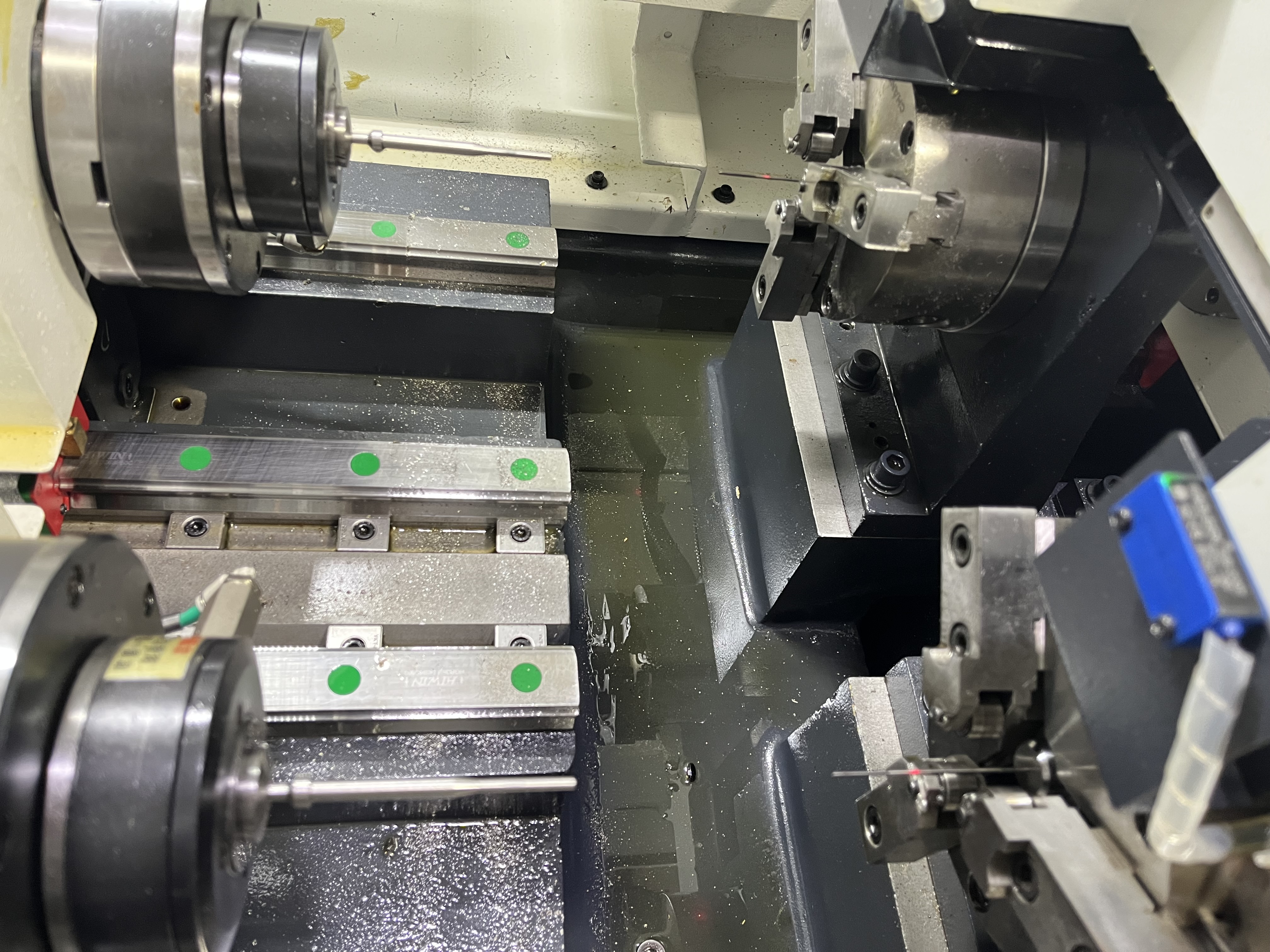
The Real Danger of High Pressure Coolant
High pressure coolant systems in deep hole drilling run at 1000-2000 psi. At those pressures, a pinhole leak creates a jet that cuts through skin like a scalpel. The entry wound looks small and harmless. The coolant carries bacteria and metal fines deep into the tissue, and the infection that follows is what causes permanent damage.
I have seen a maintenance technician get a coolant injection injury from a pinhole leak in a hose that looked perfectly sound. The leak was invisible at idle but opened up under full pressure. He needed two surgeries to clean out the infection. The hose had been in service for three years.
I treat every pressurized coolant component as a potential injury source. I do not let my hands or body get between a hose and its fitting while the system is pressurized.
Machine Guarding and Interlocks
The machine doors are the primary barrier against coolant injection. I keep them closed during the entire drilling cycle. An operator who opens the door to check chip formation while the machine is running risks a face full of coolant at 1500 psi.
I test the door interlock weekly. I try to start a cycle with the door open. If the machine starts, the interlock is faulty and I lock out the machine until it passes repair. I have found failed interlocks on two different machines over the past year.
| Component | Inspection Interval | Replacement Interval |
|---|---|---|
| Door interlocks | Weekly | As needed |
| Coolant hoses | Monthly | Every 2 years |
| Rotating union seals | Monthly | Annual |
| Pressure relief valve | Annually | Per manufacturer |
| Filter housing seals | Quarterly | As needed |
I do not allow zip ties, tape, or any temporary bypass of interlocks. I send operators home for bypassing safety equipment. The cycle time saved by an open door is not worth a permanent injury.
Hose and Fitting Inspection
Coolant hoses flex with machine movement and rub against metal edges. The rub points wear through the outer braid and eventually the inner tube. A hose fails without warning when it reaches that point.
| Condition | Action |
|---|---|
| Outer braid frayed | Replace immediately |
| Kinked or crushed | Replace immediately |
| Fittings leaking | Tighten or replace |
| Surface cracks | Replace |
| Normal appearance, 2+ years old | Replace on schedule |
I run my hands along every hose monthly and feel for flat spots, bulges, or soft sections. I replace all coolant hoses every two years regardless of appearance. The cost of the hose is nothing compared to the cost of an injury.
Rotating Union Maintenance
The rotating union transfers coolant from the stationary supply line to the rotating drill. The seal inside the union is the weakest link in the system. When it fails, coolant sprays in all directions at full pressure.
I replace rotating union seals on an annual schedule. The seal kit costs about $80 and takes 30 minutes to install. I have had unions fail at 11 months and 13 months, so the annual replacement catches them before failure.
Signs of a failing union include coolant dripping from the weep hole and a drop in coolant pressure at the tool tip. If I see either sign, I replace the seal immediately.
Pressure Relief Systems
Every high pressure coolant system needs a working pressure relief valve. The relief valve opens if the system pressure exceeds the safe limit. Without it, the weakest component in the system fails unexpectedly.
I test the pressure relief valve annually by isolating the system, building pressure, and verifying the valve opens at its rated pressure. I record the test date and result in the maintenance log.
The filter housing is another pressure hazard. The housing can trap pressure even after the pump is off. I always bleed the filter housing before opening it. I open the bleed valve slowly and stand to the side.
Personal Protective Equipment
PPE for high pressure coolant work includes:
- Safety glasses with side shields or a full face shield
- Coolant-resistant gloves for handling hoses and fittings
- Hearing protection for pump noise above 85 dB
- Waterproof apron for hose changing and maintenance
I wear a full face shield when connecting or disconnecting coolant lines. Safety glasses alone leave the rest of my face exposed. A face shield costs $15 and fits over prescription glasses.
Coolant System Maintenance Records
I keep a maintenance log for every high pressure coolant system. The log tracks hose replacements, seal changes, and relief valve tests. The records help me spot patterns and prevent failures.
| Component | Installation Date | Last Inspection | Next Replacement | Notes |
|---|---|---|---|---|
| Main coolant hose | 2024-01-15 | 2026-04-10 | 2026-01-15 (overdue) | Schedule replacement |
| Rotating union seal | 2025-06-01 | 2026-04-10 | 2026-06-01 | Annual replacement |
| Filter housing gasket | 2025-12-01 | 2026-04-10 | 2026-06-01 | Replace with next element change |
| Pressure relief valve | 2024-06-01 | 2026-03-15 (tested OK) | 2027-03-15 | Annual test required |
I use a digital spreadsheet shared with the maintenance team. Each technician updates the log when they replace or inspect a component. The log sends an email alert when a replacement date is approaching.
Training Requirements for Operators
Every operator who works near high pressure coolant needs specific training. I do not let new operators run a deep hole drilling machine until they complete the training program.
| Training Module | Duration | Topics |
|---|---|---|
| Coolant system basics | 2 hours | System components, pressure ranges, shutoff locations |
| Hose inspection | 1 hour | How to identify wear, what to look for, reporting procedure |
| LOTO procedure | 2 hours | Energy isolation, pressure bleed, verification |
| PPE requirements | 30 min | Proper use, inspection, replacement schedule |
| Emergency response | 1 hour | First aid for coolant injection, who to call, what to do |
I conduct the training annually with a written test. Operators who score below 80% retake the training before they can run the machine again.
Key Takeaways
High pressure coolant is the most dangerous aspect of deep hole drilling. I keep the doors closed, replace hoses on a two-year schedule, test interlocks weekly, and wear the right PPE. The injection injury that looks small on the outside can be career-ending on the inside. I do not cut corners on coolant safety.