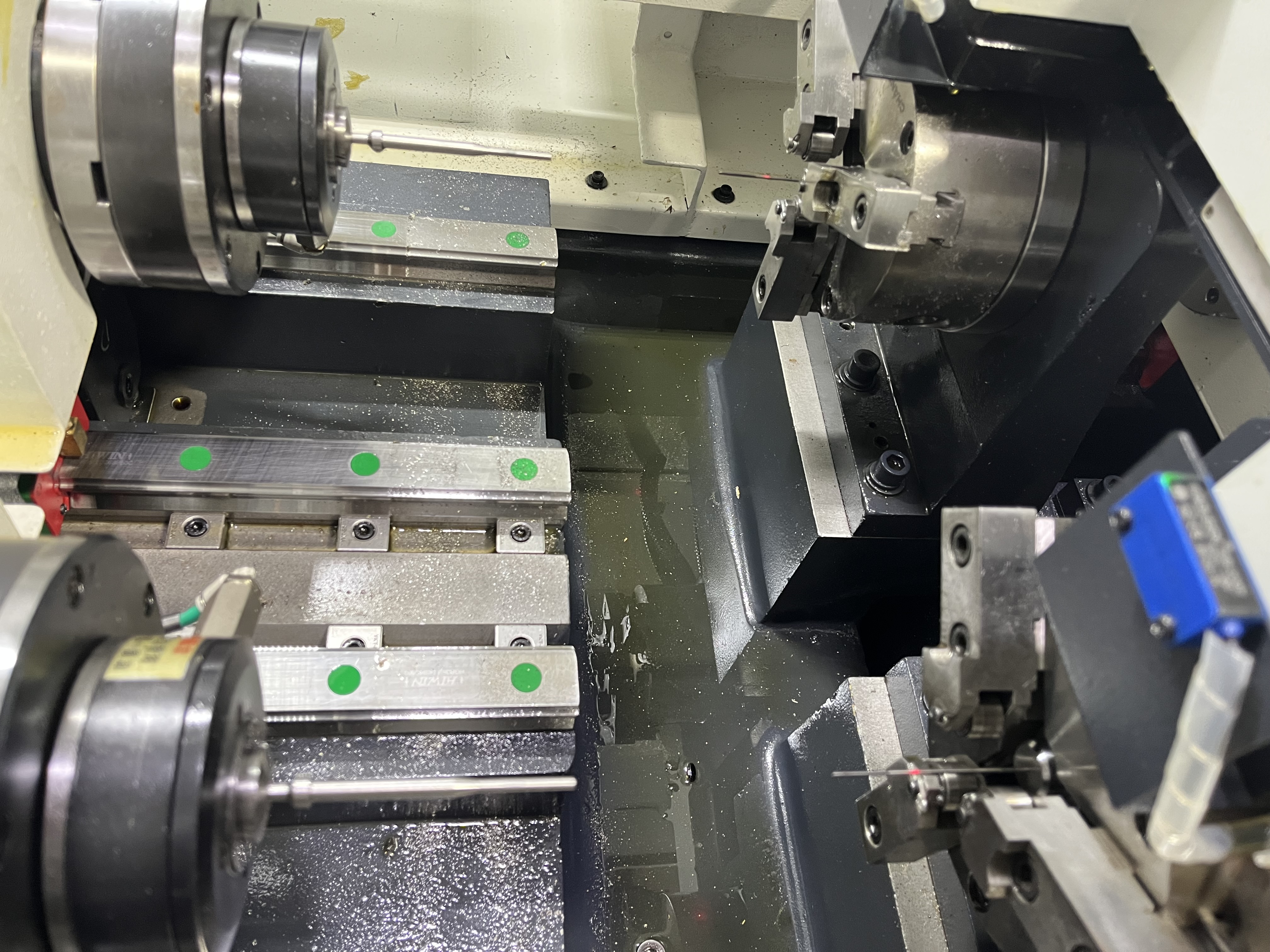
Most operators know to change speed and feed when switching materials. Fewer know that the gun drill geometry itself should change. Running an aluminum-optimized drill in cast iron will produce poor tool life and inconsistent hole quality.
Here is what changes and why.
How Material Properties Drive Geometry Decisions
Three material properties determine the optimal gun drill geometry:
Chip formation. Materials that produce long, stringy chips (aluminum, low-carbon steel) need geometry that encourages chip breaking. Materials that produce short, broken chips (cast iron, brass) can use geometry optimized for edge strength.
Abrasive vs adhesive wear. Cast iron wears tools by abrasion — the graphite and carbide particles erode the cutting edge. Aluminum wears tools by adhesion — material welds to the edge and pulls fragments away. The ideal geometry for resisting each wear type is different.
Cutting forces and friction. Softer materials generate less cutting force but more friction against the bore wall. Harder materials generate higher forces but less friction. The guide pad design must balance support against friction.
| Material | Chip Type | Dominant Wear | Friction Torque |
|---|---|---|---|
| Aluminum (6061, 7075) | Long, stringy | Adhesive (BUE) | ~10% of total torque |
| Low-carbon steel (1018) | Long, stringy | Adhesive + abrasive | ~15% of total torque |
| Medium-carbon steel (4140) | Short, broken | Abrasive | ~18% of total torque |
| Cast iron (gray, ductile) | Very short, powder | Abrasive | ~14% of total torque |
| Stainless steel (304) | Stringy, work-hardening | Adhesive + notch | ~20% of total torque |
The friction torque percentage comes from cutting force research. Aluminum produces the least friction against the bore wall. Stainless produces the most. This directly affects how many guide pads the drill should have and how much burnishing they should do.
Point Angle Selection by Material
The point angle determines how the cutting edge engages the material. A wider angle (135-140 degrees) spreads the cutting force and produces a smoother finish. A narrower angle (110-120 degrees) penetrates faster but leaves a rougher surface.
| Material | Recommended Point Angle | Reason |
|---|---|---|
| Aluminum | 130-135 degrees | Balances edge sharpness with strength. Aluminum needs a sharp edge to cut cleanly without BUE. |
| Medium-carbon steel | 135-140 degrees | Wider angle spreads force and reduces edge pressure. Steel is strong enough to cut cleanly at this angle. |
| Cast iron (gray) | 120-130 degrees | Narrower angle strengthens the edge against abrasive wear. Cast iron chips break easily so the narrower angle does not cause chip problems. |
| Stainless steel | 130-140 degrees | Wider angle reduces notching at the depth-of-cut line. |
| Brass/bronze | 110-120 degrees | Narrow angle prevents grabbing. Soft brasses need a sharp, narrow point. |
I cover point angle measurement in Gun Drill Geometry Guide.
Guide Pad Design Changes by Material
The guide pads support the drill in the bore and burnish the surface. The number of pads and their material depend on the workpiece material.
Aluminum and non-ferrous materials benefit from a three-pad design. The additional pad provides more burnishing action, which improves surface finish. Aluminum’s low friction coefficient (10% of torque) means the extra pad does not cause excessive heat.
Steel typically uses a two-pad design. Steel’s higher friction generates more heat, and a third pad adds unnecessary drag. Two pads provide adequate support for most applications.
Cast iron also uses a two-pad design, but the pad material should be carbide rather than HSS. Cast iron’s abrasiveness wears steel pads quickly. Carbide pads last 3-5x longer in cast iron.
Coating Selection by Material
The coating reduces friction at the cutting edge and protects against the dominant wear mechanism:
| Material | Best Coating | Why |
|---|---|---|
| Aluminum | DLC (diamond-like carbon) | Lowest friction coefficient. Prevents aluminum from welding to the cutting edge. |
| Steel (general) | TiAlN | High hot hardness. Resists abrasive wear at the cutting edge. |
| Cast iron | TiAlN or AlCrN | Abrasion resistance. Coatings with high hardness protect against graphite erosion. |
| Stainless steel | AlCrN | Higher oxidation resistance than TiAlN. Resists notch wear at the depth-of-cut line. |
I cover coating selection in more detail in Gun Drill Coatings.
Clearance Angle Adjustments
The clearance angle behind the cutting edge must be large enough to prevent rubbing but small enough to maintain edge strength.
| Material | Primary Clearance | Secondary Clearance |
|---|---|---|
| Aluminum | 12-15 degrees | 20-25 degrees |
| Steel | 8-12 degrees | 15-20 degrees |
| Cast iron | 6-10 degrees | 12-18 degrees |
| Stainless | 8-12 degrees | 15-20 degrees |
Aluminum needs larger clearance angles because the soft material springs back behind the cutting edge. If the clearance is too small, the flank rubs against the workpiece and generates heat that promotes BUE.
Cast iron needs smaller clearance angles because the material is abrasive. A larger clearance angle exposes more of the flank to wear. The smaller angle protects the edge.
Practical Example: Switching from Steel to Aluminum
If you have been running 4140 steel with a standard 135-degree gun drill with TiAlN coating and two guide pads, and you switch to 6061 aluminum, here is what should change:
| Feature | Steel Setup | Aluminum Setup |
|---|---|---|
| Point angle | 135 degrees | 130 degrees |
| Coating | TiAlN | DLC |
| Guide pads | 2, HSS | 3, HSS |
| Primary clearance | 10 degrees | 14 degrees |
| Expected feed | 0.025 mm/rev | 0.035 mm/rev |
The aluminum-optimized drill will produce better surface finish and longer tool life in aluminum. The steel-optimized drill will still cut aluminum, but BUE will develop faster and the surface finish will be inconsistent.
Key Takeaways
- Point angle, clearance angle, guide pad count, and coating should all change with material — not just speed and feed.
- Cast iron needs abrasion-resistant geometry: narrower point angle, two carbide guide pads, TiAlN coating, smaller clearance angles.
- Aluminum needs adhesion-resistant geometry: DLC coating, three pads for burnishing, larger clearance angles to prevent rubbing.
- Steel is in the middle — standard 135-degree point, TiAlN coating, two pads, moderate clearance angles work for most applications.
- The difference in friction torque between materials (10% for aluminum vs 20% for stainless) directly affects how many guide pads and how much clearance angle the drill should have.