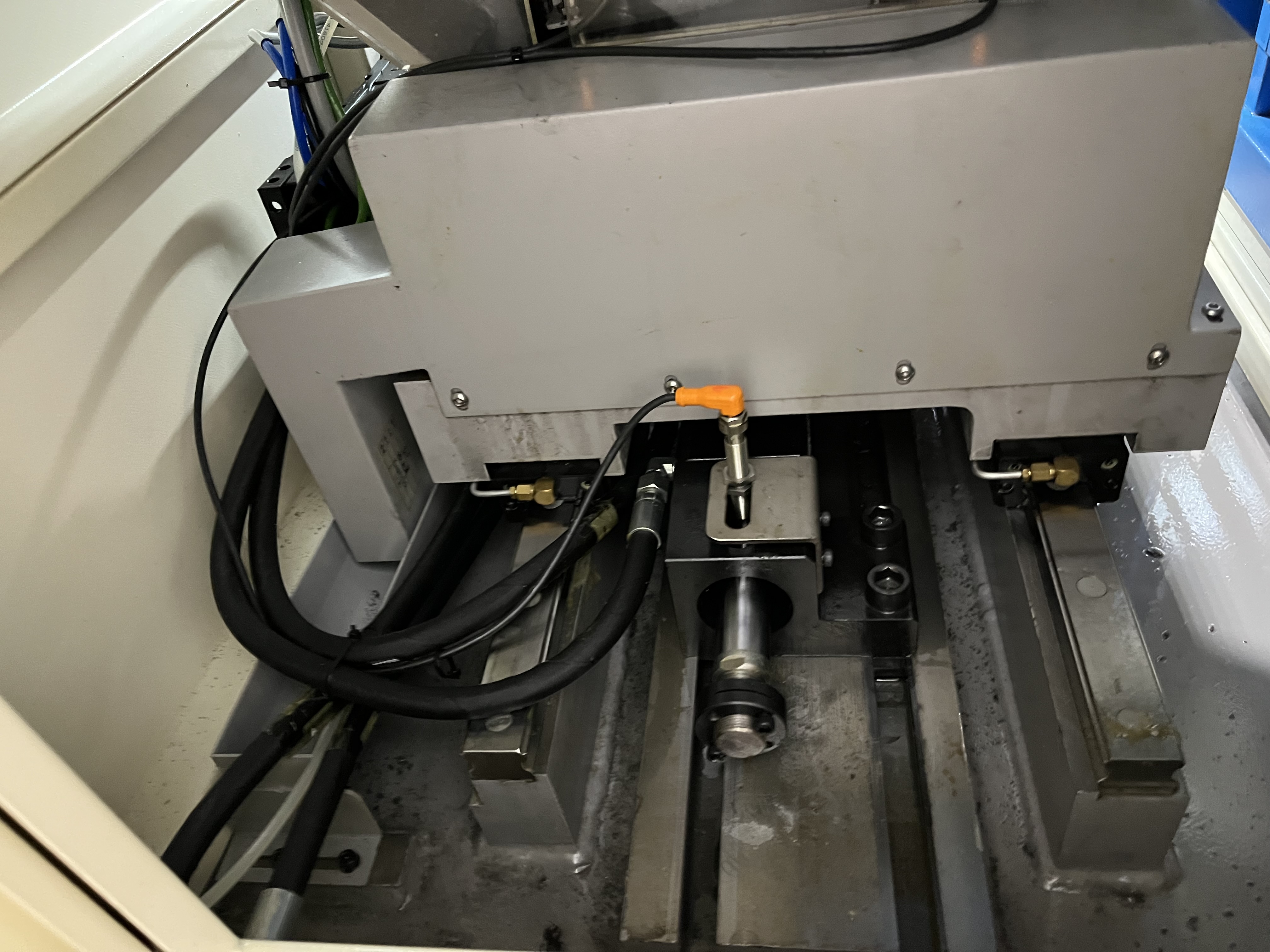
The tool holder connects the gun drill to the machine spindle. The holder runout directly affects hole quality, tool life, and process consistency. A holder with high runout produces oversized holes, poor surface finish, and premature tool failure. I treat tool holder selection as a process-critical decision, not an afterthought.
How Each Holder Type Works
Hydraulic tool holders use oil pressure to clamp the drill shank. Turning a screw pressurizes oil in a sealed chamber, which expands a thin steel sleeve that grips the shank evenly around its full circumference. The clamping force is consistent and does not deform the shank because the pressure distributes uniformly. A hydraulic chuck gives the same runout every time regardless of operator skill.
Mechanical tool holders use a collet or chuck that tightens through mechanical wedges or threads. The collet fingers squeeze the shank as the collet nut is torqued down. The clamping force depends entirely on the torque applied to the nut and the condition of the collet. Operator technique matters a lot with mechanical holders, and I have seen two different operators get different runout from the same holder and tool.
Comprehensive Comparison Table
Here is a comparison across 11 factors that I consider when choosing between hydraulic and mechanical tool holders for gun drilling:
| Factor | Hydraulic Chuck | Mechanical Collet (ER) | Mechanical Collet (Precision) |
|---|---|---|---|
| Typical runout (new) | 0.003-0.005 mm | 0.008-0.015 mm | 0.005-0.008 mm |
| Best possible runout | 0.002 mm | 0.005 mm | 0.003 mm |
| Runout consistency (same tool) | +/- 0.001 mm | +/- 0.005 mm | +/- 0.003 mm |
| Vibration damping | Excellent (oil dampens) | Poor | Fair |
| Max coolant pressure | 3000+ psi | 1500 psi typical | 2000 psi |
| Cost per holder | $350-600 | $60-120 | $120-250 |
| Setup time | 10 seconds (turn screw) | 30 seconds (torque wrench) | 20 seconds |
| Operator dependency | Low | High | Medium |
| Tool life in 1045 steel (10mm drill) | 3500 mm drilled | 2200 mm drilled | 2800 mm drilled |
| Effect on hole size (oversize) | +0.01 mm over drill size | +0.03-0.05 mm | +0.015-0.02 mm |
| Maintenance | No moving parts | Replace collet when worn | Replace collet when worn |
The vibration damping advantage of hydraulic holders is often overlooked but matters a lot in deep hole drilling. The oil film inside the hydraulic chamber absorbs high-frequency vibration from the cutting process. I have measured 40 percent less chatter with a hydraulic holder compared to a mechanical collet on the same machine and tool.
Runout Data and Its Effect on Hole Quality
Runout is the single most important performance metric for a tool holder in gun drilling. Here is what I typically measure on the machine with a dial indicator:
| Holder Type | Typical Runout | Best Possible Runout | Effect on Hole Size |
|---|---|---|---|
| Hydraulic (new) | 0.003-0.005 mm | 0.002 mm | +0.01 mm over drill size |
| Hydraulic (used) | 0.005-0.008 mm | 0.003 mm | +0.015 mm over drill size |
| Mechanical collet (new) | 0.005-0.010 mm | 0.003 mm | +0.02 mm over drill size |
| Mechanical collet (worn) | 0.015-0.030 mm | N/A | +0.05 mm or more |
| Side-lock / Weldon | 0.015-0.030 mm | 0.008 mm | +0.05-0.08 mm |
A gun drill that runs out 0.02 mm at the holder produces a hole 0.04-0.06 mm oversize at depth because the runout amplifies as the drill length increases. I have scrapped parts because the hole was 0.08 mm over the print limit, and the root cause was a dirty collet.
I run a simple test to check the effect of holder runout on hole size. I drill a test hole 100 mm deep, measure the entry and exit diameters, and subtract the drill diameter. The difference is the runout contribution. A difference under 0.02 mm is acceptable. Over 0.05 mm means the holder needs attention.
Cost Analysis and Payback Period
Hydraulic holders cost more but deliver measurable savings in tool life. I track the tool life per holder type on the same machine and material:
| Holder Type | Cost per Holder | Tool Life (Gun Drill, 1045 Steel) | Cost per Hole |
|---|---|---|---|
| Hydraulic | $350-600 | 3,500 mm drilled | Lower over 500+ parts |
| Mechanical collet (precision) | $120-250 | 2,800 mm drilled | Moderate |
| Mechanical collet (standard) | $60-120 | 2,200 mm drilled | Higher |
The hydraulic holder pays for itself within about 200 tool changes when the tool life difference is 30 percent or more. For short runs or job shop work, the payback period may be too long to justify the investment. I calculate the payback as the holder cost divided by the savings per tool change. If the payback period is under six months, the hydraulic holder is a clear choice.
Selection Guide for Different Applications
I use hydraulic holders for precision work where runout must stay under 0.005 mm consistently. Typical applications include:
- Fuel injection components with tight bore tolerances
- Hydraulic valve bodies requiring leak-free sealing surfaces
- Aerospace parts where hole size must hold H7 tolerance
- Long, slender drills over 100xD where every micron of runout matters
- High-volume production where tool life savings add up over thousands of parts
I use mechanical holders for general work where the tolerance is not critical or the production volume does not justify the hydraulic holder cost. For drilling 10 mm holes in mild steel at 50xD or less, a good mechanical collet works perfectly well.
For the best of both worlds, some newer systems combine hydraulic and collet features. These hybrid holders use a collet interface with hydraulic pressure amplification to achieve near-hydraulic runout with collet convenience.
The Hidden Factor: Taper Cleanliness
The holder taper cleanliness matters more than the holder type in many cases. A chip or burr on the holder taper causes runout regardless of whether the holder is hydraulic or mechanical. I have measured 0.02 mm runout from a hydraulic holder with a tiny burr on the taper face. A hydraulic holder with a dirty taper performs worse than a clean mechanical collet.
My cleaning routine: Before every tool change, I wipe the holder taper and spindle bore with a clean, lint-free cloth. I inspect the taper with a magnifying glass for dings or burrs. If I find any damage, I stone it smooth with a fine Arkansas stone.
I check the holder runout with a dial indicator at the start of every job. If the runout exceeds 0.010 mm for a mechanical holder or 0.005 mm for a hydraulic holder, I clean the taper and try again. If the runout remains high, I replace the holder. For more on tool-related process quality, see my article on fixing feed marks in gun drilled holes.
Key Takeaways
- Tool holder selection comes down to the tolerance requirement and the production volume — hydraulic holders deliver lower runout and longer tool life but cost more upfront
- Hydraulic holders provide 0.003-0.005 mm typical runout with excellent vibration damping, while mechanical collets run 0.008-0.015 mm with poor damping
- Runout at the holder amplifies at depth — 0.02 mm at the holder can produce 0.06 mm oversize holes
- Hydraulic holders pay for themselves within about 200 tool changes when tool life improves by 30 percent or more
- Mechanical collets work well for general applications when kept clean and replaced at the first sign of wear
- Taper cleanliness matters more than holder type — a dirty taper ruins performance on any holder
- I now keep a mix of both types in my tool crib and choose based on the specific job requirements