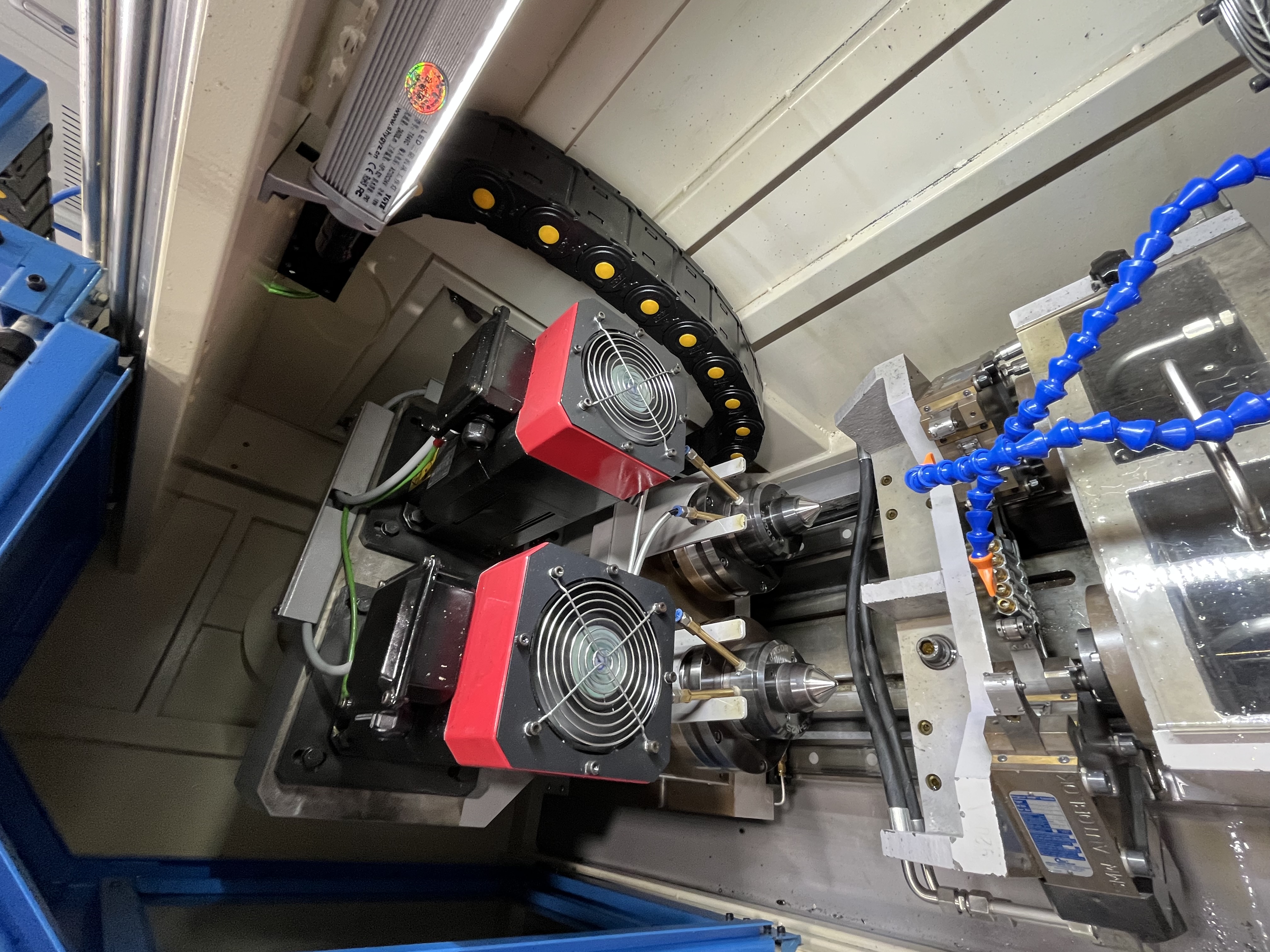
Inconel 718 is a nickel-based superalloy used in aerospace and power generation components. It retains its strength at high temperatures but is extremely difficult to machine. The material work-hardens rapidly and retains heat at the cutting edge.
I have drilled hundreds of holes in Inconel 718 across multiple jobs. Every one was a battle against heat, work-hardening, and tool wear. Here is what works for me.
Cutting Parameters for Inconel 718
The cutting speed is the single most critical parameter. Above 25 m/min, the edge degrades rapidly from heat. Below 15 m/min, the tool rubs instead of cutting and work-hardens the surface. I start at 20 m/min and adjust based on tool life.
For a 10mm hole at 20 m/min:
- RPM = 20 x 1000 / (Pi x 10) = 637 RPM
The feed rate must be high enough to cut but low enough to avoid edge chipping. I start at 0.012 mm/rev and watch the chip formation. Short, broken chips indicate good cutting. Fine powder tells me the feed is too low and the tool is rubbing.
Here are the parameters I use for different diameters:
| Diameter (mm) | Cutting Speed (m/min) | Feed (mm/rev) | RPM | Coolant Pressure (psi) | Expected Tool Life (m) | Chip Type Expected |
|---|---|---|---|---|---|---|
| 4 | 15-18 | 0.008 | 1190-1430 | 2500-3000 | 0.3-0.5 | Fine chips |
| 6 | 18-20 | 0.010 | 955-1060 | 2500-3000 | 0.5-0.8 | Short broken |
| 8 | 18-22 | 0.012 | 716-875 | 2400-2800 | 0.8-1.2 | Short broken |
| 10 | 18-22 | 0.012 | 573-700 | 2200-2800 | 1.0-1.5 | Short broken |
| 12 | 20-25 | 0.014 | 531-663 | 2200-2600 | 1.2-1.8 | Short broken |
| 15 | 20-25 | 0.015 | 424-531 | 2000-2500 | 1.5-2.0 | Short broken |
| 20 | 20-25 | 0.015 | 318-398 | 2000-2500 | 1.5-2.5 | Short broken |
| 25 | 20-25 | 0.018 | 255-318 | 1800-2200 | 2.0-3.0 | Short broken |
The smaller diameters need lower speeds because heat builds up faster in a confined space. I have broken more 4mm drills in Inconel than all other sizes combined. The tool life at 4mm is less than half a meter, which means I change tools every few holes on a long production run.
For depths beyond 100x diameter, I reduce the cutting speed by an additional 15 percent. The friction from the guide pads and the reduced coolant effectiveness at depth both contribute to faster tool wear. At 200x diameter, I expect tool life to be about 60 percent of what I get at 50x diameter.
Tool Selection and Coatings
I use AlTiN-coated micrograin carbide tools for Inconel 718. The coating provides thermal protection and reduces friction at the cutting edge. The micrograin carbide gives the edge toughness to handle the interrupted cut from the gun drill’s single cutting edge.
Recent advances in coating technology have introduced AlCrN and AlTiN+AlCrN multilayer coatings that extend tool life by up to 22 percent in Inconel compared to standard AlTiN. I have tested these coatings on production runs and confirmed the improvement. The multilayer coating provides a harder surface and better thermal stability at the cutting edge.
For high-volume production, PCBN-tipped gun drills are worth considering. Research published in the Journal of Manufacturing Processes shows that PCBN gun drills can operate at cutting speeds above 50 m/min in Inconel 718, which is more than double the speed of carbide tools. The trade-off is higher tool cost — PCBN-tipped drills cost 3-5 times more than carbide — and longer lead times for custom sizes. I use PCBN only for production runs above 500 holes where the cycle time savings offset the tooling cost.
Tool life is about 1-2 meters of drilling per edge in Inconel 718. I change tools on a set schedule based on hole count. Pushing the tool to failure causes work-hardening that damages the next tool and can scrap the part.
I change tools at 0.5 meters for diameters under 6mm. For larger diameters, I change at 1.5 meters or sooner if the load increases. The regrind quality matters immensely — a poorly reground tool lasts half as long as a new one.
I track tool life by serial number. If a tool consistently underperforms, I send it back to the regrind supplier. A tool that should last 1.5 meters but only gets 0.8 meters usually has a regrind geometry problem — the cutting edge angle or relief is wrong for Inconel.
Coolant Strategy
Coolant pressure at the high end is essential in Inconel. I run the pump at maximum pressure and check the pressure at the tool tip before starting. The pressure drop through a small-diameter gun drill in Inconel is significant — often 500-800 psi from pump to tip.
I use straight oil coolant for Inconel. Oil has better lubricity than emulsion and reduces the friction heat at the cutting edge. The oil also provides better chip evacuation because the chips slide more easily through the flute. Research indicates that high-pressure oil at 1000-1500 psi is the minimum effective range for small-diameter Inconel holes, and I prefer to run 2500-3000 psi for consistent results.
I check the coolant concentration weekly and the coolant temperature daily. Inconel generates so much heat that the coolant temperature can rise 10-15 degrees C during a long run. I use a coolant chiller to keep the temperature below 45 degrees C. Above 50 degrees C, the oil viscosity drops and the lubricity decreases, which accelerates tool wear.
Cryogenic cooling using liquid nitrogen is an emerging approach that shows promise for Inconel. Studies have demonstrated extended tool life and improved chip breakability with LN2 cooling. In my shop, I have not adopted cryogenic cooling yet because of the infrastructure cost, but I am watching the technology for future investment.
Common Problems and Solutions
Chip packing is the most common problem I see in Inconel deep hole drilling. The chips are tough and stringy, and they pack in the flute if the coolant pressure drops even slightly. I monitor the coolant pressure continuously during the cut. If I see a pressure drop of more than 200 psi, I retract the tool and check for chip packing.
Work-hardening at the entry happens when the tool dwells on the surface before starting the feed. I program a 0.5-second delay between spindle start and feed start to allow the spindle to reach full speed, but I never let the tool dwell on the surface with zero feed.
Tool edge chipping at the exit occurs when the drill breaks through the far side of the part. The sudden change in cutting forces chips the edge. I reduce the feed by 30 percent for the last 2 mm of the hole to minimize exit burr and edge damage.
Guide pad galling happens when the coolant breaks down or the pressure drops. The guide pads weld to the bore surface and create a rough finish. I inspect the guide pads after every 50 holes and replace the tool if I see galling marks.
Avoiding Work-Hardening
Inconel 718 work-hardens instantly if the tool dwells on the surface. I keep the tool advancing steadily with no pauses during the cut. A pause of even 0.5 seconds can create a hard spot that destroys the cutting edge.
I program a continuous feed from start to finish with no feed hold allowed. The operator can only stop the spindle in an emergency. Normal peck cycles are fine because the tool retracts cleanly — it is the partial retract and re-entry that causes problems.
If the machine stops unexpectedly during an Inconel cut, I retract the tool completely and inspect the cutting edge. A tool that dwelled in the cut is almost always damaged and needs replacement.
For more on work-hardening management, see my guide on deep hole drilling in difficult materials, which covers stainless and titanium in addition to Inconel.
Key Takeaways
- Start at 18-22 m/min cutting speed for most diameters in Inconel 718; reduce by 15% for depths beyond 100x diameter.
- Use AlTiN-coated micrograin carbide tooling; consider AlCrN multilayer coatings for 22% longer tool life.
- PCBN-tipped gun drills can operate at 50+ m/min but cost 3-5x more — evaluate for runs above 500 holes.
- Change tools at 0.5-1.5 meters of drilling, before failure — track by serial number to catch regrind issues.
- Run coolant at 2500-3000 psi with straight oil; the pressure drop through small-diameter drills is 500-800 psi.
- Use a coolant chiller to keep temperature below 45 degrees C; above 50 degrees C oil viscosity drops.
- Watch for chip packing, work-hardening at entry, edge chipping at exit, and guide pad galling.
- Never let the tool dwell on the surface — program continuous feed from start to finish.
- Track tool life by serial number to catch regrind quality issues.
- For more on related materials, see my guide on drilling Waspaloy and Rene 41 and deep hole drilling in difficult materials.