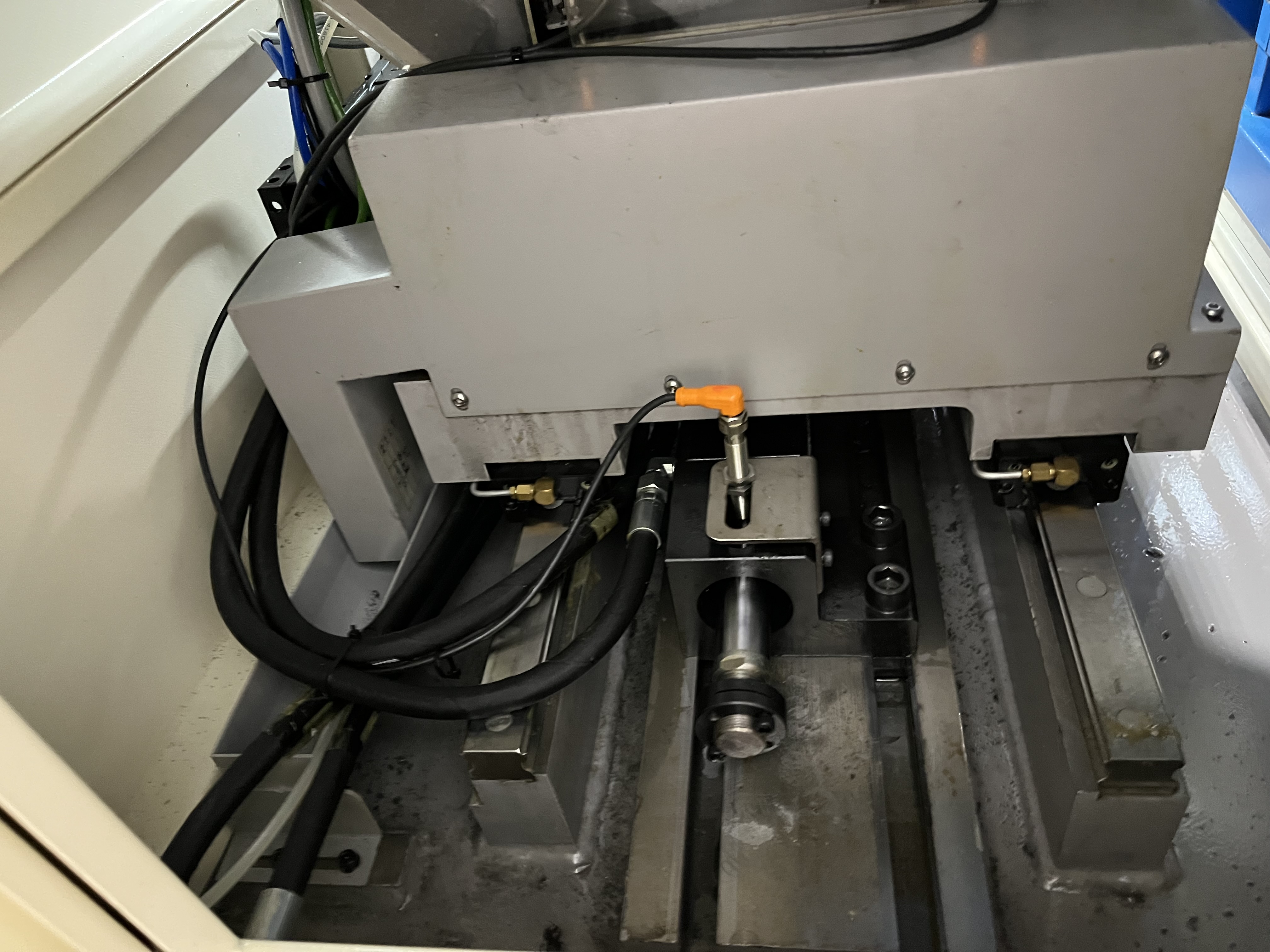
Why LOTO Is Critical on Deep Hole Drills
Lockout/tagout is standard safety on any machine tool. Deep hole drilling machines add two hazards that make LOTO especially critical: trapped high-pressure coolant and separately-powered coolant pumps.
A deep hole machine can hold 500-1000 psi of residual coolant pressure after the pump shuts off. The pressure is trapped in the filter housing, the rotating union, and the supply lines. Opening a fitting without bleeding the pressure first releases a jet of coolant that can inject through skin.
The machine coolant pump is often on a separate electrical circuit from the main machine disconnect. I have seen machines where the coolant pump breaker was behind the machine in a panel that nobody labeled. The operator locked out the main disconnect but the coolant pump was still live.
My LOTO Procedure Step by Step
I follow the same six steps every time I work on a deep hole drilling machine.
Step 1: Notify all affected operators that the machine is being taken out of service for maintenance. I tell them when it will be back online.
Step 2: Shut down the machine using the normal stop procedure. I let the spindle stop completely and the coolant pump cycle down.
Step 3: Identify all energy sources. This includes the main electrical disconnect, the coolant pump breaker, the hydraulic power unit, the chip conveyor motor, and the pneumatic system.
| Energy Source | Location | Lock Required |
|---|---|---|
| Main electrical disconnect | Machine electrical panel | Yes |
| Coolant pump breaker | Separate panel or machine panel | Yes |
| Hydraulic power unit | Usually machine base | Yes |
| Chip conveyor motor | Conveyor drive end | Yes |
| Pneumatic supply | Machine air inlet | Yes |
| Coolant trapped pressure | Filter housing bleeder | Bleed, not lock |
Step 4: Lock out each energy source with a personal padlock. I put my lock on the main disconnect handle, another lock on the coolant pump breaker, and locks on any other energy sources. Each lock has my name and the date on the tag.
Step 5: Tag out each locked point. The tag says “DO NOT OPERATE” with my name, the date, and my contact extension.
Step 6: Verify energy isolation. I try to start the machine by pressing the start button. It should not start. I open the coolant filter bleed valve and check that no pressurized coolant comes out.
The Trapped Pressure Problem
The coolant system in a deep hole drilling machine holds pressure in several places after the pump stops. The filter housing is the most common pressurized reservoir.
I always bleed the pressure at the filter housing before opening any coolant line. I open the bleed valve slowly and stand to the side. If liquid comes out at pressure, I wait until the flow stops completely before proceeding.
The rotating union can also hold pressure. The union is between the stationary coolant supply and the rotating drill shank. When the pump stops, the union seal traps pressure on the drill side. I relieve this by retracting the drill a few millimeters, which opens the seal and releases the pressure.
| Component | Trapped Pressure After Shutdown | Bleed Method |
|---|---|---|
| Filter housing | 500-1000 psi | Bleed valve at housing top |
| Coolant lines | 200-500 psi | Open union or disconnect |
| Rotating union | Up to full system pressure | Retract drill 2mm |
| Accumulator (if equipped) | Up to 2000 psi | Accumulator bleed valve |
Multiple Energy Sources
I have found coolant pumps wired to separate breakers more often than I expected. In one shop, the coolant pump for a gun drilling machine was on the same circuit as a nearby CNC lathe. The operator locked out the gun drill but the pump stayed live because the lathe was still running.
| Energy Isolation Point | What It Controls |
|---|---|
| Main disconnect | Spindle, axes, controls, all machine systems |
| Coolant pump breaker | Coolant pump only |
| Hydraulic pump breaker | Hydraulic system (fixtures, tailstock) |
| Chip conveyor breaker | Conveyor drive motor |
| Air shutoff valve | Pneumatic clamps, seals, air blast |
I check the electrical schematic before starting any maintenance on a machine I have not worked on before. The schematic shows all the breakers and what they feed. I trace the coolant pump circuit specifically because it is the most commonly miswired system.
When Multiple Technicians Are Working
When two or more technicians work on the same machine, each one applies their own lock and tag. A technician who finishes their work removes their lock only. The machine stays locked until all locks are removed.
I use a hasp that accepts up to six padlocks on each lockout point. The hasp goes through the disconnect handle, and each technician clips their lock onto the hasp. The machine cannot be re-energized until all technicians remove their locks.
Verifying the Machine Is Safe to Restart
Before I remove my lock, I check that:
- All tools and equipment are removed from the machine
- All guards are back in place
- All coolant lines are reconnected and tightened
- All bleed valves are closed
- The machine interior is clear
I remove my lock, close the panel, and start the machine. I run the coolant pump and check for leaks at every fitting I opened. If any fitting drips, I lock out again and tighten it.
Key Takeaways
Lockout/tagout on deep hole drilling machines is not the same as LOTO on standard machine tools. The trapped coolant pressure and separately-powered pumps are hazards that require extra steps. I bleed the pressure, lock out every energy source, and verify isolation before I put my hands on the machine. The extra five minutes of LOTO saves a lifetime of injury.