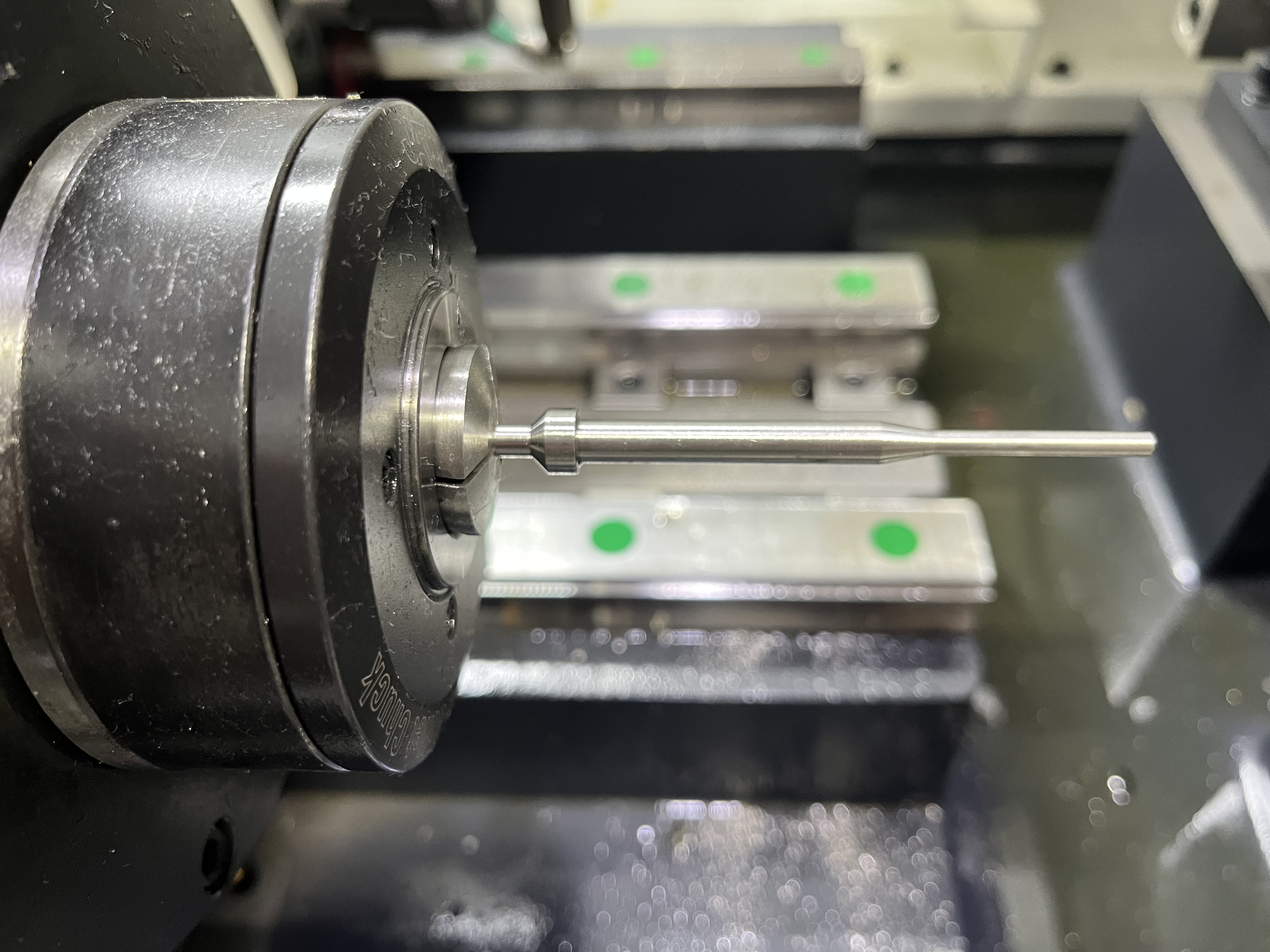
The Pilot Hole Is the Foundation
A gun drill has a single cutting edge offset from the centerline. It does not self-center like a twist drill. The pilot hole is the only thing keeping the gun drill tip in position during the first critical millimeters of engagement.
I have tested gun drilling with and without a proper pilot hole on the same material. Without a pilot hole, the gun drill wandered 0.15mm off-center in the first 10mm of drilling. With a properly sized pilot, the same drill stayed within 0.02mm of the centerline for the entire hole.
The pilot hole provides three functions:
- Guides the drill tip at entry
- Seals the coolant around the drill shank
- Supports the drill bushing exit face
Pilot Depth Rules
The standard rule I follow is 2-3 times the gun drill diameter for pilot depth. A 10mm gun drill gets a 20-30mm deep pilot.
| Gun Drill Diameter | Pilot Depth (2x) | Pilot Depth (3x) | Recommended |
|---|---|---|---|
| 5mm | 10mm | 15mm | 12mm |
| 8mm | 16mm | 24mm | 20mm |
| 10mm | 20mm | 30mm | 25mm |
| 12mm | 24mm | 36mm | 30mm |
| 16mm | 32mm | 48mm | 40mm |
| 20mm | 40mm | 60mm | 50mm |
A pilot shallower than 1.5x the drill diameter does not provide enough bearing surface. I see the drill tip start to wobble on entry and the hole opens up 0.05-0.10mm oversized.
A pilot deeper than 4x the drill diameter adds cycle time with no benefit. The extra depth does not improve guidance beyond 3x.
Pilot Diameter Tolerances
The pilot diameter must match the gun drill diameter within 0.05mm. This is a tight tolerance for a drilled hole, but it is essential.
| Pilot vs Gun Drill Fit | Diameter Difference | Result |
|---|---|---|
| Light interference | 0.01-0.03mm smaller | Best guidance, centers drill firmly |
| Close sliding fit | 0.00-0.02mm smaller | Good guidance |
| Loose fit | 0.03-0.10mm larger | Wobble, oversize entry |
| Oversized | 0.10mm+ larger | Scrap hole from start |
| Undersized | 0.05mm+ smaller | Chips drill edge |
I aim for 0.01-0.03mm interference. The gun drill pushes into the pilot with light pressure, centers itself, and starts cutting concentric with the pilot.
I use a carbide reamer to achieve this tolerance on critical jobs. The reamer produces a consistent diameter within 0.01mm of the target. For less critical jobs, a good carbide drill produces acceptable accuracy.
Coolant Seal at the Pilot
The pilot hole also serves as a coolant seal. When the gun drill enters the pilot, the close fit forces the high-pressure coolant to flow through the drill’s coolant hole and out the cutting tip rather than leaking back out of the bore entrance.
A loose pilot fit leaks coolant out of the entry. The pressure at the cutting tip drops, chip evacuation suffers, and the drill runs hotter. I have measured a 15-20% pressure drop at the tip with a pilot that was 0.10mm oversized.
| Pilot-to-Drill Gap | Coolant Leakage | Pressure at Tip (1000 psi system) |
|---|---|---|
| 0.01mm | Minimal | 950 psi |
| 0.03mm | Low | 900 psi |
| 0.05mm | Moderate | 850 psi |
| 0.10mm | High | 750 psi |
| 0.15mm+ | Severe | 600 psi |
The pressure drop affects chip evacuation more than it affects cutting. If I see long stringy chips coming out of a hole that normally produces short chips, I check the pilot fit first.
Drilling the Pilot in the Same Setup
The pilot must be concentric with the spindle axis. The best way to guarantee this is to drill the pilot in the same machine setup as the gun drilling. If I move the part between the pilot operation and the gun drilling operation, the concentricity is lost.
I use the same workholding fixture for both operations. The part stays clamped in the fixture from pilot drilling through gun drilling completion.
| Setup Method | Concentricity Achievable | Risk |
|---|---|---|
| Same machine, same fixture | 0.01-0.02mm | Low |
| Same machine, re-fixtured | 0.03-0.10mm | Medium |
| Different machine | 0.05-0.20mm+ | High |
| Manual layout and drill | 0.10-0.30mm+ | Very high |
For the pilot drill itself, I use a stub-length carbide drill. The short length minimizes deflection and keeps the pilot straight. A typical pilot drill is 3-4 diameters long.
The Pilot Bushing
On machines with a drill bushing, the bushing sits at the entry face of the pilot hole. The bushing supports the gun drill shank as it passes through and provides additional guidance.
The bushing bore should match the gun drill shank diameter within 0.01-0.02mm. A worn bushing with 0.05mm+ clearance allows the drill to move and produces an oversize hole.
I check the bushing bore with a plug gauge every 500 holes on production jobs. When the plug gauge starts to fit loosely, I replace the bushing.
When I Skip the Pilot Hole
There are two cases where I drill without a pilot hole:
- Very small diameters under 3mm where the pilot drill would be too fragile
- Soft materials like brass or plastic where the gun drill self-centers adequately
Even in these cases, I use a center drill to create a starting chamfer. The chamfer gives the gun drill tip a starting seat and prevents it from skating across the surface.
Key Takeaways
The pilot hole is the most important setup step in gun drilling. I drill it 2-3 diameters deep, match the diameter within 0.05mm, and keep the part in the same fixture for both operations. The pilot guides the drill, seals the coolant, and determines the straightness of the entire hole. Skipping or rushing the pilot hole is the fastest way to scrap a deep hole job.