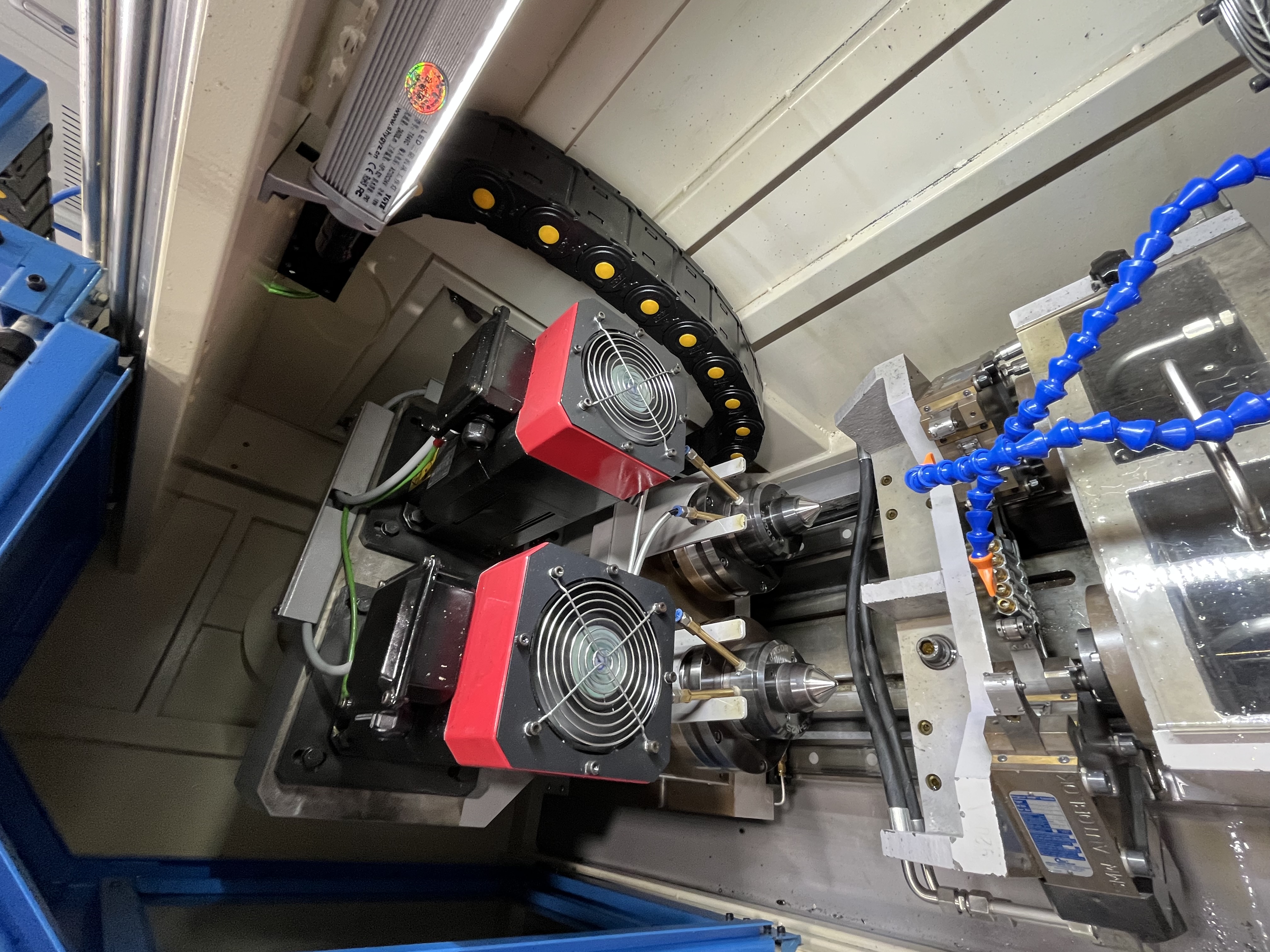
Through-tool coolant delivers coolant through the center of the drill directly to the cutting edge. Flood coolant sprays coolant over the outside of the drill and relies on flow to reach the cutting zone. In deep hole drilling, the choice between these two methods determines whether the process succeeds or fails.
How Through-Tool Coolant Works
For gun drilling, through-tool coolant is essential. Coolant enters through a rotating union at the spindle, travels down the center of the gun drill tube, and exits at the cutting edge. The coolant cools the cutting edge and then flushes chips back along the external flute of the drill.
Through-tool coolant requires a high-pressure system. For gun drilling, I typically run 1,000-2,000 psi depending on the application. The rotating union must seal against this pressure while the spindle rotates at several thousand RPM.
| Coolant Method | Pressure Range | Flow Rate | Primary Function |
|---|---|---|---|
| Through-tool (gun drill) | 1,000-2,000 psi | 10-40 L/min | Chip evacuation + cooling |
| Through-tool (BTA) | 200-600 psi | 100-400 L/min | Chip transport + cooling |
| Flood coolant | 30-200 psi | 50-150 L/min | Cooling |
| Through-tool (ejector) | 400-1,000 psi | 80-200 L/min | Chip evacuation via venturi |
How Flood Coolant Works
Flood coolant relies on volume rather than pressure. A standard centrifugal pump delivers 30-200 psi of coolant through a nozzle aimed at the cutting zone. The coolant covers the tool and workpiece but has limited ability to penetrate deep holes.
Flood coolant works well for shallow holes under 5:1 L/D where chip evacuation is not dependent on coolant pressure. The chips can escape on their own or through mechanical chip breaking.
I use flood coolant for conventional drilling, reaming, and counterboring operations where the hole depth is less than three times the diameter. For anything deeper, I switch to through-tool delivery.
The Key Difference: Chip Evacuation
The main function of coolant in deep hole drilling is chip evacuation. Cooling is secondary. A gun drill that stalls because chips pack the flute is a greater risk than a gun drill that runs slightly hot.
| Aspect | Through-Tool Coolant | Flood Coolant |
|---|---|---|
| Chip evacuation at 10:1 L/D | Excellent | Poor |
| Chip evacuation at 50:1 L/D | Required | Impossible |
| Heat removal at cutting edge | Direct | Indirect |
| Cutting edge lubrication | Direct | Limited |
| System complexity | High | Low |
| System cost (pump + union) | $8,000-25,000 | $1,000-5,000 |
Even at 10:1 L/D, flood coolant has trouble reaching the cutting edge. The coolant sprays against the drill entry and runs down the outside of the drill, but very little of it reaches the tip. At 50:1 L/D, effectively none of the flood coolant reaches the cutting edge.
BTA Coolant Delivery: A Hybrid Approach
BTA drilling uses a different but effective approach. Coolant is delivered through the gap between the drill tube and the bore wall, then returns through the inner tube with the chips. This is a form of through-tool cooling but at lower pressure and much higher flow than gun drilling.
The BTA method uses the coolant velocity to create a suction effect that pulls chips through the inner tube. The pressure is typically 200-600 psi, but the flow rate can be 400 L/min for a 50 mm head. The high flow rate keeps the bore clean and the tool cool.
When Each Method Makes Sense
My rule of thumb for selecting the coolant method:
- Holes under 3:1 L/D: Flood coolant is sufficient. No need for high-pressure investment.
- Holes 3:1 to 10:1 L/D: Through-tool coolant recommended for consistent results, especially in steel.
- Holes above 10:1 L/D: Through-tool coolant is mandatory. Flood coolant will fail.
- BTA drilling above 20 mm: Use the BTA coolant method (through the annular gap).
- Ejector drilling: Through-tool coolant through the inner tube with the ejector principle.
I have seen shops try to use flood coolant on 20:1 L/D gun drilling jobs because they did not want to invest in a high-pressure system. The results were always the same: inconsistent tool life, poor surface finish, and frequent drill breakage. The high-pressure system paid for itself within six months.
Pressure Requirements by Drill Diameter
The pressure needed for through-tool coolant depends on both the drill diameter and the bore depth:
| Drill Diameter | Depth 100 mm | Depth 500 mm | Depth 1000 mm |
|---|---|---|---|
| 4 mm | 1,500 psi | 2,000 psi | 2,500 psi |
| 8 mm | 1,000 psi | 1,500 psi | 1,800 psi |
| 12 mm | 800 psi | 1,200 psi | 1,500 psi |
| 20 mm | 600 psi | 900 psi | 1,200 psi |
Smaller drills need higher pressure because the coolant passage has a smaller cross-section, which creates more flow resistance. I always verify the pressure at the tool tip with a pressure gauge on the rotating union, not at the pump.
Key Takeaways
Through-tool coolant is not optional for deep hole drilling above 10:1 L/D in steel or stainless steel. Flood coolant has its place in shallow holes and conventional operations but cannot support the chip evacuation requirements of deep hole drilling. The investment in a high-pressure coolant system is the first thing I check when evaluating a machine for deep hole work. I have never regretted spending money on a good rotating union and a reliable high-pressure pump.