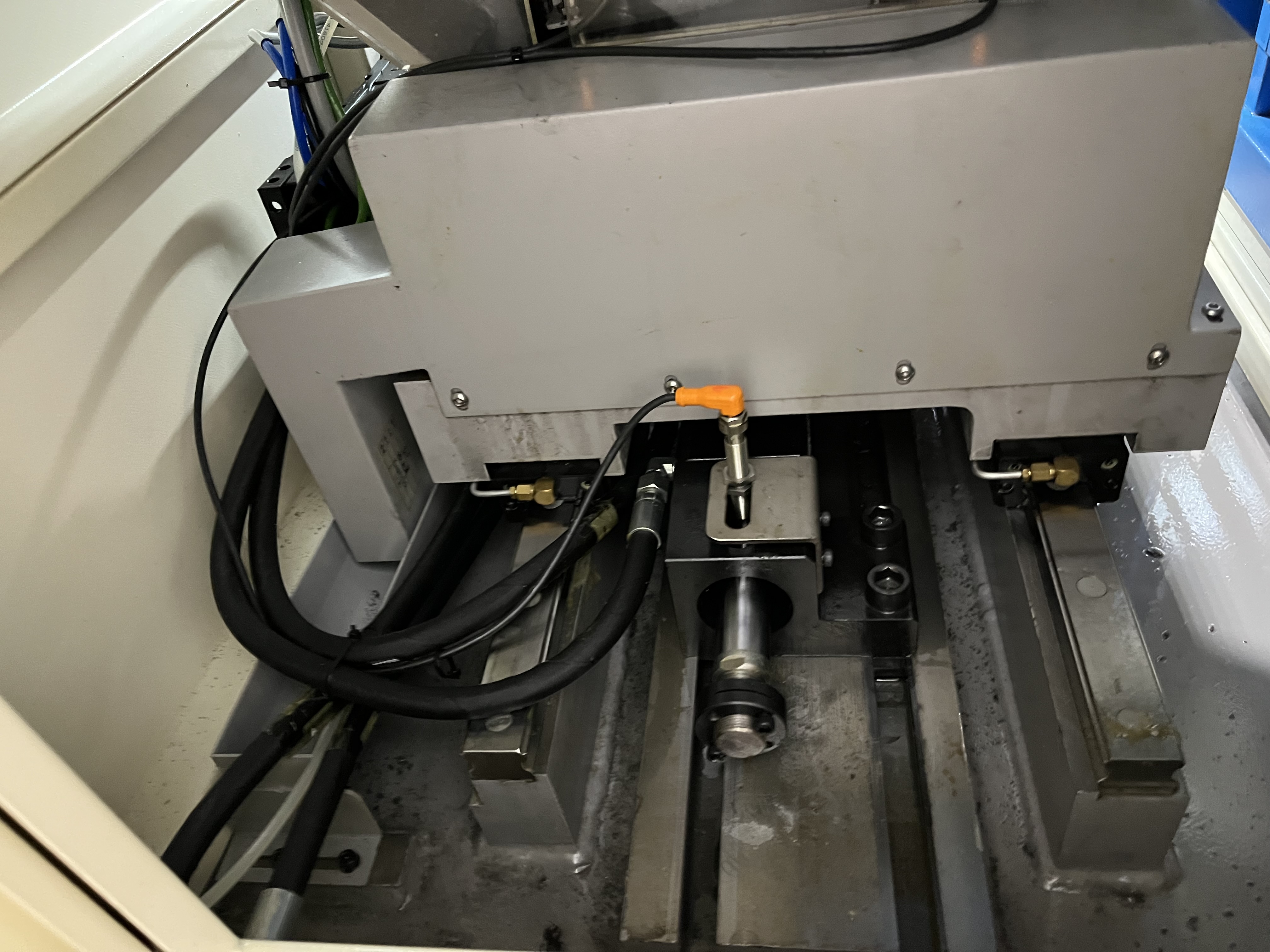
I use trepanning when the core material has value. Trepanning cuts an annular groove around a solid core instead of removing all the material as chips. The core is recovered and can be used for another part. The economics make sense in specific situations, and the tooling and setup are different from solid deep hole drilling.
When Trepanning Pays Off
Trepanning makes the most sense for large diameters in expensive materials. The material savings drive the decision. Drilling a 200 mm hole through 500 mm of titanium solid removes about $8,000 worth of material as chips. Trepanning the same hole recovers a 180 mm diameter core that can be used for a smaller part, saving most of that value.
I calculate the break-even point using the material cost per kilogram, the trepanning tool cost, and the number of holes. The formula I use:
Break-even holes = Tool cost / (Material savings per hole - Additional machining time cost)
| Material | Price per kg | Min Diameter for Trepanning | Core Value (200 mm x 500 mm) | Tool Cost per Hole |
|---|---|---|---|---|
| Mild steel (1018) | $0.50 - $2 | 200 mm | $50 - $100 | $30 - $50 |
| Alloy steel (4140) | $2 - $5 | 150 mm | $150 - $400 | $30 - $50 |
| Tool steel (D2, H13) | $5 - $15 | 100 mm | $400 - $1,200 | $40 - $70 |
| Stainless 316 | $5 - $10 | 100 mm | $400 - $800 | $40 - $60 |
| Stainless 15-5 PH | $10 - $20 | 80 mm | $800 - $1,600 | $40 - $60 |
| Titanium 6Al-4V | $30 - $80 | 50 mm | $3,000 - $8,000 | $50 - $80 |
| Inconel 718 | $50 - $120 | 40 mm | $4,000 - $12,000 | $60 - $100 |
| Aluminum 7075 | $3 - $6 | 150 mm | $200 - $500 | $30 - $50 |
For steel, trepanning rarely pays off unless the hole diameter exceeds 150 mm. For titanium, it makes economic sense at diameters above 50 mm. For Inconel, trepanning is economical on any hole over 40 mm.
Diameter Range and Ring Width
Trepanning covers a specific diameter range that overlaps with BTA drilling at the high end.
| Trepanning Category | Outer Diameter Range | Typical Ring Width | Core Diameter |
|---|---|---|---|
| Small trepanning | 30 - 80 mm | 6 - 10 mm | 20 - 70 mm |
| Standard trepanning | 80 - 200 mm | 8 - 15 mm | 65 - 185 mm |
| Large trepanning | 200 - 500 mm | 12 - 25 mm | 185 - 480 mm |
| Extra-large trepanning | 500 - 1000 mm | 20 - 40 mm | 480 - 960 mm |
The ring width is determined by the tool body strength and the cutting insert size. A wider ring is stronger but removes more material and reduces the core savings. I use an 8-10 mm ring width for diameters under 100 mm and 12-15 mm for diameters above 100 mm.
Tooling Design
Trepanning tooling is more complex than solid drilling tooling. A trepanning head has cutting inserts on the outer diameter and guide pads on the inner diameter. The tool cuts only the annular ring and leaves the center column intact.
Cutting Insert Configuration
I use two cutting inserts on the trepanning head — one for the OD cut and one for the ID cut. The inserts are offset axially by about 0.5 mm to distribute the cutting forces. The OD insert cuts first, followed by the ID insert. This offset reduces vibration and provides a cleaner cut surface on both the bore and the core.
| Parameter | OD Insert | ID Insert |
|---|---|---|
| Axial offset | 0 mm (reference) | 0.3 - 0.5 mm behind OD |
| Radial position | Cuts the bore diameter | Cuts the core diameter |
| Insert grade | Tough grade (P30-P40 for steel) | Wear-resistant (P20-P30 for steel) |
| Nose radius | 0.4 - 0.8 mm | 0.2 - 0.4 mm |
| Chip breaker | Open for free-flowing chips | Tight for short chips |
Guide Pad Design
The guide pads ride on the cut surface of the bore to maintain alignment. Unlike solid drilling where pads contact the bore wall directly, trepanning pads contact the freshly cut ring surface.
| Pad Parameter | Typical Value | Notes |
|---|---|---|
| Pad material | Carbide K10-K20 | Same as BTA drilling |
| Pad location | Inner diameter of the tool | Rides on the cut bore surface |
| Number of pads | 2 - 4 | More pads for larger diameters |
| Wear limit | 0.08 mm on radius | Tighter than BTA due to smaller contact area |
Cutting Parameters
The cutting parameters for trepanning are similar to BTA drilling but on the conservative end. The trepanning head has less radial support than a solid drill head because it only contacts the ring surface, not the full bore.
| Material | Cutting Speed (m/min) | Feed (mm/rev) | Coolant Pressure | Coolant Flow |
|---|---|---|---|---|
| Mild steel | 70 - 100 | 0.06 - 0.12 | 500 - 800 psi | 50 - 100 L/min |
| Alloy steel | 60 - 80 | 0.05 - 0.10 | 600 - 1000 psi | 50 - 100 L/min |
| Stainless steel | 40 - 60 | 0.04 - 0.08 | 700 - 1000 psi | 60 - 120 L/min |
| Titanium | 20 - 35 | 0.03 - 0.06 | 800 - 1200 psi | 60 - 120 L/min |
| Inconel | 12 - 20 | 0.02 - 0.05 | 800 - 1200 psi | 60 - 120 L/min |
I start with the lower feed rate and increase by 0.01 mm/rev per hole until chips break properly. In steel, the chips should form short C-shapes. Long ribbon chips mean the feed is too low and the inserts are rubbing instead of cutting.
Power Requirements
Trepanning requires significantly less power than solid drilling because less material is removed. The power requirement is roughly proportional to the cross-sectional area removed.
| Drilling Method | Area Removed (200 mm hole) | Power Required | Power Ratio |
|---|---|---|---|
| Solid drilling | 31,416 mm² | 100% | 1.0x |
| Trepanning (10 mm ring) | 5,970 mm² | 30 - 40% | 0.3 - 0.4x |
| Trepanning (15 mm ring) | 8,717 mm² | 45 - 55% | 0.5x |
A machine with limited spindle power can trepan a larger diameter than it could drill solid. I once trepanned a 300 mm hole in 4140 steel on a machine that could only solid-drill up to 150 mm. The power savings made the job possible without upgrading the machine.
Core Handling
The core must be supported as the trepanning tool approaches full depth. If the core tips sideways at breakthrough, it jams in the bore and cracks the cutting inserts. I use a core catcher mechanism on the machine spindle that supports the core from above.
Core Catcher Design
The core catcher has spring-loaded fingers that engage the core OD when the tool reaches full depth. The fingers hold the core as the tool retracts. Without the catcher, the core falls into the chip pan and can be damaged or lost.
| Core Weight | Handling Method | Equipment Needed |
|---|---|---|
| Under 5 kg | Manual removal | Operator extracts core from spindle |
| 5 - 20 kg | Assisted removal | Core catcher + operator with gloves |
| 20 - 100 kg | Lifting sling | Core catcher + overhead crane |
| Over 100 kg | Mechanical extraction | Core catcher + hydraulic ejector |
Breakthrough Procedure
I use a specific procedure at breakthrough to prevent core damage and tool breakage.
- Reduce feed by 50% in the last 5 mm of trepanning depth to reduce breakthrough force.
- Retract the tool 0.5 mm at full depth to let coolant flow past the core and prevent hydraulic locking.
- Stop coolant flow before retracting the tool to prevent washing the core out of position.
- Activate the core catcher while the tool is still at depth.
- Retract the tool slowly at 200 mm/min while the core catcher holds the core.
- Remove the core from the spindle area using the appropriate handling method.
The peck at full depth is critical. Without it, hydraulic pressure from the coolant traps the core in the bore and the tool cannot retract. I learned this after cracking inserts on three consecutive holes.
Material Savings Calculation
The core recovered from trepanning is not a finished part. It typically needs machining to remove the trepanning witness line and clean up the OD. The witness line is a 0.2-0.5 mm ridge on the core surface where the ID insert finished the cut.
Expected core yield after cleanup:
| Trepanning Ring Width | Core OD Cleanup Needed | Usable Core Diameter |
|---|---|---|
| 8 mm | 1 - 2 mm per side | 4 - 6 mm less than core OD |
| 10 mm | 1 - 2 mm per side | 6 - 8 mm less than core OD |
| 15 mm | 2 - 3 mm per side | 9 - 12 mm less than core OD |
| 25 mm | 3 - 4 mm per side | 17 - 19 mm less than core OD |
For a 200 mm trepanning job with a 10 mm ring width, the recovered core is 180 mm diameter. After cleanup, the usable core is about 172 mm diameter. If the next part needs a 170 mm shaft, the core is ready to use.
Key Takeaways
- Trepanning is economical for titanium above 50 mm diameter, stainless above 100 mm, and steel above 150 mm.
- The OD and ID inserts should be offset axially by 0.3-0.5 mm to distribute cutting forces and reduce vibration.
- Power requirement is only 30-50% of solid drilling for the same outer diameter — trepanning enables larger holes on lower-power machines.
- Use a core catcher with spring-loaded fingers to prevent the core from jamming at breakthrough.
- Reduce feed by 50% in the last 5 mm of trepanning to prevent breakthrough damage to inserts.
- The recovered core needs 1-4 mm cleanup per side to remove the trepanning witness line.
- For Inconel and titanium, trepanning pays for itself on the first hole due to material value savings.