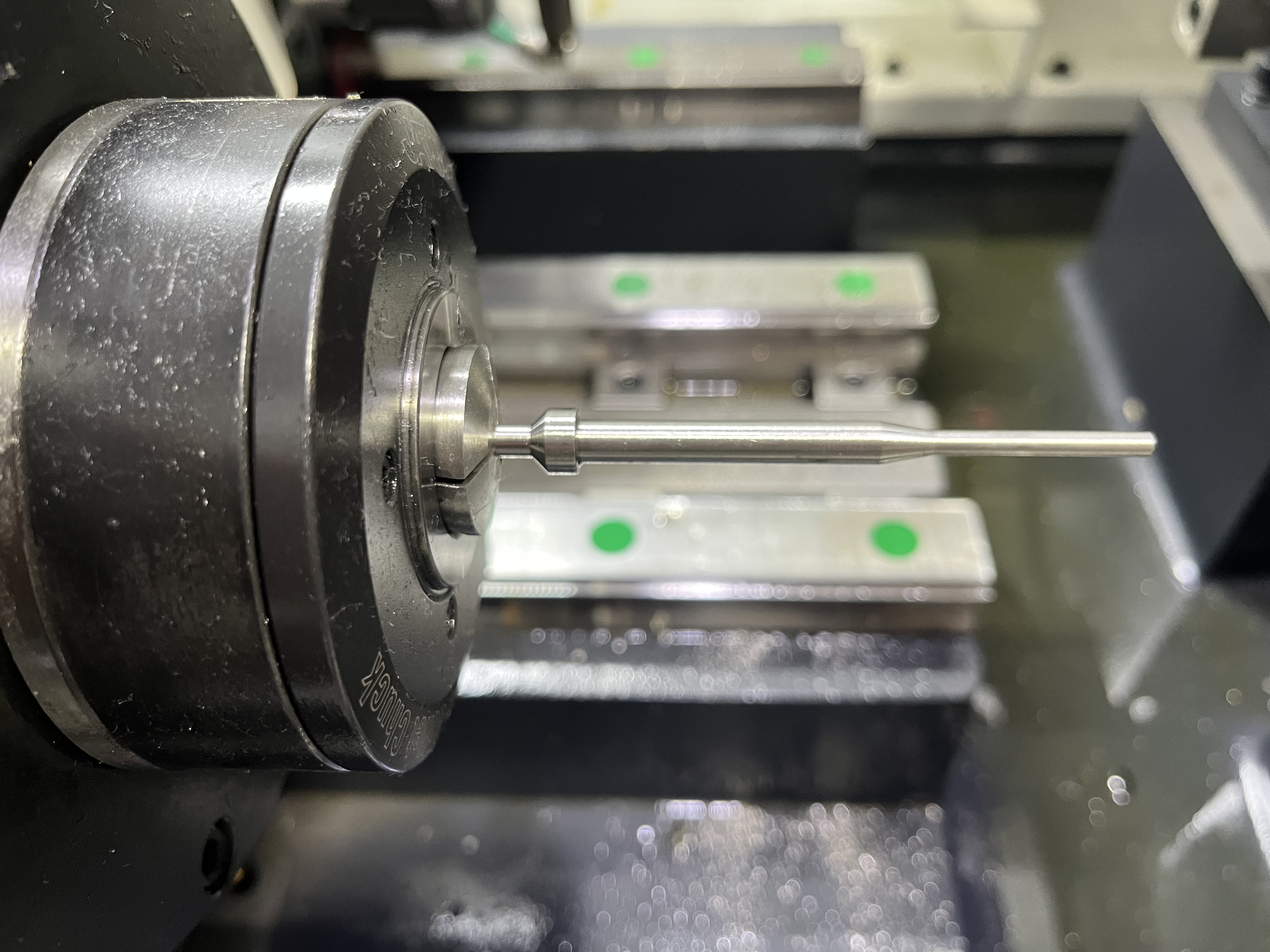
Waspaloy and Rene 41 are nickel-based superalloys used in turbine engines and high-temperature applications. They are among the most difficult materials to deep hole drill. These alloys retain strength at high temperatures, work-harden rapidly, and produce extreme cutting forces.
I have drilled both materials for aerospace components. Rene 41 is slightly harder than Waspaloy at room temperature — about 40 HRC versus 38 HRC. Both are unforgiving. Here is what I have learned.
Cutting Parameters
The cutting speed for these alloys is extremely low by normal standards. Above 18 m/min, the edge fails within a few millimeters of cutting. Below 10 m/min, the tool rubs and work-hardens the surface. I target 14 m/min for Waspaloy and 12 m/min for Rene 41 as my starting points.
The feed rate is equally constrained. Too low and the tool rubs, creating work-hardening. Too high and the thin cutting edge chips. I start at 0.008 mm/rev and adjust based on chip formation.
Here are the parameter ranges I use:
| Diameter (mm) | Cutting Speed (m/min) | Feed (mm/rev) | Coolant Pressure (psi) | Peck Length (mm) |
|---|---|---|---|---|
| 3 | 8-12 | 0.005-0.008 | 2500-3000 | 1.5 |
| 4 | 10-14 | 0.006-0.010 | 2500-3000 | 2.0 |
| 6 | 12-16 | 0.008-0.012 | 2500-3000 | 3.0 |
| 10 | 14-18 | 0.010-0.015 | 2200-2800 | 5.0 |
I have found that the smaller diameters are disproportionately harder in these alloys. A 3mm drill in Rene 41 is a different world from a 10mm drill. The chip space is tiny and the heat builds up instantly.
Peck Cycle Strategy
I use aggressive peck cycles for Waspaloy and Rene 41. The frequent retracts clear chips and allow coolant to reach the cutting edge. Without short pecks, the chips pack and the tool breaks.
For small diameters under 6mm, I use 2mm pecks with a full retract to the start position. The full retract allows coolant to flood the hole and wash out every chip. Partial retracts do not work well because chips settle in the bottom of the hole.
For larger diameters, I use 5mm pecks with a 2mm retract. The partial retract saves time and the chip space is larger so packing is less likely.
I use a dwell of 0.5 seconds at the peck bottom before retracting. This allows the coolant pressure to build and break the chip. Without the dwell, the chips form long strings that wrap around the drill.
Tool Life and Tool Change Strategy
Tool life is short in these materials — about 0.5-1 meter per edge for Waspaloy and 0.3-0.6 meters for Rene 41. I change tools at set intervals rather than waiting for failure. A tool that fails in the hole is extremely difficult to extract without damaging the part.
I use AlCrN-coated carbide for these alloys. The coating performs better than AlTiN at the extreme temperatures generated in these materials. The AlCrN coating maintains hardness up to 900 degrees C.
The carbide substrate must be fine-grain with high cobalt content — 10-12% cobalt for toughness. Standard carbide grades chip too easily in these materials.
I change tools at half the expected tool life. This wastes some tool capacity but prevents failures in the hole. The cost of a scrapped part is much higher than the cost of a tool change.
Coolant Requirements
The coolant pressure must be at the tool tip, not just at the pump. I check the pressure at the tool before every cycle. A 500-800 psi drop across the system is typical at these pressures.
I use oil coolant exclusively for these alloys. The lubricity of oil reduces the cutting forces and the heat generation. Emulsion coolants boil at the cutting edge and lose their cooling effectiveness.
I run the coolant through a chiller to keep the temperature below 40 degrees C. The heat from drilling Rene 41 can raise the coolant temperature by 15-20 degrees C in a single hole.
Real Job Example
I drilled Waspaloy for gas turbine engine components. The job required a 4mm hole through 80mm of material — a depth ratio of 20:1. Each hole took 15 minutes and required two tools. The first tool drilled the first 40mm, and a fresh tool finished the last 40mm.
The parts passed inspection with a surface finish of 0.8 Ra and hole position within 0.05mm. The straightness was 0.02mm over the 80mm length.
The job was profitable but slow. We ran one shift per day because the coolant needed time to cool between cycles.
Key Takeaways
- Use 10-18 m/min cutting speed for Waspaloy, 8-15 m/min for Rene 41
- Use short peck cycles — 2mm for small diameters, 5mm for larger ones
- Expect 0.3-1 meter of tool life per edge
- Use AlCrN-coated carbide with 10-12% cobalt content
- Check coolant pressure at the tool tip, not at the pump
- Change tools at half the expected life to prevent in-hole failures
- Use coolant chiller to manage temperature rise
For more on high-temperature alloy drilling, see my guide on heat management in high-temp alloys.