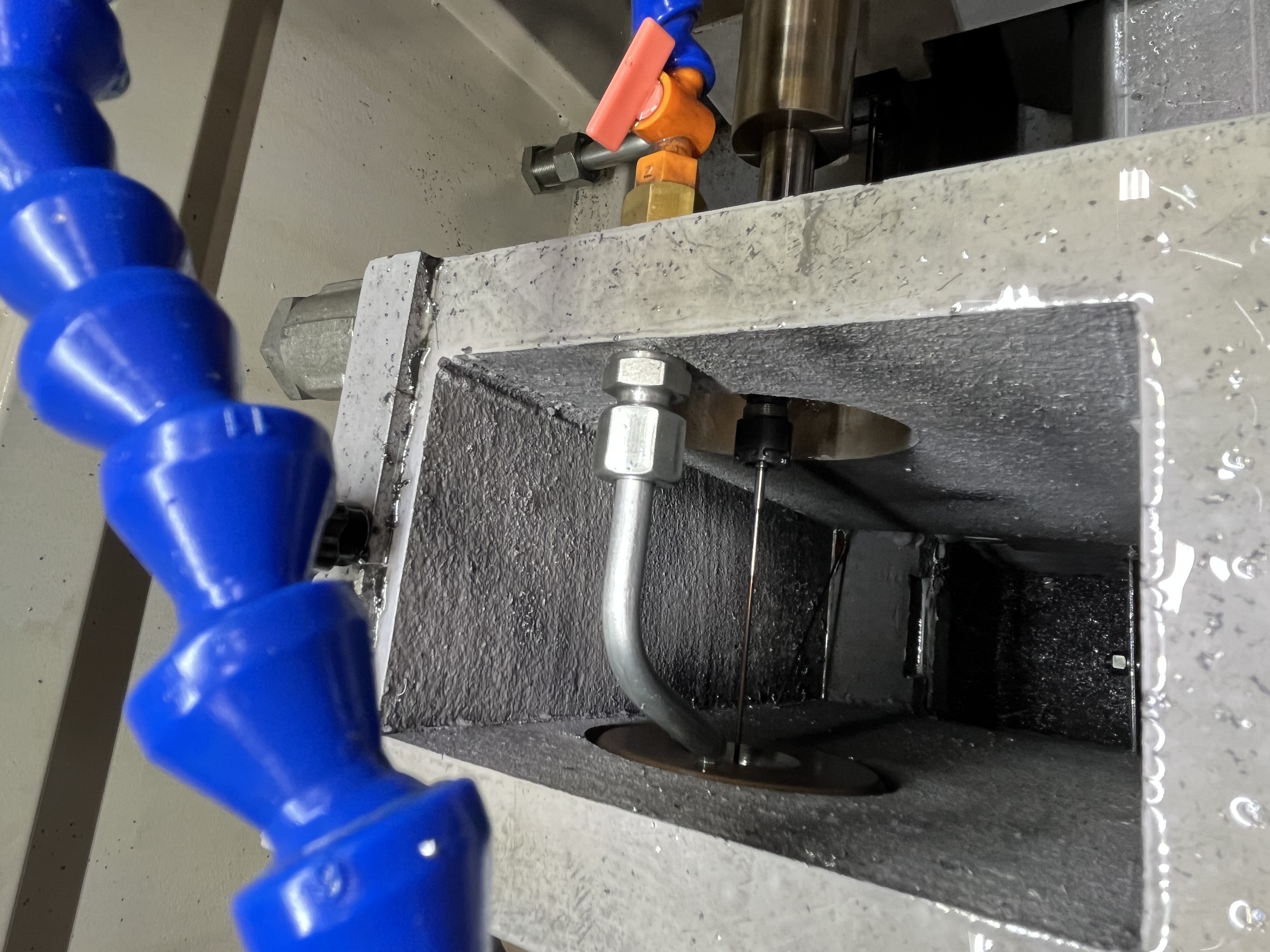
It was a Tuesday morning in late February, and I was feeling confident. We had a batch of fifty 4140 steel shafts to get through, each requiring a 12mm hole drilled 400mm deep. The machine was a TBT ML-800, which normally runs like a Swiss watch. I had set the job up the day before, everything was dialed in, and I was ready to make chips.
First hole of the day came out at 0.15mm off position. Not terrible, but not within our tolerance of 0.08mm. I tweaked the alignment, ran another part. This one was 0.12mm off. Then the third hole was 0.18mm off at the bottom. Something was wrong.
I spent the next three hours working through every possible cause. I checked the spindle runout with a tenths indicator – 0.005mm, well within spec. I pulled the guide bushings and measured them with a bore gauge. They were barely worn, definitely not the problem. I inspected the gun drill under a microscope – the grind was clean, the carbide tip was sharp, no chipping anywhere. I even checked the material certification to make sure we hadn’t gotten a bad heat of steel.
At lunchtime I was standing there staring at the machine, completely out of ideas. The machine was drilling crooked holes and I could not figure out why. I had checked everything I could think of.
The maintenance guy, an older guy named Pete who had been at the shop since the 90s, walked by on his way to the break room. He saw me staring at the machine and said, “Did you check the foundation bolts?”
I almost laughed. Foundation bolts? The machine was bolted to a three- foot thick concrete slab. Those bolts were not going anywhere.
But I was out of ideas, so I grabbed a wrench and checked them. The front left bolt was loose. I could turn it a quarter turn by hand.
A nearby press brake had been running a heavy bending job all week, stamping 12mm plate. The vibration had traveled through the floor and worked the bolt loose. The whole machine had shifted maybe 0.2mm, which was enough to throw every hole out of position.
I tightened the bolt, releveled the machine, and ran a test piece. The hole was dead center, 0.02mm off position. Beautiful.
Three hours of troubleshooting for a loose bolt. I felt like an idiot. But Pete just shrugged and said, “Happens to everyone once.”
I printed a checklist and laminated it to the side of the machine cabinet. It starts with the boring stuff: foundation bolts, leveling pads, coolant pressure at the tool, filter condition. Operators go through those checks before they call me with a problem. It has saved us hours of wasted troubleshooting.
These days, whenever I run into a weird problem, I start with the foundation and work my way up. The machine can have every fancy component working perfectly, but if it is sitting on a loose bolt, nothing else matters.
That checklist has saved me more times than I can count. Last month I got a call about a machine that was making a knocking sound. Before heading over, I asked the operator to check the foundation bolts. Turns out two of them had worked loose from the same press brake vibration. Ten minutes with a wrench saved an hour of walking through the toolroom grabbing alignment tools. Simple stuff first, always.