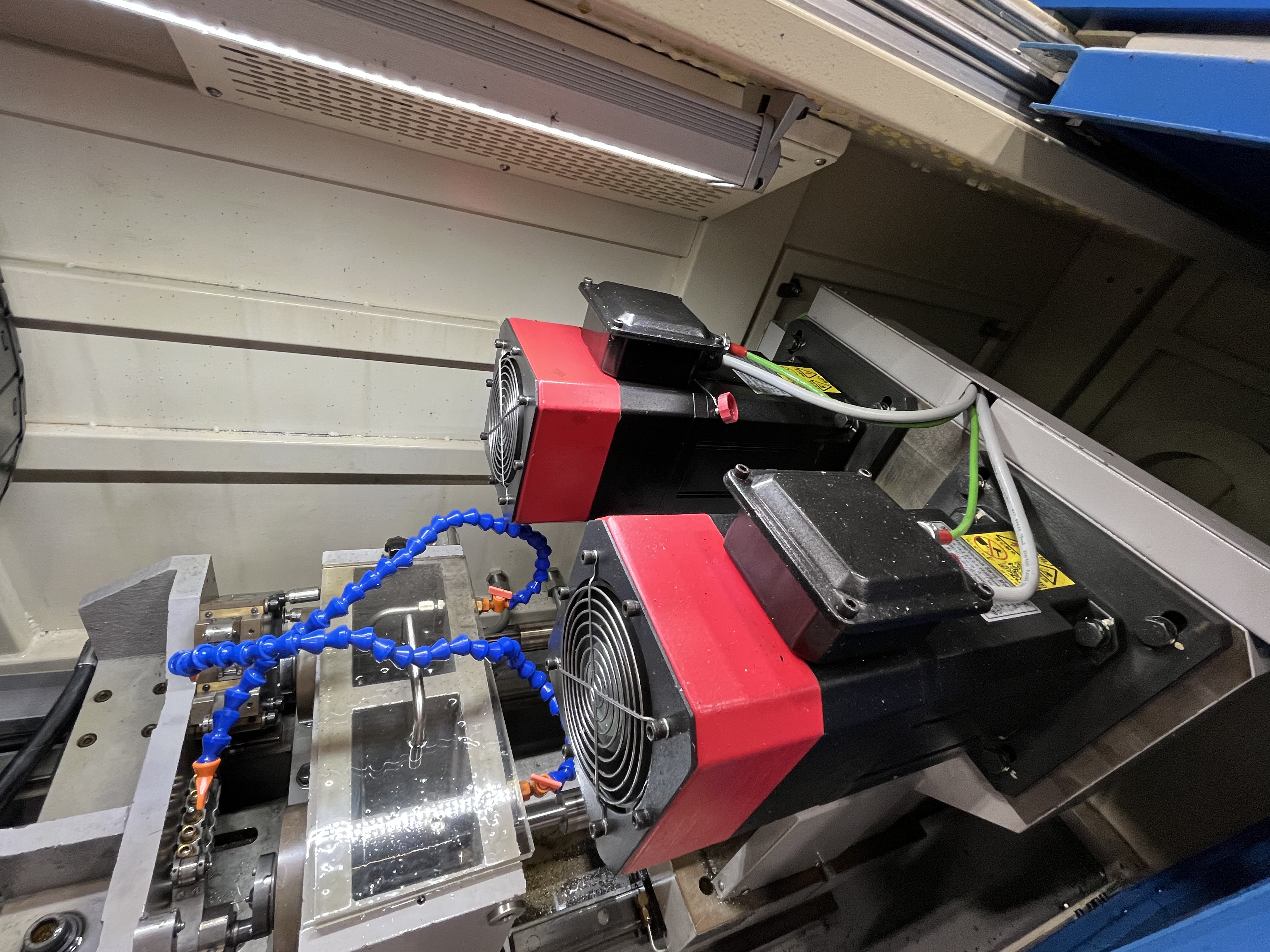
We were running a production batch of 200 hydraulic cylinders. Halfway through, the coolant pressure started dropping. Chip evacuation was getting worse with every part. I noticed the problem during a routine walk around the machine. The chip conveyor had almost nothing coming out, which is unusual for a deep hole drilling operation running at full production speed. Normally the conveyor runs heavy with blue steel chips throughout the cycle.
I checked the coolant pressure gauge and it was sitting at 8 bar instead of the normal 14 bar. The flow meter showed 60 liters per minute instead of the usual 110. Those numbers told me something was blocking the coolant path. The first thing that came to mind was the filter. I had seen this pattern before on other machines and the symptoms were classic. Low flow combined with low pressure points to a restriction upstream of the pump or a clogged filter element.
I stopped the machine immediately. Running a gun drill without proper coolant pressure is a fast way to scrap a drill and a part. I have made that mistake once and paid for it with a 400-dollar drill and a scrapped barrel. The drill tip can overheat in seconds when chip evacuation stalls. The chips pack around the drill head and the cutting edges lose coolant contact. The result is a seized drill tip that twists off inside the bore. Extracting a broken gun drill from a 2-meter barrel is a job nobody wants.
Diagnosing the Problem
I checked the filter pressure differential gauge. The reading was 1.8 bar. Normal is 0.5 bar or less after a fresh filter change. The filter was clearly clogged. I opened the filter housing and found it packed with fine steel chips from the previous job — a run of 50mm bores in 4140 steel that produced a lot of fine swarf. The swarf had packed so densely that water could barely pass through the element. I poked at it with a screwdriver and the material was compacted like wet sand.
The operator told me he had checked the filter visually but did not look at the gauge. He said the outside of the element looked clean. I have heard this before and it is the most common mistake in coolant filter maintenance. Visual inspection of a cartridge filter tells you nothing about the internal loading. The dirt loads from the inside out on most cartridge filters. The outside can look clean while the inside is completely plugged. You have to read the pressure differential to know the condition of the element.
I keep a logbook for coolant system checks on every machine. Here is what the entries looked like leading up to that day:
| Date | Time | Filter Delta P (bar) | Coolant Flow (L/min) | Coolant Pressure (bar) | Notes |
|---|---|---|---|---|---|
| Day 1 | 07:00 | 0.4 | 112 | 14.0 | Fresh filter installed |
| Day 2 | 07:00 | 0.5 | 110 | 14.0 | Normal operation |
| Day 3 | 07:00 | 0.6 | 108 | 13.5 | Slight increase noted |
| Day 4 | 07:00 | 0.7 | 100 | 12.5 | Trend continues upward |
| Day 5 | 07:00 | 0.9 | 95 | 12.0 | Caution — should schedule change |
| Day 5 | 13:00 | 1.8 | 60 | 8.0 | Stopped — filter clogged |
The jump from 0.9 bar to 1.8 bar happened fast once the filter started loading up. The fine chips bridged across the filter media and the pressure drop accelerated. Looking back at the log, I should have changed the filter at the end of Day 4 when the delta P hit 0.7 bar. That would have taken 15 minutes during a tool change and saved the scare on Day 5. The trend was clear in the logbook but nobody was watching the trend.
The Swap and Recovery
I had a spare filter element in my stock cabinet. I keep one spare for every machine in the shop now, but back then I had bought that one on a whim after a close call on a different machine. I had put it in the cabinet and forgotten about it. When I needed it, I remembered exactly where it was. That spare element was the difference between a 15-minute fix and a full shift of downtime.
Swapping the filter took 15 minutes. I shut off the coolant pump, opened the housing vent, drained about 5 liters of coolant into a catch pan, unbolted the cover, swapped the element, and primed the system. I restarted the pump and watched the pressure climb back to 14 bar. The flow returned to 110 liters per minute. Chips started coming out normally again. I checked the first part after the swap and the bore surface finish was back to Ra 0.8um.
I inspected the clogged filter element after the job finished. The fine steel swarf had packed so tightly that the pleats were flattened against each other. I cut the element open with a hacksaw to see the cross-section. The outer layer was clean but the inner pleats were completely sealed with metal fines. That explained the sudden pressure drop. The effective filtration area had gone from the full surface area of the element down to near zero once the fines bridged across the pleats.
Process Changes I Made After This Incident
I made three permanent changes after that day. First, I added filter delta P to the startup checklist for every deep hole drilling job. The operator records it at the start of each shift and after every 50 parts. This catches problems early before they become emergencies. I printed the checklist on laminated cards and hung them on each machine with a zip tie.
Second, I set up a minimum stock level for filter elements. Each machine type has a different filter size and micron rating. I maintain two spares per machine. When I use one, I order a replacement the same day. This way I never run out. I keep a stock card on the cabinet door with the part numbers and minimum quantities written in permanent marker.
Third, I installed a secondary polishing filter on the machines that run the longest production batches. This takes some of the load off the primary filter. The primary filter now lasts three times longer between changes because the polishing filter captures the fines before they reach the primary. The total cost of those spare filter elements is about 400 dollars per machine. The cost of a scrapped drill and the downtime to change it is easily 2,000 dollars.
The Broader Impact on the Production Schedule
The production run was 200 cylinders with a delivery deadline of two weeks. We were on day five when the filter clogged. A 24-hour delay for an overnight filter delivery would have pushed the entire schedule back by a day. That might not sound like much, but the customer was building an assembly line and our cylinders were on the critical path. A one-day delay at our shop meant a one-day delay at their plant, which meant 200 workers standing idle.
The cost of that line stoppage would have been billed to us as a late delivery penalty. The penalty was 5 percent of the order value per day, which worked out to about 2,000 dollars. Plus the lost production from our machine being down. Plus the overtime to catch up. The total would have exceeded 5,000 dollars easily. Against that, the 50 dollars I spent on a spare filter element looks like the best investment I ever made.
I also calculated the cost of not having a spare. The overnight shipping for a filter element would have been 45 dollars. That is less than the spare itself. But the wait time was 24 hours because the supply house was in another state. I now keep a list of local suppliers who stock common filter elements so I can drive to pick one up in an hour if needed. That backup plan has saved me twice since this incident.
The Numbers That Matter
Here is what the downtime comparison looked for that specific job:
| Scenario | Downtime | Cost Impact |
|---|---|---|
| Had spare — swapped immediately | 15 minutes | 0 dollars lost production |
| No spare — ordered overnight delivery | 24 hours | 4,800 dollars lost production |
| No spare — ran without filter | Risk of scrapped drill | 800 dollars per drill + scrapped part |
| No spare — ran without filter and damaged bore | Scrapped barrel | 1,200 dollars per barrel |
| Had spare but did not catch trend | 15 minutes + potential quality issues | Rework costs if parts shipped out of spec |
The 15-minute swap saved the production run and saved me from having to explain to the customer why their 200 cylinders were late. The customer was on a tight schedule. A 24-hour delay would have caused a line stoppage at their plant. That kind of reputation damage costs more than any filter element.
Training Operators on Filter Maintenance
I now train every operator on the difference between visual inspection and gauge-based inspection. I show them a clean-looking filter element that is completely clogged inside. I cut one open and let them see the packed fines. That visual demonstration sticks with them better than any written procedure.
I also teach them to read the trend, not just the number. A delta P that climbs from 0.4 to 0.6 over two days is normal. A climb from 0.6 to 1.0 in a single shift means something changed and needs investigation. The operator who had been checking the filter visually now records the delta P on a whiteboard next to the machine. He sees the trend for himself and takes ownership of the coolant system health.
I review the logbook with the team every Friday. We look at the trends across all machines and identify which filters need changing the following week. This preventive approach has eliminated unplanned filter changes on my shifts. The machines run consistently and I sleep better knowing the coolant systems are monitored.
Key Takeaways
- Check the filter pressure differential gauge, not just the filter visually. The gauge tells the real story every single time.
- Stock spare filter elements for every machine before you need them. The day you need one is the day you will not have it.
- Log coolant system parameters regularly. The trend tells you when a change is due before the machine tells you by stopping.
- A clogged filter is not a failure of the filter. It is a failure of the maintenance schedule or the inspection process.
- The 15 minutes it takes to swap a filter is nothing compared to the hours lost waiting for a replacement or the cost of a scrapped part.
- Check the logbook trend, not just the current reading. A slow climb over several days is easier to fix than a sudden spike.
- A 400-dollar spare filter inventory protects thousands of dollars in production value. That is the easiest return on investment in the shop.