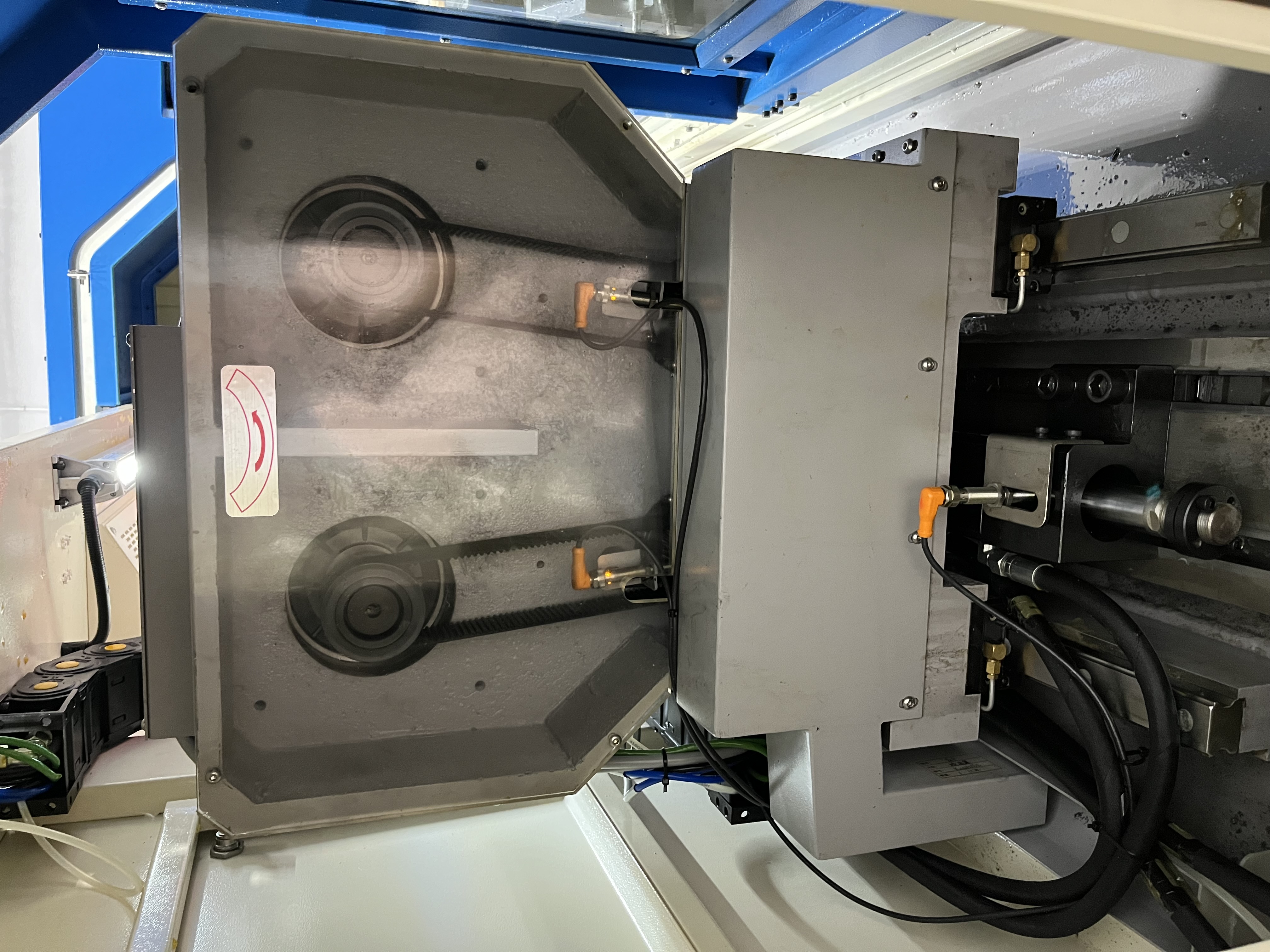
I was drilling a batch of hydraulic cylinders on a tight deadline. The job was going smoothly — good chips, good surface finish, ahead of schedule. Then the coolant hose burst.
The Setup That Day
I was running a 22 mm gun drilling operation on 4140 steel. The depth-to-diameter ratio was about 40:1, so coolant pressure and flow were critical from the start. I had the pressure set to 80 bar at the pump, and the return flow was steady through the chip separator. The first twelve parts came out perfect. I was feeling confident enough to let the machine run while I prepped the next batch of raw stock.
The hose that failed was a 3/4-inch reinforced rubber line on the pressure side between the pump manifold and the rotating union. It was about two meters long, routed along the machine column. I later found out that hose had been on the machine for nearly three years. In hindsight, I should have replaced it during the last annual maintenance shutdown, but it wasn’t on anyone’s checklist.
When the Hose Let Go
The burst happened during the thirteenth part, about 300 mm into a 600 mm bore. I heard a loud pop followed by the hiss of high-pressure coolant spraying everywhere. The cabinet doors were open for chip access, so coolant shot across the aisle and pooled on the floor. The machine’s pressure gauge dropped from 80 bar to zero in less than two seconds.
I hit the emergency stop and shut off the main coolant pump. The drill was still buried deep in the hole. Without coolant pressure, the chips that were being flushed out settled back around the drill shank. I knew immediately I was in trouble. A gun drill stuck in the hole with packed chips is one of the worst situations to deal with on the shop floor.
The Extraction
Getting the drill out took two hours of careful work. I started by disconnecting the coolant lines and flushing the drill flute from the entry side with a low-pressure auxiliary pump. That cleared some of the loose chips. Then I applied gradual torque to the drill shank with a strap wrench while an assistant worked the spindle back and forth manually. The drill came out in stages — a few millimeters at a time — with each small movement followed by another low-pressure flush.
When the drill finally came free, I inspected the cutting edge. It was still sharp. The carbide tip showed no damage, which surprised me. I got lucky. If the chips had welded to the drill body during the downtime, the tool would have been scrap and the bore might have needed reaming or scrapping entirely.
After extraction, I measured the hole. The bore diameter was within tolerance, but the surface finish was borderline. I had to re-cut that bore with a fresh drill on the next setup. That cost another hour of cycle time.
The Replacement Parts Fiasco
The replacement hose situation made everything worse. The shop didn’t stock a spare. I called our supplier at 10 AM and they said the earliest delivery was the next afternoon. I spent the rest of that day cleaning the machine, changing filters, and reorganizing the tool crib — anything to feel productive while the machine sat idle.
The hose arrived at 2 PM the following day. Installation took twenty minutes. But by then I had lost an entire production shift. The customer had to be called. The delivery date slipped from Friday to Tuesday. I took the blame in the morning production meeting.
| Coolant Hose Inspection Criteria | Inspection Interval | Replacement Threshold |
|---|---|---|
| Outer cover cracks or blistering | Monthly | Replace immediately |
| Fitting corrosion or leaks | Monthly | Replace immediately |
| Kinked or crushed sections | Monthly | Replace immediately |
| Hose age exceeds 18 months | Quarterly review | Replace at 24 months max |
| Pressure test deviation > 5% | During PM shutdown | Replace before next job |
My Preventive Hose Program
After that job, I built a coolant hose replacement schedule that I still follow today. Every hose on every machine gets tagged with an installation date written directly on the hose with a paint marker. I track hose age in a simple spreadsheet, grouped by pressure rating and service conditions. High-pressure lines between 60 and 100 bar get replaced every 18 months without exception. Low-pressure return lines get replaced every 24 months or when visible wear appears.
I also inspect hose routing during every tool change. A hose that rubs against the machine frame or another line will fail at the wear point long before the rubber degrades internally. I now install spiral wrap or split loom on any hose that contacts a sharp edge or another hose. That five-minute addition has prevented at least two failures that I know of, because I caught the wrap fraying when I opened the cabinet for a routine tool change.
I also added a cumulative hour meter to the coolant pump circuit. The standard wall-clock age of a hose is useful, but actual pump runtime is more accurate. A machine that runs three shifts will wear out hoses twice as fast as the same machine on one shift, even if the calendar age is identical.
Lessons from the Hose Supplier
After the incident, I sat down with our hose supplier to understand why the hose failed. The supplier’s technical representative inspected the failed section. The inner tube had developed longitudinal cracks along the reinforcement layer, a failure mode consistent with age-related embrittlement. The hose was rated for 100 bar working pressure, but the rubber compound had hardened over three years of exposure to the coolant chemistry and the heat radiating from the machine column.
The representative told me that coolant hoses in deep hole drilling applications experience a unique failure environment. The coolant itself contains cutting oils and biocides that slowly attack the rubber compounds. The constant flexing from machine movement and temperature cycling from cold startup to steady-state operation accelerates the degradation. He recommended switching to a hose with a polyurethane outer cover, which resists coolant chemicals better than standard rubber. I tried one, and it lasted two years longer than the previous type.
I also learned that hose fittings fail differently than hose bodies. The crimped fitting at the connection point is a stress concentration zone. If the fitting is not fully seated or the crimp pressure is inconsistent, the hose will separate from the fitting before the hose body wears out. I now inspect the fitting area during every hose check. Any sign of movement between the hose and the ferrule means the fitting needs replacement.
The Cost Breakdown of That Failure
I ran the numbers after the job was delivered. The total cost of the coolant hose failure was higher than I initially estimated. The direct costs included the replacement hose, the coolant lost during the burst, and the labor for extraction and re-cutting. The indirect costs included the late delivery penalty, the overtime for the weekend catch-up shift, and the lost opportunity from the machine being down for thirty-six hours.
| Cost Category | Item | Amount |
|---|---|---|
| Direct material | Replacement hose and fittings | $85 |
| Direct material | Lost coolant (refill) | $120 |
| Direct labor | Drill extraction (2 hours) | $140 |
| Direct labor | Re-cut bore (1 hour) | $70 |
| Direct labor | Machine cleanup (3 hours) | $210 |
| Indirect | Late delivery penalty | $500 |
| Indirect | Weekend overtime premium | $375 |
| Indirect | Lost machine hours (36 hrs at shop rate) | $2,880 |
| Total | $4,380 |
That four-thousand-dollar number made the decision to implement a preventive hose program easy. The cost of tagging every hose and replacing them on schedule runs about two hundred dollars per machine per year. The math does not require a spreadsheet.
Key Takeaways
- Coolant hoses are wear items, not lifetime components. Replace them on a fixed schedule, not when they fail.
- Write the installation date on every hose with a marker. Memory is unreliable when a machine has fifty hoses.
- Inspect hose routing at every tool change. A rubbing hose fails at the contact point first, and the wear is visible before the burst.
- Stock at least one spare hose for every pressure rating used in the shop. Same-day delivery is not guaranteed.
- A coolant pressure gauge on the machine is useless if there is no low-pressure alarm. I added a pressure switch that stops the feed if pressure drops below 70 bar. That would have saved the thirteenth part.
- A stuck drill from a coolant failure is fixable, but the fix takes hours. Prevention takes minutes.
- The total cost of a hose failure includes lost machine hours, which dwarfs the material cost.
- Talk to your hose supplier. They know how their products fail and can recommend alternatives for your specific application.