His name was Jake, and he was maybe nineteen years old. Fresh out of a two-year trade program at the local community college, green as they come, and eager — almost too eager. He’d been with us for about three months, and every day he showed up fifteen minutes early and stayed fifteen minutes late just to absorb everything he could. He had that hungry look in his eye, the one that says “I want to be good at this more than anything.”
I’d been assigned as his unofficial mentor. I liked the kid. He asked good questions and he listened to the answers, which put him ahead of half the new guys I’d trained over the years. Most of them thought they already knew everything. Jake knew he didn’t, and he was trying to close that gap as fast as possible. But he had one problem: he wanted to prove himself so badly that he couldn’t admit when he didn’t know something. He’d rather struggle in silence than ask for help. I recognized the trait because I’d had it myself at his age, and I knew exactly where it would lead if he didn’t learn to manage it.
I remember the conversation when I first gave him the responsibility. His face lit up. “Really? You’ll let me run it alone?” he asked. “I won’t let you down.” I almost changed my mind right there, but I didn’t want to crush his initiative. That was my mistake.
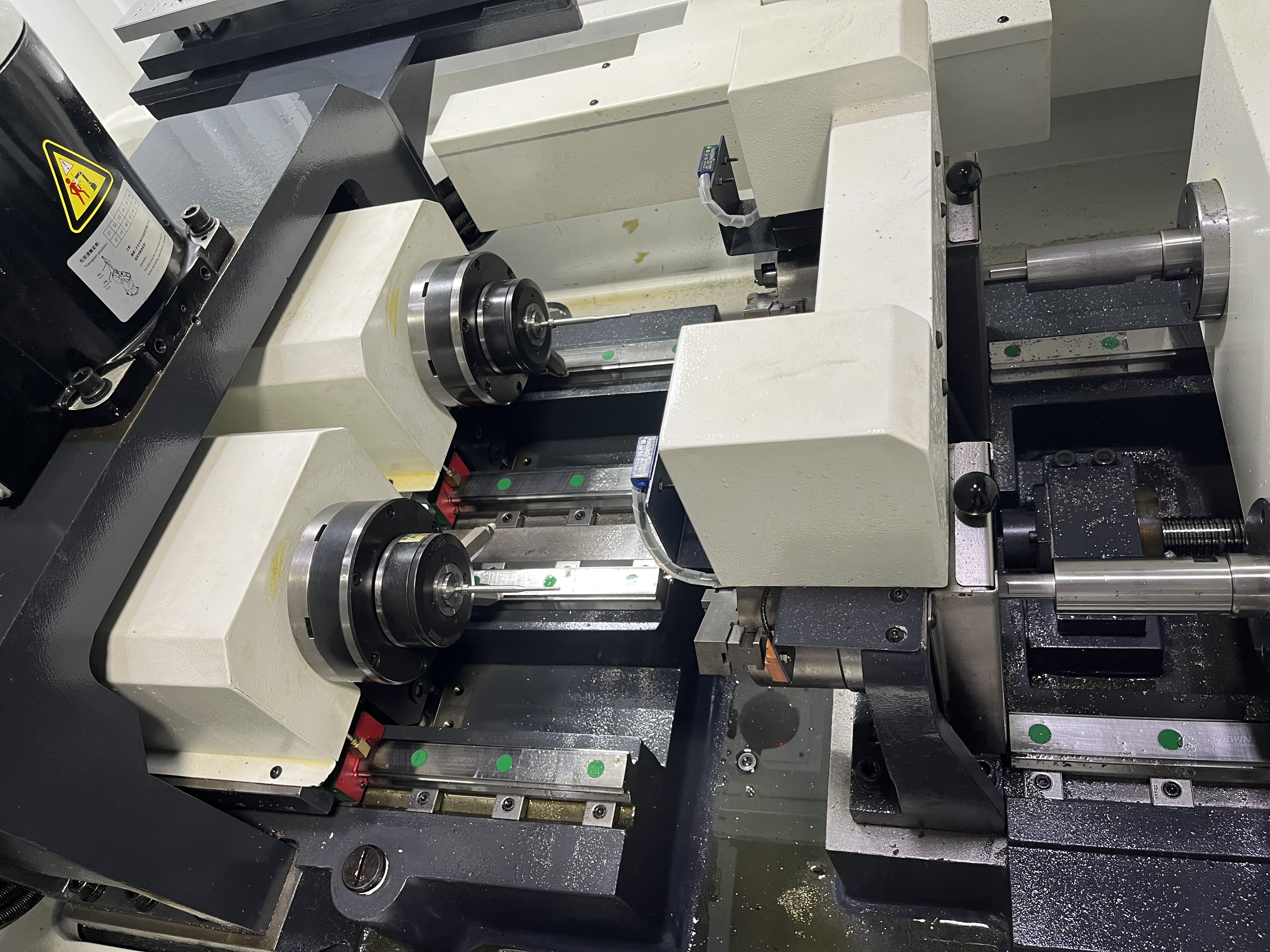
The overtime incident happened on a Friday night in August. The Houston summer heat was still hanging in the air even at six in the evening. We had a rush job for a hydraulics customer — a manifold block out of 4140 that needed twelve deep holes, each 20mm diameter by 500mm deep. It was the kind of job that wasn’t technically difficult but demanded attention to detail. One mistake and you scrap a four-hundred-dollar block of steel that’s already had a hundred dollars of machining time in it.
I’d been running it all week on the night shift. By Friday afternoon I was fried. The job was about eighty percent done, and the last four holes needed drilling. I figured I’d come in Saturday morning to finish it and finally have a weekend that started before Sunday afternoon.
That’s when Jake pulled me aside. “I can finish it tonight,” he said. “I’ll stay late. Save you the Saturday trip.”
I should have said no. I should have explained that deep hole drilling isn’t something you rush, especially when you’ve been on your feet for ten hours and your brain is starting to fog. But I saw the look in his eyes — he wanted to prove he could handle it. And I thought, well, he’s watched me do this all week. The setup is dialed in, the parameters are saved, what could go wrong? I told myself I was being a good mentor by giving him a chance.
I showed him the program. I walked him through the setup one more time. Coolant pressure at sixty bar, feed rate at forty-five millimeters per minute, spindle speed at three thousand RPM. The guide bushing was set, the whip guide was positioned, and the first eight holes were already done and measured. I showed him the inspection report and pointed out the hole positions that had passed.
“Just run the last four,” I said. “Same as you watched me do all week. If anything looks wrong — anything at all — stop and call me. Doesn’t matter what time it is.”
He nodded confidently. “I got it.”
I went home, showered, and was just sitting down to dinner with my wife when my phone rang. It was Jake. The call came in at eight-thirty, and I could hear the panic in his voice before he even said hello.
“I broke the drill,” he said.
Not “the drill broke.” Not “we have a situation.” I broke the drill. He was already blaming himself, already replaying the mistake in his head.
I drove back to the shop — twenty minutes that felt like two hours. When I walked in, Jake was standing at the machine with his arms crossed, staring at the control panel like he could will the problem away. The machine was stopped mid-cycle. Red lights flashing on the console. The gun drill was snapped off inside the manifold block, about halfway down the eleventh hole.
“Tell me what happened,” I said. Calmly. Because yelling at a guy who’s already beating himself up doesn’t teach anything.
He took a breath and let it out slowly. “I was watching the chips. They looked good — same as yours did all week. Then the coolant pressure dropped a little. Just a couple bar. I thought it was nothing, maybe a fluctuation in the pump. But then the chips stopped coming, and I heard the sound change. By the time I hit the feed hold, it was too late.”
He’d been running for about an hour at that point. He was tired. The shop was quiet — just him and the machine and the hum of the fluorescent lights. The coolant pressure fluctuation was a warning sign, and he read it but didn’t trust it. He told himself it was fine. And that’s when the chips packed up in the flute and the drill twisted in half.
I looked at the broken drill sticking out of the manifold. About sixty millimeters of carbide still visible above the surface. The rest was embedded in the hole, surrounded by packed chips that looked like a solid mass of steel wool.
“Grab the torch and a brass punch,” I said. “And a magnet. We’re going fishing.”
Extracting a broken gun drill from a deep hole is one of those jobs that separates machinists from button-pushers. You can’t just grab it and pull. The drill is wedged in there by the packed chips. If you pull too hard, you risk breaking it deeper into the hole, making extraction impossible and scrapping the part. You have to work it out gently, in stages, without damaging the parent material.
We spent the next two hours at that machine. First we tried grabbing the shank with a pair of vise grips and gently rocking it side to side while pulling. That got us maybe ten millimeters before the grip slipped. Then we switched to the torch, heating the surrounding material enough to expand the hole diameter by a few hundredths of a millimeter. While it was still warm, I had Jake tap the broken piece with a brass punch from the entry side, working it back out the way it came in. Each tap moved it a few millimeters, and then we’d clear more chips from the flute with a dental pick and tap again.
At around eleven o’clock, the broken piece came free with a soft clunk. Jake held it in his hand — about three hundred millimeters of twisted carbide that had cost three hundred dollars new — and didn’t say a word. He just stared at it.
I helped him set up a new drill and walked him through the last three holes. We ran them one at a time, checking coolant pressure after every part. He finished the job at one in the morning. The holes came out within spec. The part was saved.
On Monday morning, Jake came up to me before the shift started. He looked like he hadn’t slept well. “I should have called you when the pressure dropped,” he said. “I knew it was wrong. I just thought I could fix it.”
“I know,” I said. “And now you know that overtime is when mistakes happen. You were tired. You were alone. You talked yourself into believing it was fine when every instinct said it wasn’t. That’s not weakness — that’s inexperience. The only way to get experience is to make mistakes like this one and learn from them. I broke my first drill the same way, for the same reason.”
He didn’t make that mistake again. Six years later, Jake was running his own crew at a shop across town. I ran into him at IMTS, the big manufacturing trade show in Chicago. We grabbed coffee and he reminded me of that night. “I still check coolant pressure before every part,” he said, laughing. “And I tell every new guy I train about the night I snapped a three-hundred-dollar drill because I was too proud to call you.”
I still have a snapshot of Jake from that night. Not a photograph — I mean a mental image. Him standing at the machine with his arms crossed, staring at that broken drill, the whole weight of the mistake on his nineteen-year-old shoulders. I see that image every time I think about giving a young operator too much responsibility too fast.
That night taught both of us something. It taught Jake to trust his instincts and call for help when something feels wrong. And it taught me that when a young guy asks to prove himself, you let him — but you stay close enough to catch him when he falls. Being a mentor doesn’t mean protecting someone from every mistake. It means being there when the mistake happens, so they learn the lesson without the cost destroying them.
I’ve turned that night into part of our shop’s training curriculum. Every new operator spends a shift on overtime, paired with a senior guy, just to learn how fatigue feels. We tell them to pay attention to when their decision-making starts to slip, when they start second-guessing themselves, when they start taking shortcuts.
Jake’s story also changed how I handle overtime requests. Now, when a junior guy asks to stay late, I don’t just say yes or no. I ask them three questions: “Are you tired right now? Have you eaten in the past four hours? Do you know exactly what can go wrong on this job?” If they can’t answer all three with confidence, I send them home. The job can wait. The lesson can’t be unlearned.
Jake stopped by the shop last Christmas to visit. He’s got his own apprentice now, a kid who reminds him of himself at nineteen. “I told him the story about the drill I broke,” Jake said. “He didn’t believe me at first. So I showed him the broken piece. I still have it in my toolbox.”
Funny how these things come full circle. Jake learned from me, and now he’s teaching someone else the same lesson with the same piece of broken carbide. That piece of drill has probably trained more operators than I have.
If I could go back to that Friday night, I’d still let Jake try. But I’d stay at the shop. I’d sit in the break room with a book and let him know I was there. He would have felt my presence without me hovering. And he might have called me over when the pressure dropped, instead of trying to fix it himself. Sometimes being a mentor means just being present.
That night cost us a drill and a few hours. But it made Jake the operator he is today. And it made me the mentor I needed to be. Some lessons are expensive. That one was a bargain.
Jake sent me a photo last month of his apprentice holding the same piece of broken drill he showed me years ago. The note said, “Your drill has now trained three generations of operators. I think it’s earned its retirement.” I told him to keep passing it on.
That piece of drill has taught more people than I ever could. Every time it comes out of a toolbox, it comes with a story. And every time the story is told, another operator learns that overtime is when mistakes happen.
Overtime is dangerous. Not because the work is harder, but because you’re alone, you’re tired, and the voice in your head that says “it’ll be fine” gets louder when there’s no one else in the room to disagree.