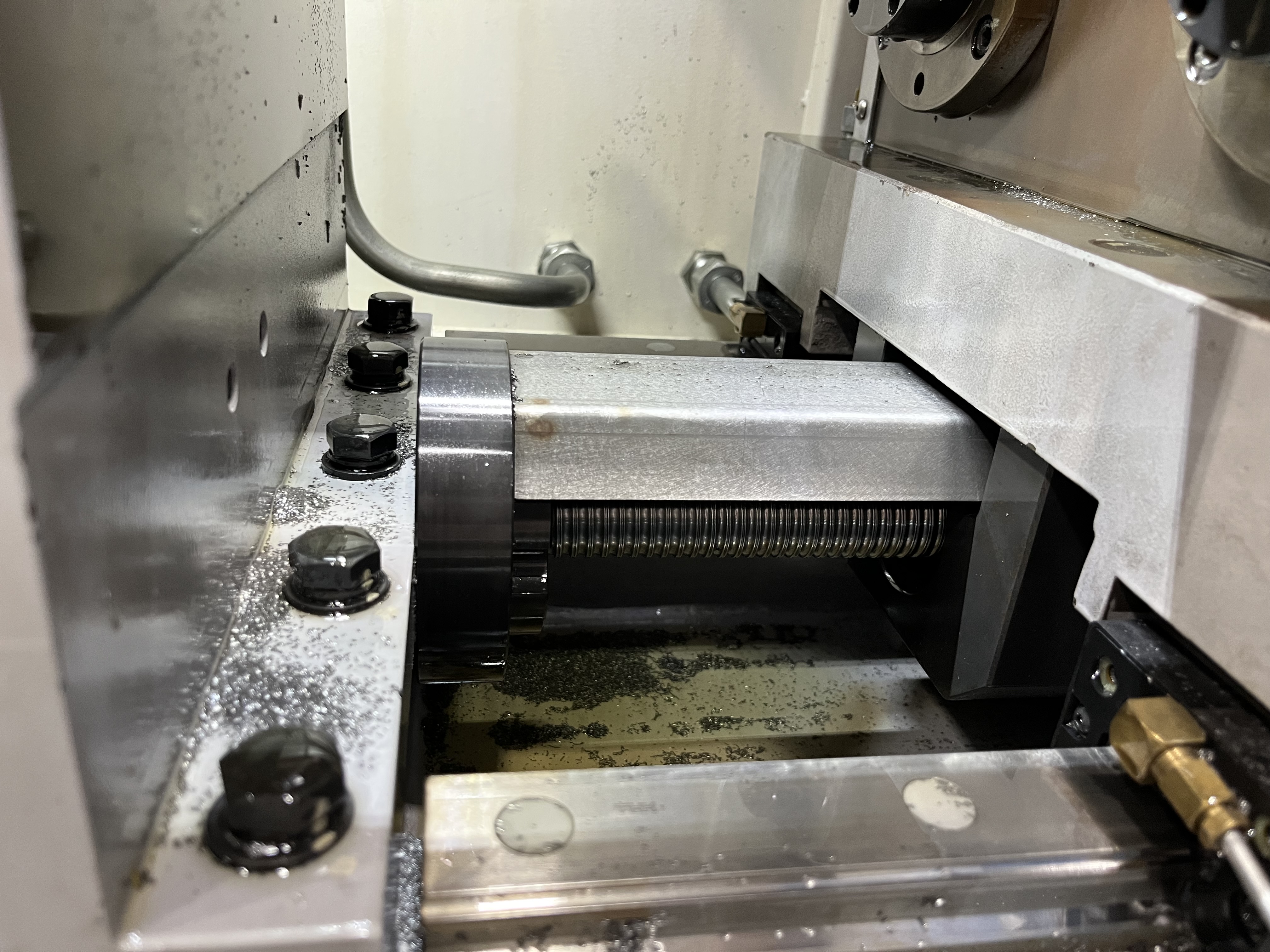
It was a Monday morning in January, and I was already behind before the spindle even turned.
The weekend had been rough — my oldest kid had come down with a fever on Saturday, and my wife and I had been up half the night trading off shifts with a thermometer and a bowl of chicken soup. Sunday was a blur of laundry, grocery shopping, and trying to catch up on sleep that never came. I came into work on about four hours of sleep, running on coffee and determination.
I walked into the shop that morning already dreading the week ahead. The place was quiet — the night shift had already gone home, and the day shift hadn’t fully trickled in yet. I hung my coat on the hook by the time clock, poured myself a cup of coffee from the break room pot that had been sitting there since six, and headed over to my machine.
We had a job on the schedule that had been bumped three times already. A hydraulic cylinder tube for a construction equipment customer — 1026 DOM tubing, 50mm inside diameter, needing a 10mm diameter lubrication hole drilled crosswise at a precise thirty-degree angle. It wasn’t complicated, but it was time-sensitive. The customer’s production line was down, waiting on this replacement part. The plant manager had been walking past my machine every hour asking when it would be done.
I fired up the deep hole machine and checked the program. Everything looked good. The coolant system on that machine had been acting up the week before — a small leak at one of the fittings on the return line. Maintenance was supposed to fix it over the weekend. I assumed they’d handled it. That was my first mistake.
I loaded the tube into the fixture, positioned the drill bushing, set the angle, and hit the cycle start. The machine whirred to life. The gun drill advanced through the pilot hole and started cutting. The chips looked normal — small, segmented, the way 1026 drills when everything is right. I watched for a few seconds and turned away to clean up the workbench.
I was thinking about the weekend I’d had, about my kid’s fever breaking on Sunday morning, about the load of laundry I hadn’t folded. My mind was everywhere except on the machine. I wiped down the workbench, organized some tools, checked my email on the shop computer. The machine was running fine. I could hear it.
Then, about two minutes into the cut, I glanced at the coolant pressure gauge out of habit. It was sitting at thirty bar. It should have been at sixty.
I looked at the coolant tank level sight glass. Empty.
My stomach did a little flip. The maintenance crew had fixed the leak, all right — by closing the shutoff valve to the tank entirely while they replaced the fitting. And nobody had opened it back up. The machine had been drawing from whatever was left in the lines all weekend. By Monday morning, the tank was dry and the pump was running on residual pressure in the lines.
I stood there staring at the empty sight glass for what felt like a full minute. The gauge was reading thirty bar because the pump was pulling against air, and the residual coolant in the lines was just enough to give a false reading. The cutting zone had been getting almost no lubrication for at least a minute. That minute was enough to destroy a drill and compromise a part.
I hit the emergency stop. The machine screamed to a halt with that pneumatic hiss that always sounds more dramatic than it is. I checked the part — the drill had made it about 150mm into the 500mm hole before I stopped it. The cutting zone had been running hot for probably a minute without proper coolant coverage. I pulled the drill and examined it under the microscope on my bench.
The carbide tip was discolored — that telltale blue tint spreading from the cutting edge that says you’ve cooked it. The PVD coating was gone in spots, flaked off from thermal stress. The drill was done. Three hundred and fifty dollars, up in smoke in less than two minutes.
The part was a different story. The hole surface was rough in spots, with that burned, galled appearance that comes from cutting without enough lubrication. It wasn’t bad enough to scrap the part — the hole was still within diameter tolerance — but the surface finish was terrible. I spent the next hour reaming it to size and polishing the bore with a flex-hone. The customer got their part two hours late because of it.
I stood there holding that dead drill, staring at the empty sight glass, and felt like an idiot. Because I knew better. Everyone who runs a deep hole machine knows better. You check the coolant level before you start the spindle. It’s right up there with “don’t run the machine without a guide bushing” and “check your chips every few minutes.” It’s rule number one. It’s the first thing Frank taught me when I was an apprentice, and the last thing he reminded me of every day for five years.
But I was tired. I was distracted. I assumed someone else had handled it. And it cost me a tool, half a shift, and a piece of my pride.
I spent the next thirty minutes cleaning out the coolant tank — it had about an inch of sludge at the bottom, which told me it hadn’t been cleaned in months. I refilled it with a fresh mix at nine percent concentration, checked it with the refractometer myself, and bled the air out of the lines. I replaced the drill with a fresh one from the crib and got the job running again by nine-thirty. The rest of the holes came out clean.
That afternoon, I had a talk with the maintenance foreman. We put a procedure in place — every Friday, maintenance fills the coolant tank to the top and marks the level on the sight glass with a grease pencil. Every Monday morning, the operator checks the level against the mark before starting. Simple. Obvious. The kind of thing you only bother to implement after it bites you.
I also made a personal rule that I’ve never broken in the twelve years since: before I hit the green button on a deep hole machine, I walk a checklist in my head. Coolant level. Coolant pressure. Guide bushing installed and tight. Whip guide positioned. Feed rate verified. Spindle speed confirmed. It takes about ninety seconds. And it has saved me more times than I can count. I’ve caught loose bushings, misaligned guides, wrong programs, and low coolant levels all because I spent ninety seconds checking.
That Monday morning mistake was embarrassing. But it was also cheap — as far as lessons go, a broken drill and a bruised ego is a bargain. Some guys learn this one with a scrapped part worth thousands, or a ruined machine spindle.
So now, every morning, I check the coolant level before anything else. And when I train new operators, I tell them this story on their first day. Not to scare them, but to make the point that deep hole drilling doesn’t forgive oversight. The machine doesn’t care if you’re tired or distracted or running on three hours of sleep. All it cares about is the coolant level, the pressure, and the feed rate.
That incident also changed how we handle maintenance turnover. We now require a signed tag on any machine that’s been worked on — a red tag that says “maintenance in progress” that gets swapped for a green “cleared for operation” tag only after the work is verified and the system is restored. It’s a simple system, and it’s saved us from repeating that Monday morning disaster at least three times that I know of.
The checklist I use has evolved over the years. It’s laminated now, with checked boxes for each item. Coolant level — check the sight glass and the refractometer. Coolant pressure — run the pump and read the gauge. Guide bushing — installed and tight. Whip guide — positioned and locked. Part — fixtured and indicated. It takes ninety seconds and I’ve never regretted taking it.
I have that checklist pinned to the wall above every machine I’ve run since that Monday. It’s not fancy — just a piece of paper in a plastic sleeve. But it’s saved me from repeating the same mistake. Twice since then, I’ve started to hit the green button and caught myself because I hadn’t checked the coolant level. Both times the tank was low. Both times I would have cooked another drill if I’d started without checking.
That Monday morning cost me a drill and a bruise to my pride. But it saved me from something worse — the kind of complacency that comes from assuming things are fine. Now I assume nothing. I check everything. And I sleep better knowing that.
The night shift operator who took over my machine the next week asked me why I had the checklist posted. I told him the story. He laughed and said, “That sounds like something I’d do.” Then he took a photo of the checklist with his phone. “I’m posting this on my machine too.” By the end of the month, every operator on both shifts had a checklist on their machine. One mistake, one story, twelve laminated sheets of paper.
Check the coolant first. Then check everything else. And don’t trust maintenance to have done what they said they’d do until you’ve verified it yourself.
I trained three operators after that incident, and every single one of them heard this story on their first day. I lead them over to the machine, point at the sight glass, and say, “That empty glass cost me a drill and a day of production. Learn from my mistake so you don’t have to make it yourself.” Two of those three operators have come back to me years later and said that story has saved them from the same mistake. That’s the thing about sharing your failures — they become other people’s prevention.
There’s a postscript to this story that still makes me shake my head. About a year after the incident, the maintenance foreman retired. At his retirement party, he handed me a small box. Inside was the valve he’d installed that Friday when he fixed the leak — the one he forgot to open. “Keep this as a reminder,” he said. “That valve cost us more than I want to think about.” I still have it, sitting next to the checklist on my toolbox.
That valve has become a symbol in our shop. Every time someone finds a shortcut or skips a check, someone else says, “Don’t pull a valve on it.” The new guys don’t get the reference for a while. But they learn.
Every year on the anniversary of that Monday, I buy the night shift guys pizza. They think it’s random. But I know. It’s my way of saying thanks for never leaving a valve closed on a Friday.
That Monday morning taught me that deep hole drilling doesn’t forgive. It doesn’t care about your weekend, your sick kid, or your assumptions about maintenance. It just needs coolant. And if the coolant isn’t there, the drill pays the price. The only way to avoid that is to check. Every time. No exceptions.
The checklist on my machine has changed over the years. Added a line for chip shape. Added a line for spindle runout. But the first line has never changed: “Coolant level — check sight glass.” It’s been there from the beginning and it’ll be there until I retire.
Every time a new operator asks why I check the sight glass before I check anything else, I tell them about the Monday morning in January when an empty tank cost me a drill. They usually check their own coolant level after that. Sometimes a story is worth more than a procedure.
That Monday morning was one of the worst days of my career. But it was also one of the most useful. Because it taught me a lesson that no training manual could. And it gave me a story that has saved more drills than I’ll ever know about.
I look at the coolant sight glass on every machine I walk past now, even machines that aren’t mine. It’s a habit I can’t break. And I don’t want to. I’ve caught three empty tanks on other people’s machines over the years by just looking. Each one of those was a conversation that started with, “Hey, have you checked your coolant level?” None of them ended with a broken drill.
That Monday morning taught me that the most expensive mistake is the one you could have prevented with a three-second glance. I haven’t missed a coolant check since.