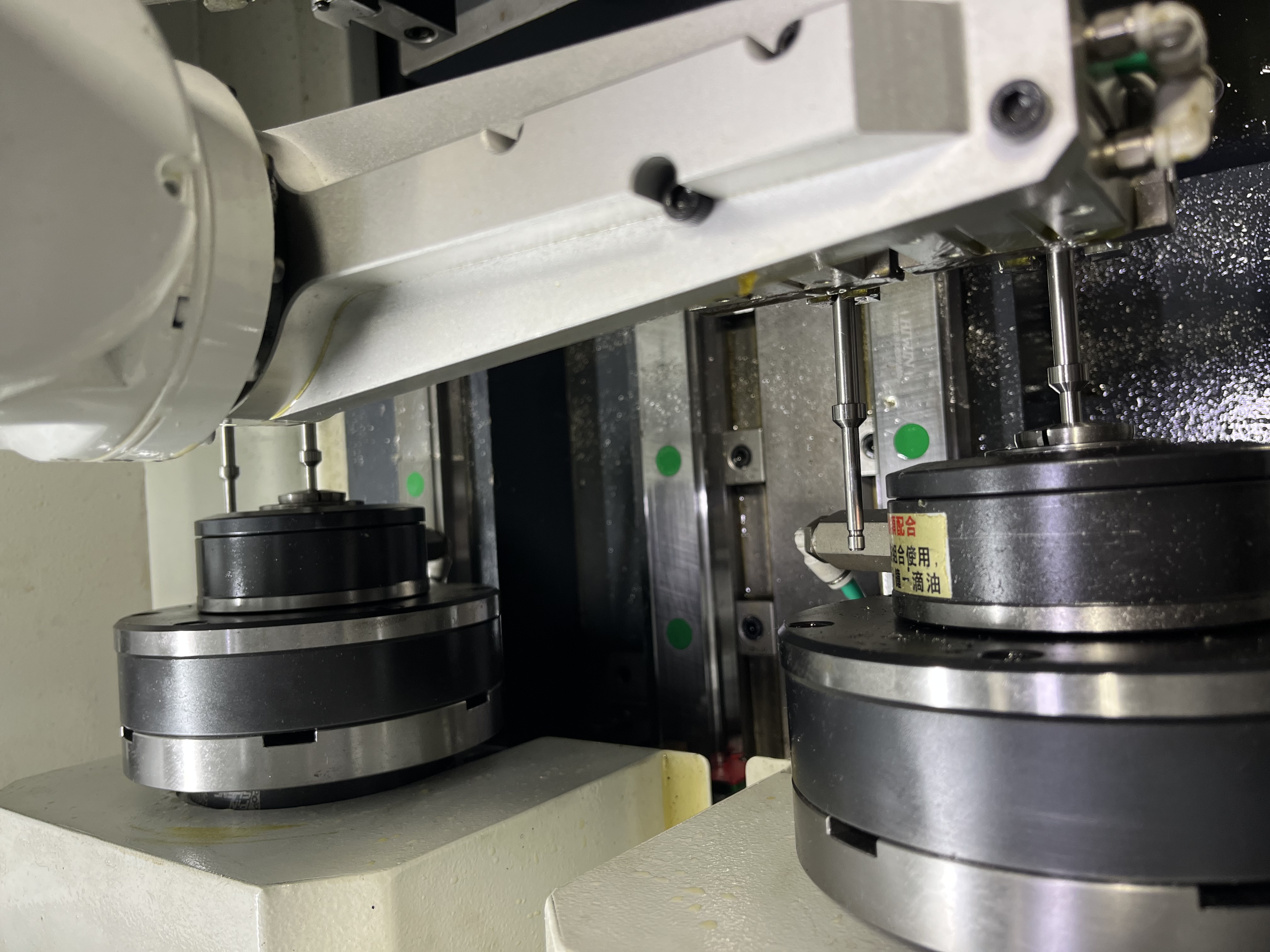
The job came in on a Wednesday afternoon. Aerospace customer, one of those jobs where the purchase order has more paperwork than the print does. The part was a Inconel 718 flange, about 150mm in diameter and 500mm long. It needed a 6mm through-hole drilled straight through the center. Tolerance on position was 0.1mm at depth, surface finish Ra 0.8. Standard stuff for that industry, except for the material.
Inconel 718 is not forgiving. It work-hardens, it retains heat, and it eats cutting tools for breakfast. The recommended cutting speed for deep hole drilling in Inconel with carbide is around 40 meters per minute, which works out to about 2,100 RPM on a 6mm drill. The recommended feed is 0.02 mm/rev, which gives you a penetration rate of roughly 42mm per minute. At that rate, a 500mm hole should take about 12 minutes.
The first drill did not make it past 200mm.
I was watching the coolant pressure gauge like a hawk, listening to the cut, and everything sounded fine for the first few minutes. Then the pressure spiked, the torque alarm tripped, and the machine retracted automatically. When I pulled the drill out, the carbide tip was gone. It had fractured clean off about 3mm from the cutting edge. The broken piece was still in the hole.
Extracting a broken carbide tip from a 6mm hole in Inconel is not fun. I tried a carbide burr first, then a spark eroder, then finally had to send the part out to a shop with EDM capability. That cost two days and four hundred dollars.
The second attempt I backed the feed down to 0.015 mm/rev. Thirty-one millimeters per minute penetration rate. The drill made it to 350mm this time before it grabbed and snapped. Same result. Another extraction, another delay.
I sat down and did the math on the third attempt. If I dropped the feed to 0.01 mm/rev, the penetration rate would be 21mm per minute. That is 5mm per minute. The hole would take 100 minutes. One hour and forty minutes to drill a single 6mm hole. But the tool load would be half of what it was at the recommended feed, and the heat generation would be significantly lower.
I also changed the peck cycle. Instead of a continuous feed, I programmed a peck of 5mm depth with a full retract to clear chips. Every five minutes, the drill would pull out, clear the chips, and go back in. It slowed things down even more, but it meant the chips were never accumulating in the hole.
I hit cycle start and watched the timer tick. Five minutes. Ten. Twenty. The coolant pressure held steady at 800 psi. The torque stayed flat. The chips coming out were short and even, the way they should be. Thirty minutes. Forty- five. The machine kept running.
At about the seventy-minute mark, I noticed the torque creeping up by about five percent. Not enough to trigger an alarm, but enough to get my attention. I let it run for another ten minutes and the torque stabilized again. Probably a slight variation in the material hardness.
At ninety-two minutes, the coolant stream changed color slightly. I leaned in to look at the return port and the chips looked good, still short and even. The machine ran for another eight minutes.
At one hundred minutes exactly, the drill broke through the back face. The coolant pressure dropped instantly and the machine completed the retract cycle. I pulled the part off the machine and measured the hole. Straight, within tolerance, surface finish Ra 0.6. Beautiful.
The cycle time was brutal. One hundred minutes for one hole. But the drill was still sharp when it finished. I could have run a second hole with the same tool if the job had required it.
That job taught me something that has stuck with me ever since. In deep hole drilling, the material sets the pace. You cannot hurry Inconel. You cannot push titanium. You cannot force stainless. The tool will break every single time, and then you get to spend two days extracting it and explaining to your production manager why the job is late.
Pushing the feed to save time often costs more time in the end. When the tool breaks, you lose the tool, you lose the part, and you lose the time to extract and restart. Running at a conservative feed rate is not admitting defeat. It is acknowledging reality.
Patience is a cutting parameter. You can set it just like feed and speed, and it is just as important.