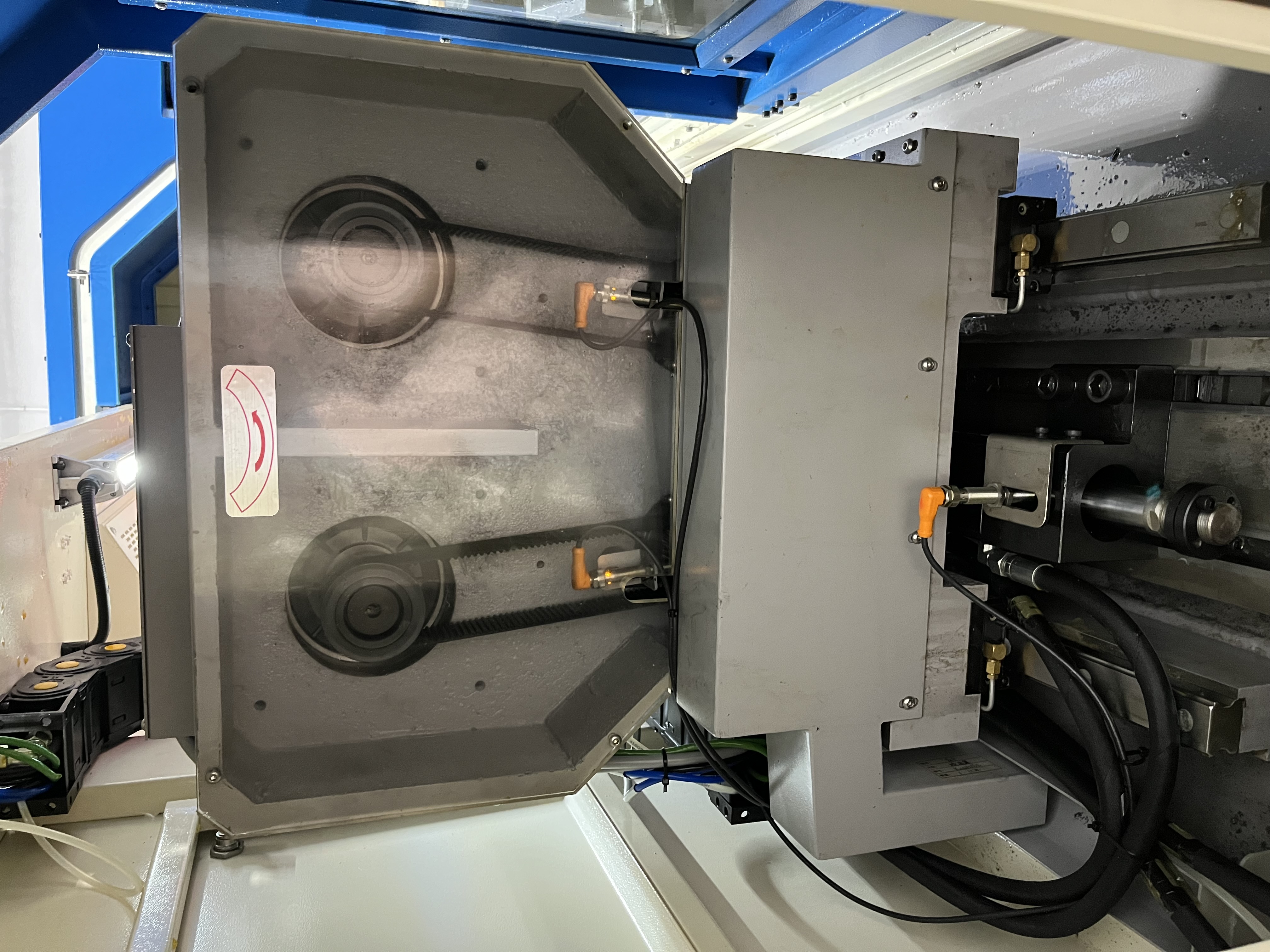
I had this one machine, a Mollart 750, that started drilling holes at a slight angle. Not enough to scrap parts right away, but enough that every hole was trending toward the low side of the tolerance band. The operator on the day shift kept adjusting his offsets to compensate, and the night shift guy was doing the same thing in the opposite direction. Nobody talked about it, so the problem festered for about two weeks.
When I finally got called in, the situation was worse than I expected. The machine was drilling holes that were 0.25mm off position at 350mm depth. The operator was fighting the machine every cycle, tweaking the X and Y offsets between every part just to keep things within spec.
I started with everything I knew. Foundation bolts were tight. Guide bushings were fresh, just replaced three weeks prior. The gun drills were sharp and properly ground. The material was the same 4340 we always ran through that machine. Coolant pressure at the tool was reading 1100 psi, right where it should be.
By the third day I had run out of standard checks. I reinstalled the guide bushing holders, thinking maybe the bore was worn. No change. I swapped the entire drilling head from a sister machine to rule out a mechanical problem in the feed unit. Same result. The machine was drilling crooked on a different head with different tooling.
I started paying attention to the sound. There was a low hum coming from the spindle at higher RPMs, around 4,000 RPM and above. It was subtle, easy to miss if you weren’t listening for it. I checked the spindle bearing preload with the maintenance manual’s procedure. The reading was inconsistent, jumping around more than it should.
I called the spindle rebuilder, a company called Setco out of Ohio. They talked me through a few more tests, then said, “Ship it to us.”
We pulled the spindle assembly on a Friday afternoon. The rebuilder had it stripped down by Monday. The front bearing race had spalled, small flakes of metal coming off the inner race. It was barely visible, but it was enough to let the spindle wobble a few tenths under load. The wobble translated into a consistent angular error in every hole.
The rebuilder replaced both bearings, set the preload properly, and had the spindle back to us by Wednesday. We reinstalled it, ran a test bar, and the runout was 0.002mm. The next production hole was dead straight, 0.03mm off position at depth.
The total cost of the repair was about three thousand dollars. The cost of the two weeks of fighting the machine, the scrapped parts we did not catch, and the lost production time was easily ten times that.
I learned that when a machine gradually goes off, it is usually a wear issue, not a setup issue. A sudden change in hole straightness is probably something simple like a loose bolt. But a slow drift over days or weeks, especially one that gets worse at higher speeds, points to the spindle.
I now keep a vibration analyzer in my toolbox. I take a baseline reading on every machine spindle every quarter. When the vibration signature changes, I know the bearing is starting to go long before it affects the parts. That one repair paid for the analyzer ten times over.