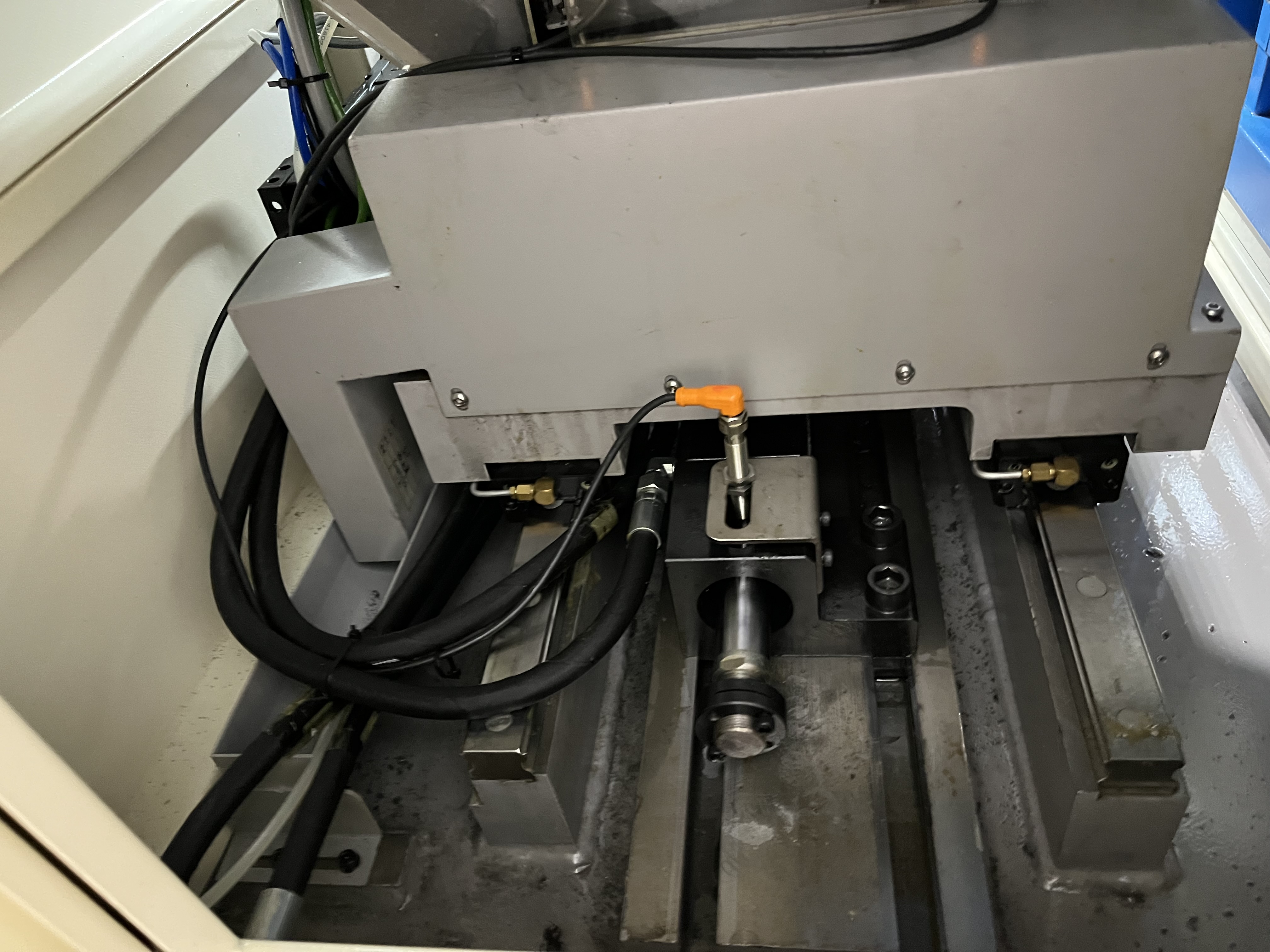
The new guy’s name was Marcus. He’d been with us for about two weeks. He came from a general machining background — vertical mills, manual lathes, that kind of work — but this was his first exposure to deep hole drilling. He was sharp, asked good questions, and seemed to have a solid grasp of the fundamentals of machining. I was optimistic about him.
What I didn’t know at the time was that Marcus had never even seen a guide bushing before. In the general machining world, you don’t use them. A drill chuck holds the drill, the drill goes into the material, and that’s the whole story. The concept of a separate precision guide that supports the drill at the entry point — that’s unique to deep hole drilling and a few other specialized processes. It never occurred to me that he wouldn’t know about bushings because they were so fundamental to everything I did.
I paired him with me for his first week on the deep hole machine. I walked him through the basics — how a gun drill works, why coolant pressure matters, how to read chip formation, what the different sounds mean. We spent a whole afternoon just on the relationship between feed rate and chip shape. By day five, he was loading parts and running the cycle under my supervision. He only needed minor corrections on the setup sequence. I was starting to think he’d be up to speed faster than most new hires.
On Monday of his third week, I gave him a simple job to run on his own. A batch of 1018 steel pins for a conveyor system, 15mm hole, 250mm deep, straight through. Straightforward. The kind of job that’s hard to mess up even if you try. I told him to set up the machine, load the part, and run the first piece. I’d check it before he ran the rest of the batch.
Twenty minutes later, I heard the machine running from across the shop. The sound was wrong. It had that hollow, rattling quality that says the drill isn’t properly supported at the entry point. Instead of the clean, high-pitched whine of a properly guided gun drill, it sounded like a loose bearing in a tin can.
I walked over to the machine and looked at the setup.
Marcus had done everything right. The part was fixtured properly in the vise. The whip guide was positioned at the correct height. The coolant lines were connected. The pilot hole was clear and concentric.
But he had not installed the guide bushing.
The guide bushing is a small hardened steel ring — about the size of a thimble — that fits into the bushing holder at the machine spindle. It supports the gun drill at the entry point of the part, providing a precise bearing surface that keeps the drill concentric with the hole as it starts cutting. Without it, the drill enters the part unsupported, wobbling slightly at the entry. That wobble gets worse as the hole gets deeper, and eventually the drill either deflects off course or snaps from the cyclic bending load.
Marcus had loaded the part, set up the whip guide, connected the coolant lines, and started the cycle without ever looking at the bushing holder. He didn’t know it needed a bushing. It wasn’t in his training from the general machining world, where you don’t use guide bushings on standard drills. Nobody had shown him.
I hit the emergency stop about ten seconds after I got to the machine. The drill had penetrated about 30mm into the part — enough to establish the start of the hole, but hopefully not enough to cause permanent damage to either the tool or the part. I pulled the drill out carefully and checked it under the microscope on my bench.
The cutting edges were fine — 1018 is soft and forgiving, unlike the 4140 and stainless we usually ran. If this had been a harder material, the carbide would have chipped within the first 20mm of unsupported cutting. I measured the hole — the entry was slightly oversized, about 0.05mm over the nominal 15mm, because the unsupported drill had wobbled at the start and reamed the entry hole slightly larger. The rest of the 30mm looked okay.
“Marcus,” I said. “Come here.”
He walked over, looking at the machine with a puzzled expression. I pointed at the bushing holder, which was empty and clean. “What’s missing?”
He looked at it. Looked at my machine across the aisle, where the bushing was visible in the holder. Looked at the third machine on the line. Then his face went pale. “The guide bushing.”
“Right. You know what happens when you run a gun drill without a guide bushing?”
He nodded slowly. “It wobbles. Snaps.”
“It can. This time it didn’t. But if I hadn’t caught it, you would have gone to full depth without a bushing. Two hundred and fifty millimeters of unsupported drilling. By the end, the drill would have been deflected by at least a millimeter. The hole would have been out of position by that much. The part would be scrap. And the drill might have snapped at the entry point from the cyclic stress.”
I showed him the bushing holder and pulled a fresh bushing from the cabinet. I walked him through the installation step by step — how to insert it, how to check that it seats fully against the shoulder, how to verify it’s tight with the set screw. Then I showed him how to check for runout with a dial indicator after the bushing is installed, zeroing the indicator on the bushing bore and rotating the spindle by hand.
“Look,” I told him. “You didn’t know. I should have shown you this on day one. That’s on me. But now you know, and you’ll never forget it, because you almost ruined a part learning it. A guide bushing costs fifty dollars. The part you were about to scrap costs about eighty in material alone. The drill would have been another three hundred. Five hundred dollars worth of damage because nobody showed you a fifty-cent piece of hardened steel.”
He didn’t forget. Marcus went on to become one of our best operators over the next three years. He became the guy who double-checks every setup element before hitting the green button — not just the bushing, but the whip guide position, the coolant pressure, the part alignment. A few years later, he told me that the bushing incident was the most valuable mistake he ever made, because it taught him that in deep hole drilling, every single component matters. You can’t skip anything.
I still tell this story when I train new operators. Not to scare them, but to make a point: a deep hole machine is a system of interdependent components. The guide bushing exists because without it, the drill will eventually fail. Every component exists for a reason, and skipping one is like jumping out of a plane and wondering why the parachute matters.
These days, every new operator I train gets a laminated checklist. It hangs on the side of each machine by a short chain. The first item on the list is “guide bushing — installed and verified with dial indicator.” It seems obvious. But it’s obvious only after someone learns why it matters.
That laminated checklist is still hanging on every machine in the shop, five years later. It’s beaten up, stained with coolant, and held together with tape in a few places. But nobody has ever tried to take it down. It’s become part of the machine, like the chip tray or the coolant hose.
Marcus is running his own crew at a shop in North Carolina now. He called me about a year ago to ask my opinion on a BTA drilling problem he was having. We talked for an hour about feeds, speeds, and chip evacuation. At the end of the call, I asked him if he still checks the guide bushing before every job.
“I check it twice,” he said. “Once when I set up, and once right before I hit the green button. And I make sure every guy on my crew does the same.”
He also told me he’d trained four operators who’d never made the bushing mistake because he showed them on day one. “I tell them your story,” he said. “The guy who almost scrapped a part because nobody showed him the bushing. They remember it.”
I hung up the phone feeling prouder than I had any right to be. That’s the thing about training — you never know which lesson is going to stick. But when one does, it’s worth more than any amount of technical knowledge you could have passed on.
Marcus taught me that as much as I taught him. Training isn’t just showing someone the steps. It’s showing them why the steps exist. And sometimes the best way to do that is to let them almost make a mistake, and be there to catch it before it costs anything.
That laminated checklist that came out of Marcus’s mistake is still on the machine, five years later. It’s stained with coolant and held together with tape, but it’s still there. When I train a new operator, I take the checklist off the machine and hand it to them. “Read this,” I tell them. “And then read it again. Because the guy who forgot the guide bushing thought he knew what he was doing too.”
I think about that day every time I see an operator skip a step in the setup. I used to get frustrated. Now I walk over and ask, “Have you seen the checklist?” Nine times out of ten, they haven’t. And that’s my fault, not theirs. The checklist isn’t for the operators who already know. It’s for the ones who don’t know what they don’t know. Like Marcus.
I still call Marcus every few months to check in. He’s doing well in North Carolina, running a shop that specializes in deep hole work for the aerospace industry. He told me his operators go through a two-week training program before they touch a machine. And the first thing they learn is the guide bushing. “I tell them the story about the guy who almost scrapped a part,” he said. “They always remember.”
I think about Marcus every time I train a new operator. I don’t just show them the bushing. I show them why it matters. I tell them the story of the guy who almost scrapped a part because nobody showed him. And I make sure they never become that guy.
Marcus called me last week. He’s up for a plant manager position at his shop in North Carolina. “I still check the bushing twice,” he said. “And I make sure everyone else does too.” I told him he’d make a great plant manager. Because he understands that the small things are the big things.
That laminated checklist that came out of Marcus’s mistake is still on our machines. It’s been revised a few times — we added more items over the years — but the first line still says “Guide bushing — installed and verified.” It always will. Because that’s where it all started. One missing bushing, one new guy who didn’t know, one mentor who didn’t think to show him. And a checklist that has saved a hundred parts since.
I still think about that day every time I train someone new. Training isn’t about showing someone the steps. It’s about showing them why the steps exist. Marcus and I learned that together. And I’ll never forget it.
The laminated checklist that came out of that mistake is worth more than any training manual I’ve ever read. It’s not the checklist itself. It’s the story behind it. And every operator who reads it learns that lesson one time.