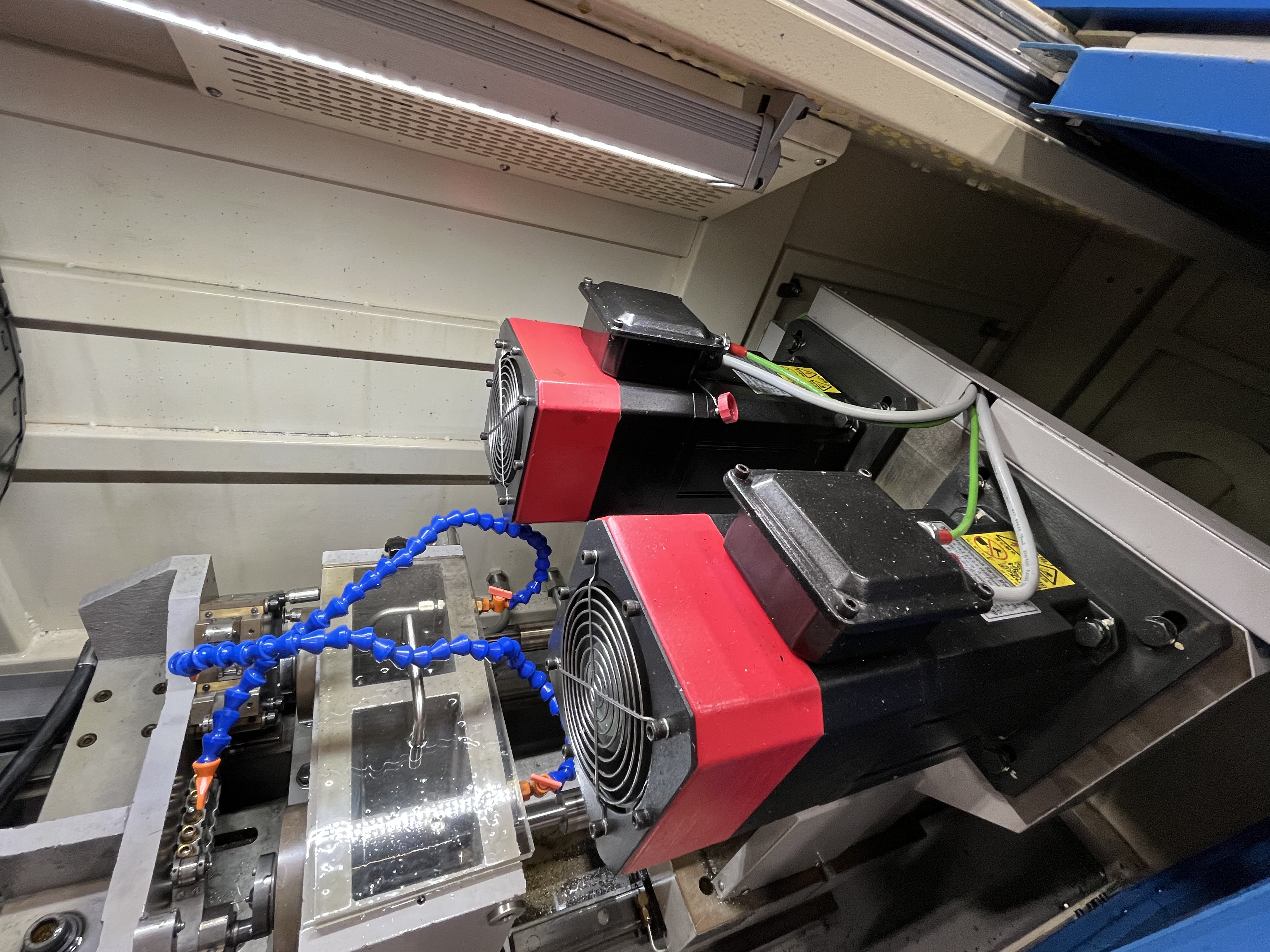
It was a Monday morning in January, the shop was freezing, and I was behind schedule. The weekend crew had left a machine set up and ready to run, and the part on the table was a large hydraulic cylinder block that had already gone through several operations. All it needed was a 25mm hole drilled 800mm deep. About an hour of cycle time, then on to the next operation.
The machine had been sitting idle since Friday evening. Three days of the shop temperature dropping to maybe 10 degrees Celsius overnight. The spindle, the ball screws, the guide bushings, the entire machine structure was cold soaked.
Normally I would run a warm-up cycle. Ten minutes at low RPM, then gradually ramping up to operating speed. Let the spindle bearings warm up, let the oil circulate, let the machine reach thermal equilibrium. Standard procedure that every operator knows.
But I was in a hurry. The production manager had been on my back all week about cycle times. The customer was calling about delivery dates. And the warm-up cycle would take ten minutes that I did not think I had.
So I hit cycle start on a cold machine.
The first fifty millimeters drilled fine. The second fifty, I noticed the torque reading was higher than normal. Not alarm territory, but elevated. I ignored it. The next hundred millimeters, the coolant return started looking funny, the chips were not coming out evenly. I ignored that too.
At about 300mm depth, the machine threw a torque alarm and stopped. I retracted the drill and found the tip was gone. Not just chipped. Gone. The carbide had fractured and the pieces were somewhere inside the 800mm hole.
The extraction took the rest of the day. We tried everything. Carbide burrs, magnetic retrievers, flushing with high pressure coolant. Finally we had to send the part out to a shop with EDM capability to burn the broken pieces out of the hole. That cost eight hundred dollars. The drill was another three hundred. And the EDM shop damaged the bore surface during extraction, so the part was scrap anyway. Total loss on that cylinder block was about two thousand dollars, not counting the lost production time.
Here is what happened. The cold spindle bearings had not reached their operating clearance. At 10 degrees Celsius, the bearing preload was tighter than it should have been because the spindle housing had not expanded yet. The tight preload created additional heat at the front bearing, which caused the spindle to grow unevenly. That growth changed the alignment of the drill relative to the hole center. The misalignment loaded the drill unevenly, which caused the carbide tip to fracture.
If I had run the warm-up cycle, the spindle would have reached a steady temperature, the bearings would have settled into their proper preload, and the alignment would have been correct. The warm-up would have taken ten minutes and saved me two thousand dollars.
I have not skipped a warm-up since, and I get on every operator who tries it. I printed a sign and put it on every machine. “Warm up or write up. Your choice.”
The math is simple. Ten minutes of warm-up costs the shop maybe fifteen dollars in labor and overhead. Skipping it risks a part that could be worth thousands. It is one of those things that seems like a time saver until the day it costs you a job.
These days I even warm up the machine if it has been sitting for more than an hour. It takes less time than explaining to the production manager why a part is scrap.