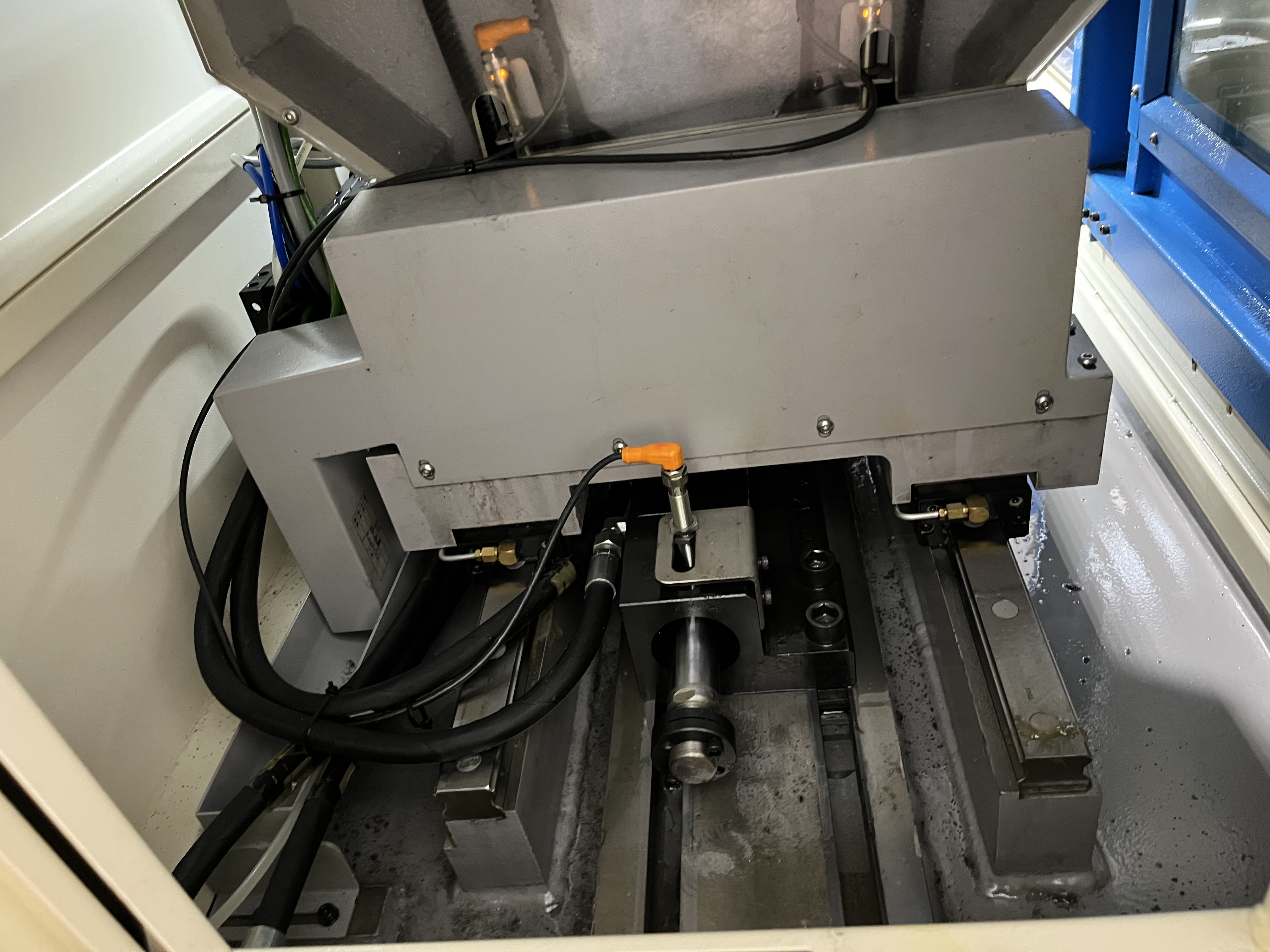
I was running a job that still haunts me a little when I think about it. Forty titanium shafts, aerospace grade Ti-6Al-4V, each one needed a 14mm hole drilled 600mm deep. The material alone was worth about eight hundred dollars per shaft, and the customer had a delivery date that did not have any slack.
The machine was a UNISIG BTA system with a 200-gallon coolant tank and a pump rated at 2000 psi. The gauge on the pump console read 1500 psi steady, which was right where it should be for that diameter and depth. Everything looked good on paper.
The first three holes were fine. The chips were coming out clean, the surface finish looked good, the cycle time was consistent. Then on the fourth hole, the chip shape changed. Instead of the short, broken chips I was expecting, I started seeing long, stringy ribbons. That is a bad sign in deep hole drilling. Stringy chips mean the chips are not breaking properly, which means they are not clearing the hole, which means you are about to break a drill.
I checked the feed rate first. It was set to 0.035 mm/rev, right where it should be for titanium at that diameter. I checked the tool condition, pulled the drill and looked at it under magnification. The cutting edges were clean, no chipping, no wear. I tried adjusting the peck cycle, shortening the retract distance to clear chips more often. The chips stayed stringy.
I spent a whole shift chasing this problem. I changed the coolant concentration, thinking maybe the lubricity was off. I checked the filter housing, pulled the filter element and inspected it. It looked fine, a little dirty but nothing alarming.
The next morning I was standing there, watching the pressure gauge read 1500 psi like it always did, when a thought hit me. The gauge is at the pump. What is the pressure at the tool?
I took a pressure gauge out of the toolroom and installed it at the rotating union inlet, right where the coolant enters the drill head. The reading was 720 psi.
I stared at it for a full minute. The pump was pushing 1500 psi, but by the time the coolant traveled through forty feet of hose, through the filter housing, through the machine plumbing, and reached the tool, more than half the pressure was gone.
The root cause was a filter element that was partially clogged with fine swarf from a previous job. It was not clogged enough to trip the differential pressure switch, but it was clogged enough to drop the flow significantly. At 720 psi at the tool, the coolant velocity was too low to push the chips out of a 600mm deep hole. The chips were accumulating in the bore and getting re-cut, which created the stringy mess.
I replaced the filter element and the pressure at the tool jumped to 1350 psi. The chips went back to short and broken on the very next hole.
I ordered permanent pressure gauges for every machine in the shop and installed them at the rotating union inlet. The gauges cost about forty dollars each, including the fittings. The information they provide is worth ten times that. Now when I look at coolant pressure, I look at the pressure at the tool, not the pressure at the pump. The two numbers can be hundreds of psi apart, and the difference tells you more about the health of your coolant system than either number alone.
These days I also track the pressure drop across the filter on a weekly basis. A rising pressure drop means the filter is loading up, and I change it before it becomes a problem. It takes two minutes and has saved me from repeating that titanium job nightmare more times than I can count.