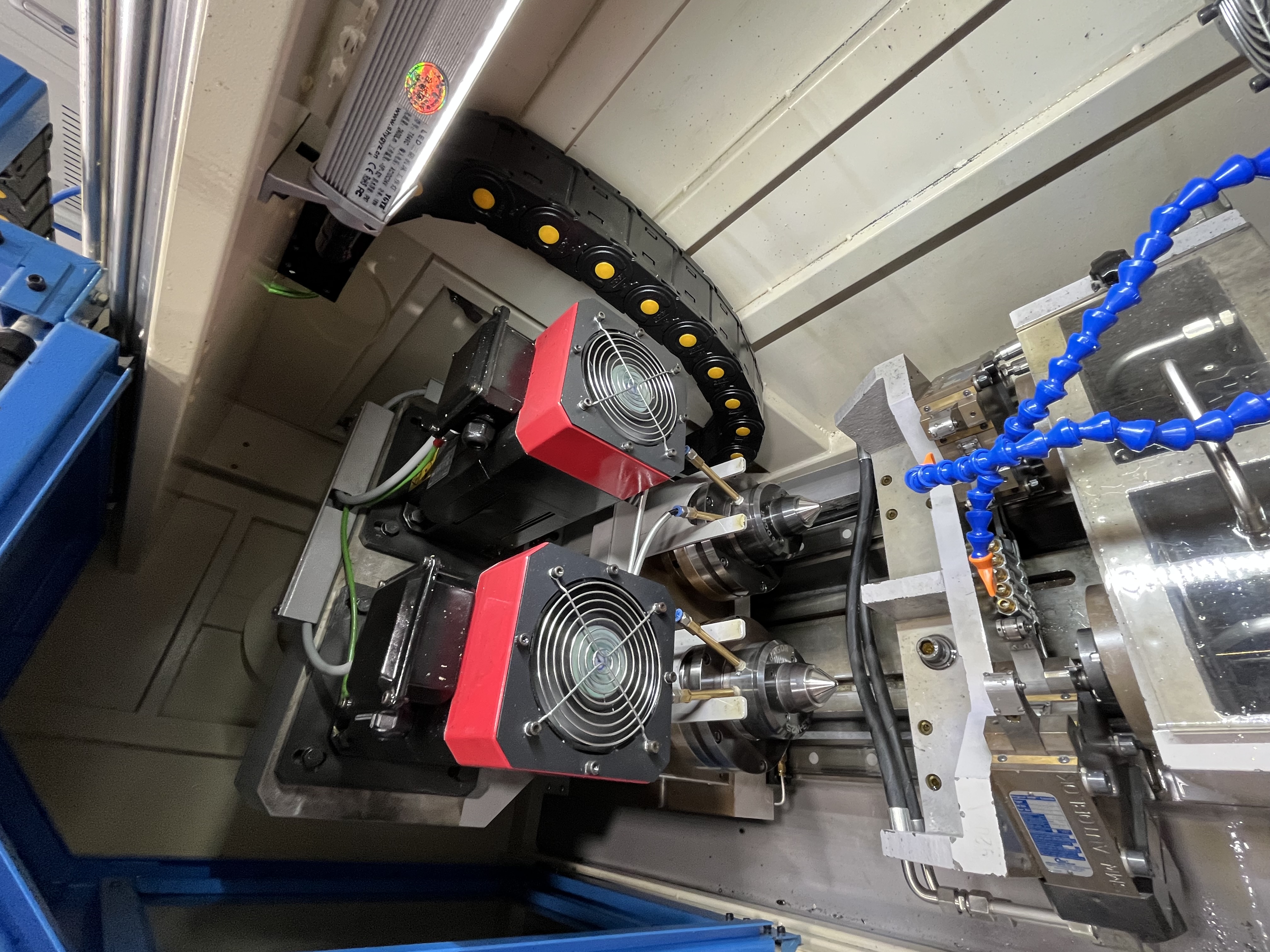
I was running a job in 304 stainless steel, which is not my favorite material to begin with. It work- hardens, it galls, and it has a habit of making you think everything is fine right up until the moment it is not. The part was a flanged fitting, about 300mm long, needing a 16mm through-hole with an Ra 0.4 finish. The feed rate on the setup sheet said 0.08 mm/rev, which seemed aggressive to me for stainless.
The machine was a Mollart 800 with a BTA head. I had run similar jobs in 304 before and usually ran around 0.05 mm/rev. When I saw 0.08 on the sheet, I assumed it was a typo or the programmer had been overly optimistic. My gut told me that was too fast, that I would tear up the tool and ruin the hole.
So I overrode the feed rate down to 0.05 mm/rev and started the cycle.
The first thirty minutes were fine. The chips were coming out consistently, the torque was stable, the pressure was holding. I felt vindicated. The machine was running happy and my conservative approach was saving us a tool change.
Then the torque started creeping up. Slowly at first, about two or three percent over ten minutes. Then faster. The sound of the cut changed from a clean hum to a rough chatter. The coolant return started showing fine metallic dust instead of chips.
I stopped the machine and retracted the tool. The BTA head was wiped out. The carbide inserts had shattered and the guide pads were scored beyond re-use. Worse, the bore surface inside the part was torn up. The chatter had created a washboard pattern on the wall of the hole, deep enough that the finish was way out of spec. The part was scrap.
I could not figure out what had gone wrong. The feed was conservative, the speed was right, the coolant pressure was good. I called over the senior machinist, a guy named Dave who had been running deep hole drills since the 80s. He looked at the setup sheet, looked at my override, and shook his head.
“You caused it,” he said. “The feed was too low.”
I argued with him. “I was being careful. 304 work- hardens if you push it.”
“Exactly,” he said. “304 work-hardens if you push it. But it also work- hardens if you rub it. At 0.05 mm/rev, you were rubbing, not cutting. The material work-hardened ahead of the cut. By the time the tool got to it, it was harder than the carbide. The inserts chipped, and then the whole head went.”
He explained it in terms that I still remember. “Every material has a minimum chip thickness. Below that, the cutting edge does not shear the material cleanly. It pushes it aside, plows it, work- hardens it. That is what happened here. The chip thickness was below the minimum for 304, so the edge rubbed instead of cut. Once the edge blunted, the heat built up, and everything went downhill.”
I went back to the setup sheet and looked at it with fresh eyes. The 0.08 mm/rev had been calculated by the tooling engineer based on tool geometry, material properties, and coolant pressure. It was not aggressive. It was the minimum feed required to maintain a stable cut in 304 with that specific tool.
I put in a new BTA head, set the feed to 0.08 mm/rev as specified, and ran the next part. The chips came out short and even. The surface finish was a consistent Ra 0.35. The tool was still sharp when the cycle finished.
That scrap part cost the shop about six hundred dollars in material and two hours of machine time. But the lesson was worth more than that. I had been running machines based on how things felt, not on what the numbers said. Feel is important in this trade, absolutely. But feel has to be calibrated against data. If the feed rate on the sheet says 0.08 and your gut says 0.05, trust the sheet until you have evidence that it is wrong.
I still have moments where I override a feed rate. But now I do it with a reason, not a feeling. I check the chip shape first. I look at the torque. I listen to the cut. If everything says the programmed feed is right, I let the machine run. The machine knows what it is doing. Sometimes my gut does not.