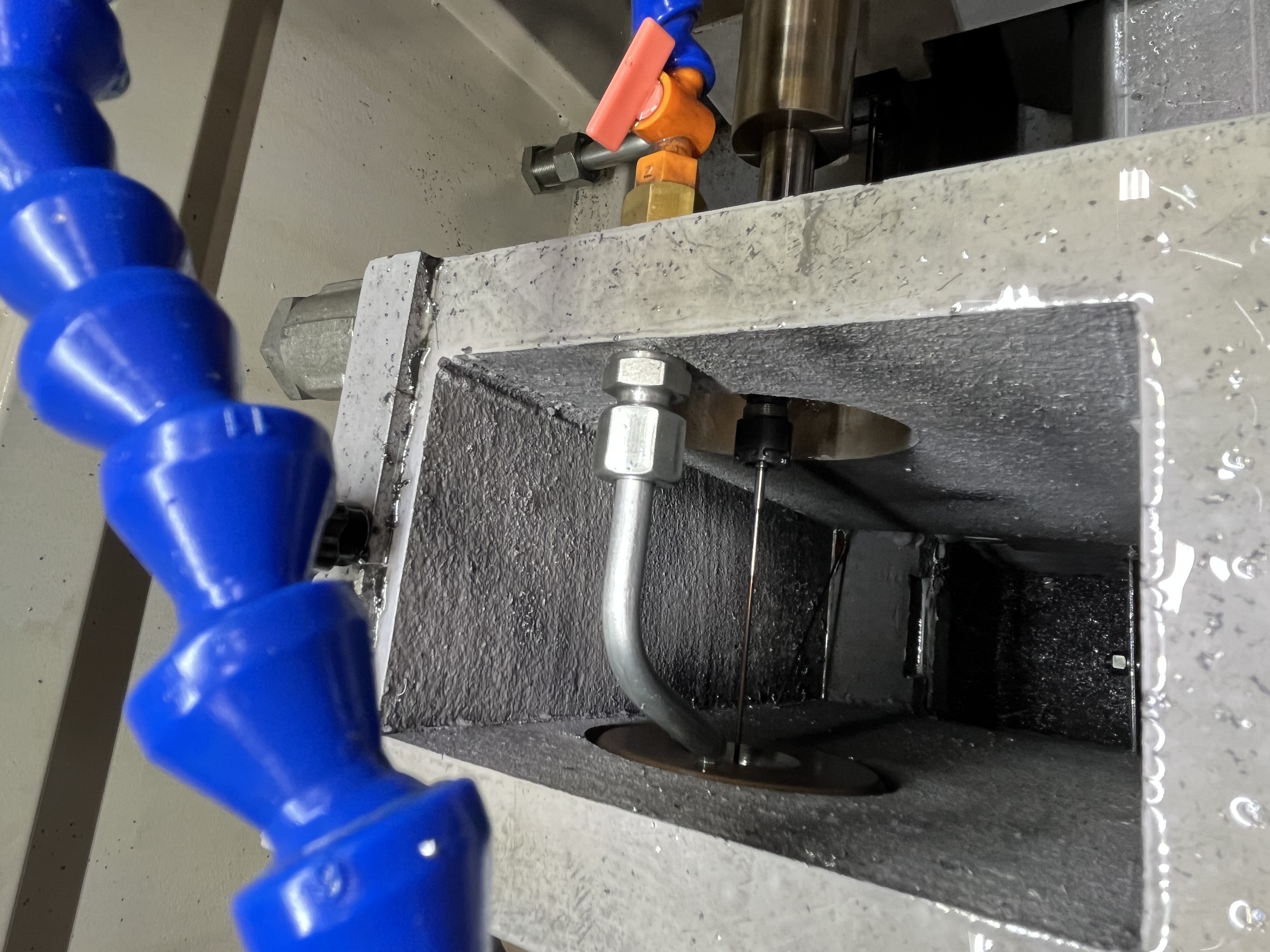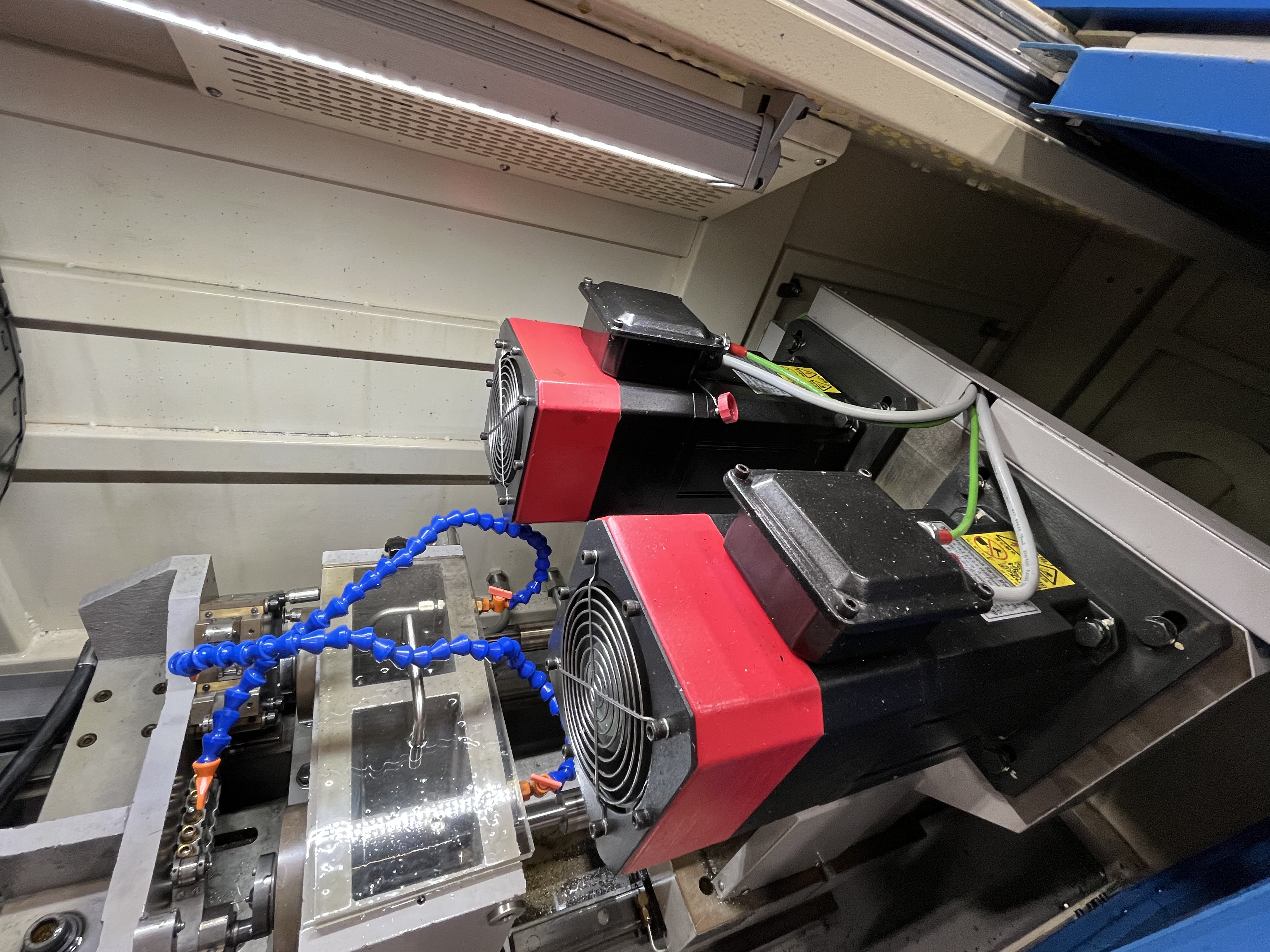
Steady Rest Setup for Long Workpieces in Deep Hole Drilling: Placement, Alignment, and Support

Long workpieces cause problems that short ones do not. A 500mm shaft supported at both ends deflects under its own weight by a fraction of a millimeter. A 2000mm shaft deflects by several millimeters. That deflection pulls the hole off-center. Steady rests fix this. But only if they are set up correctly. A misaligned steady rest is worse than no steady rest — it forces the workpiece into a bend that the drill then follows. ...
June 17, 2026 · Engineer at the Deep Hole

reworking bore drilled off position

Problem Description A bore drilled off position is a costly problem in deep hole drilling. I’ve had parts where the bore exit was 0.5 mm off location on a 20 mm diameter hole through 300 mm of 4140 steel. The part was otherwise perfectly machined, but the positional error made it scrap unless I could rework it. In deep hole drilling, bore position errors are especially painful because so much machining time has already been invested when the error is discovered. ...

June 16, 2026 · Engineer at the Deep Hole

A Job That Took Three Setups to Get Right

The First Setup: Misalignment I had a job drilling a 20mm bore through a 300mm stainless steel block. The material was 316L, which is notoriously gummy and work-hardens at the cut zone if the tool rubs instead of shearing. The customer spec called for a positional tolerance of 0.1mm at the exit, a diameter tolerance of H8, and a surface finish of Ra 0.8 microns. Simple, right? I had drilled hundreds of holes through stainless steel. I set up the machine, aligned the guide bushing with the tailstock center, and started cutting. ...

June 11, 2026 · Engineer at the Deep Hole

Deep Hole Drilling Machine Installation and Foundation Requirements

Installing a deep hole drilling machine is more involved than most other machine tools. The long stroke and high cutting forces require a solid foundation and careful alignment. I’ve been involved in installing several deep hole drilling machines. Getting the foundation and alignment right from the start prevents problems that would otherwise show up in every hole drilled. Foundation Requirements A deep hole drilling machine needs a foundation that absorbs the cutting forces and prevents vibration. The foundation requirements depend on the machine size and weight. ...

June 11, 2026 · Engineer at the Deep Hole

Drill Wandering: Causes and Corrective Actions

Problem Description Drill wandering is a gradual deviation of the bore centerline as the drill advances. It differs from a sudden step or jump caused by hitting a hard inclusion — wandering is a steady drift that increases with depth. I have seen 400 mm deep holes where the exit was 1.2 mm off center while the entry was perfectly located. The problem shows up in two ways. Gradual drift creates a curved bore that fails straightness specs. Step wandering, where the bore jogs at a certain depth, usually means the drill hit a material change or hard spot. The distinction matters because the fixes are completely different. ...

June 11, 2026 · Engineer at the Deep Hole

Hole Deviation in Deep Hole Drilling: How to Prevent It

Understanding Hole Deviation Hole deviation is one of the most frustrating problems in deep hole drilling. The drill starts on center and slowly drifts off course as it goes deeper. By the time it reaches full depth, the hole may be out of position by several millimeters. I have seen deviation ruin parts at depths as shallow as 50mm and as deep as 2 meters. The financial impact adds up fast when you scrap a part that already has hours of machining invested. ...

June 11, 2026 · Engineer at the Deep Hole

Leveling and Aligning Deep Hole Drilling Machines After Installation

Leveling and aligning a deep hole drilling machine after installation is one of the most important steps in setting up the machine for production. A machine that isn’t properly leveled and aligned will produce holes that are off-center and non-straight. Here’s the procedure I use. Tools Needed Precision level (0.02mm per meter sensitivity) Test bar (precision-ground, fits the spindle) Dial indicators (0.001mm resolution) Feeler gauges Wrenches for leveling pads Step 1: Rough Leveling Place the precision level on the machine bed ways near the headstock end. Adjust the leveling pads until the bed is within 0.1mm per meter of level in both the longitudinal and transverse directions. ...

June 11, 2026 · Engineer at the Deep Hole

Machine Alignment Checks for Deep Hole Drilling

Why Alignment Matters Machine alignment is the foundation of every straight hole you drill. If the machine is not aligned, nothing else you do will fix the hole straightness problem. I learned this lesson the hard way early in my career. I spent two days chasing a hole deviation problem on a gun drilling machine. I changed bushings, adjusted feeds and speeds, and swapped drills. Nothing worked. The machine had drifted out of alignment by 0.04mm per meter while I was looking the other way. ...

June 11, 2026 · Engineer at the Deep Hole

What Is a Test Bar and How Is It Used for Machine Verification

A test bar is a precision-ground bar that fits into the machine spindle. It extends from the spindle nose and is used to check the machine’s alignment. It’s a simple tool, but it’s essential for verifying machine condition. I use a test bar for every machine installation and after any significant repair. The standard that governs this procedure is VDI 3212, which defines the acceptance test requirements for deep hole drilling machines with one or more spindles. I follow VDI 3212 as the baseline and adapt the tolerances based on the specific job requirements. ...

June 11, 2026 · Engineer at the Deep Hole