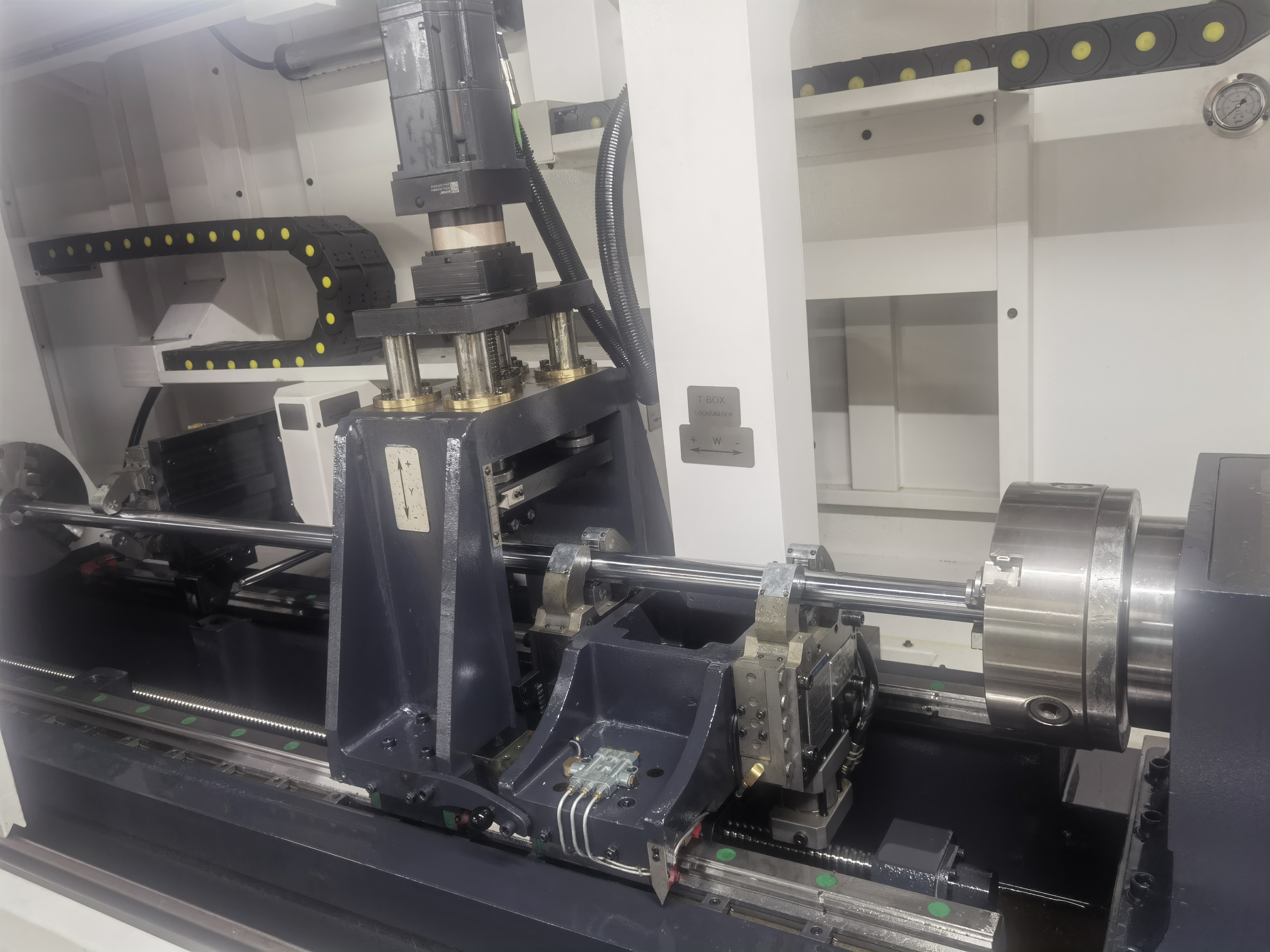
How to Read the Coolant Pressure Gauge During Gun Drilling: Diagnosis by the Numbers

The coolant pressure gauge is the most informative instrument on a gun drilling machine. It tells you about chip evacuation, pump condition, filter status, and drill condition — all in real time. But only if you know what to look for. I have spent years learning to read pressure patterns. Here is what I have found. Where to Measure Pressure The pressure at the pump gauge is not the pressure at the tool tip. I install gauges at two locations: ...
June 17, 2026 · Engineer at the Deep Hole

Coolant Filtration System Design and Configuration

Coolant filtration is essential for deep hole drilling. Chips that recirculate through the coolant will damage the drill edge and score the bore surface. I have designed and modified filtration systems for dozens of machines, and the system design has a direct impact on tool life, surface finish, and machine reliability. A well-designed filtration system delivers clean coolant consistently and requires minimal operator attention. Filter Type Comparison There are several filtration technologies available, and choosing the right one depends on your material, chip volume, and coolant pressure requirements. Here is how the main types compare based on my experience. ...

June 16, 2026 · Engineer at the Deep Hole

Coolant Flow Rate vs Pressure in Gun Drilling: What Actually Moves the Chips

I spent the first three years of my career watching the coolant pressure gauge like a hawk. If it held steady at 1200 psi, I assumed everything was fine. Chips were packing? Must be a feed issue. Drill broke? Wrong parameters. Then a senior engineer walked over to my machine one afternoon, pulled out a bucket and a stopwatch, and showed me that my pump was delivering less than half the flow the drill actually needed. The pressure gauge never flickered. ...

June 16, 2026 · Engineer at the Deep Hole

Coolant Manifold and Distribution System Design

The coolant manifold distributes high-pressure coolant from the pump to the drill through the rotating union. The manifold includes the supply lines, valves, pressure gauge, and filter. I have designed and rebuilt manifolds on a dozen deep hole drilling machines over the years, and the layout decisions have a direct impact on drilling performance and maintenance downtime. Manifold Location and Pressure Loss The manifold should be located as close to the rotating union as possible. Every meter of hose between the manifold and the union causes a pressure loss of about 50-100 psi at gun drilling pressures. I keep the distance under 2 meters. On one machine I worked on, the original builder placed the manifold 5 meters from the rotating union, and we were losing nearly 400 psi in the hose alone. Relocating the manifold to within 1 meter recovered that pressure and improved chip evacuation noticeably. ...

June 16, 2026 · Engineer at the Deep Hole

Coolant Pump Cavitation with Small Deep Hole Drills: Diagnosis and the Dump Valve Fix

I have seen this pattern more times than I can count. A shop is running 12mm gun drills with no coolant issues. Then they switch to a 6mm job and the pump starts making a rattling noise, the pressure gauge oscillates, and coolant flow becomes erratic. The diagnosis is almost always the same: the pump is cavitating because the small drill restricts flow more than the pump can tolerate. Why Small Drills Cause Cavitation A centrifugal pump needs a minimum flow rate to operate correctly. When the flow drops below this minimum, the pump recirculates fluid internally, heats up, and vapor forms at the impeller inlet. Those vapor bubbles collapse violently — that is the rattling noise you hear. ...

June 16, 2026 · Engineer at the Deep Hole

Coolant Pump Selection for Deep Hole Drilling

The coolant pump is the heart of a deep hole drilling machine. The right pump delivers adequate pressure and flow for the drilling application. The wrong pump causes chip evacuation problems, poor surface finish, and tool breakage. I have specified pumps for eight deep hole drilling systems, and I have made both good and bad choices that taught me what matters. Pump Types by Drilling Method For gun drilling, a positive displacement pump is the right choice. It delivers consistent pressure regardless of flow demand. The two most common types are piston pumps and progressing cavity pumps. Piston pumps use reciprocating pistons to pressurize the coolant. They deliver pressure up to 3000 psi with good efficiency. Progressing cavity pumps use a rotating helical rotor inside a stator to move the coolant. They deliver pressure up to 2000 psi with less pulsation than piston pumps. ...

June 16, 2026 · Engineer at the Deep Hole

Coolant System Piping Design for Deep Hole Drilling Machines

Piping design is where most coolant system installations go wrong. I have walked into shops with a $50,000 high-pressure pump and $300 worth of undersized pipe fittings that turned the whole investment into a 600 psi system instead of the designed 1,000 psi. The piping carries the coolant, but it also creates pressure losses that compound with every fitting, bend, and length of tube. Pressure Drop Fundamentals Every component in the coolant path adds resistance. The pressure drop through a system is proportional to the flow rate squared. Doubling the flow quadruples the pressure loss through the piping. This matters enormously in deep hole drilling because the flow rates are high and the pressure requirements are tight. ...

June 16, 2026 · Engineer at the Deep Hole

Coolant System PM Schedule for Deep Hole Drilling Machines

Why a PM Schedule Matters The coolant system on a deep hole drilling machine operates under high pressure and continuous duty. A gun drilling machine runs at 40-120 bar coolant pressure for every second of the cut. BTA systems run at 15-40 bar with flow rates up to 400 L/min. Components wear, filters clog, and coolant degrades. A regular PM schedule catches these changes before they cause downtime or part defects. ...

June 16, 2026 · Engineer at the Deep Hole

Coolant Tank Dump, Clean, and Recharge: A Step-by-Step Procedure for Deep Hole Drilling

Deep hole drilling puts more demand on coolant than any other machining process. High pressure, high flow, and continuous chip load mean coolant degrades faster. I have found that a systematic dump-clean-recharge (DCR) procedure every 6-12 months doubles coolant life and prevents most contamination problems before they start. Here is the procedure I use. When to Do a DCR I do not wait for a fixed schedule. I watch for these triggers: ...

June 16, 2026 · Engineer at the Deep Hole

Paper Band Filter vs Cartridge Filter for Deep Hole Drilling

Coolant filtration is critical for deep hole drilling. Chips that recirculate through the coolant will damage the drill edge and score the bore surface, causing poor surface finish and short tool life. The two common filter types for deep hole drilling coolant systems are paper band filters and cartridge filters. I have used both extensively and each has strengths depending on the application. Filter Comparison: Paper Band vs Cartridge Paper band filters use a continuous roll of filter paper that advances as the filter media loads up with chips. The paper catches particles down to 20 to 50 microns. The dirty paper is discarded and clean paper feeds in automatically. Cartridge filters use replaceable filter elements with ratings down to 5 to 20 microns. ...

June 16, 2026 · Engineer at the Deep Hole