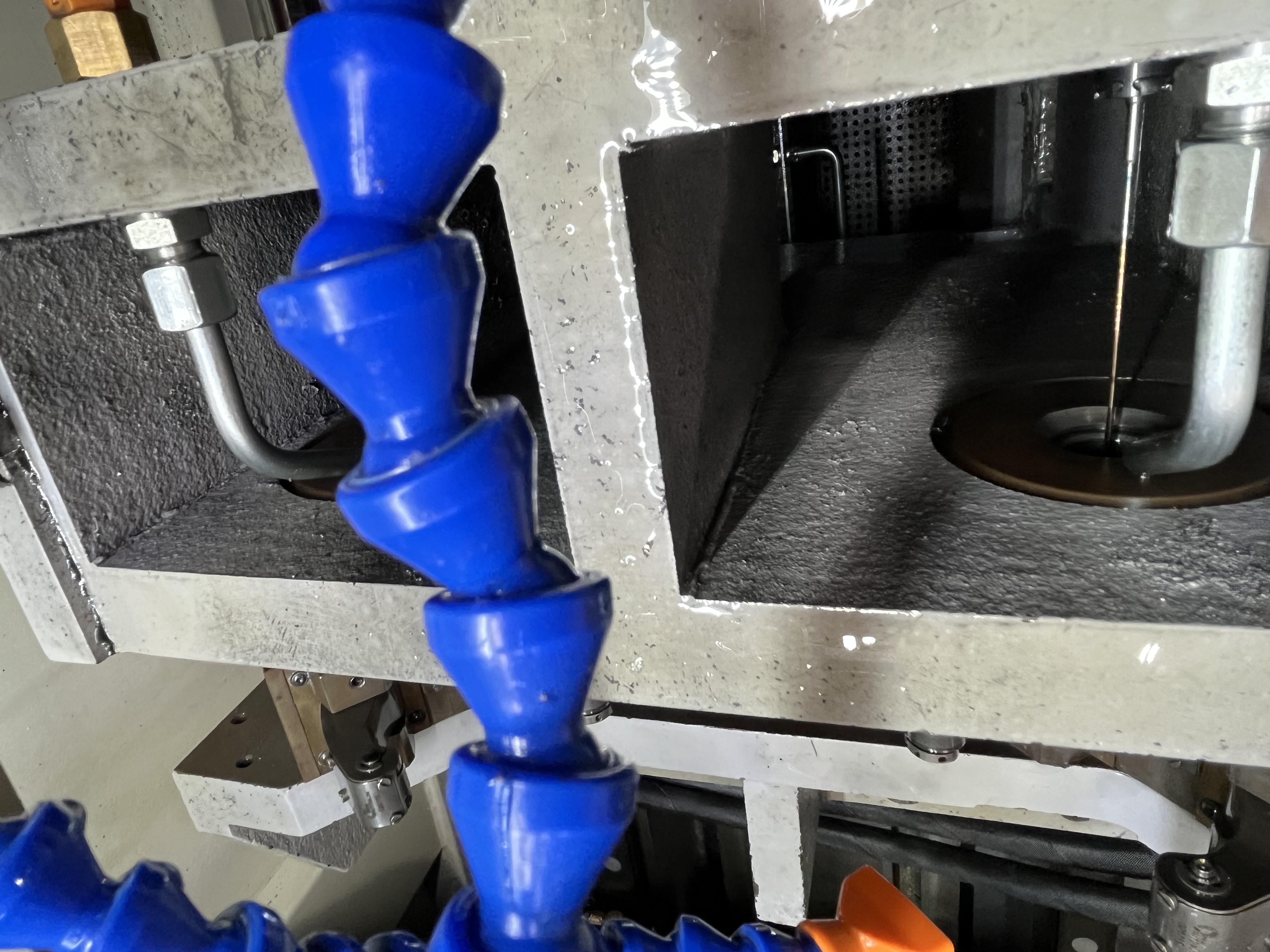
Heat Exchanger Drilling for Food Pasteurization Systems

Food pasteurization systems use heat exchangers to heat and cool products quickly. The tube sheets in these heat exchangers need hundreds of holes drilled in precise patterns to hold the sanitary tubes. I have machined tube sheets for milk pasteurizers, juice processors, and beer brewing systems, and the cleanliness requirements in food-grade work exceed anything I see in industrial hydraulic applications. The material is almost always 316L stainless steel for corrosion resistance and cleanability. The tube sheet is typically 25-50mm thick with holes on a triangular pitch. The hole spacing needs to be accurate within 0.1mm so the tubes slide through without binding. A typical tube sheet for a 20-plate pasteurizer might have 400-600 holes arranged in a 30-degree triangular pattern. ...
June 16, 2026 · Engineer at the Deep Hole

Sanitary Fitting Drilling for Food Processing

Surface Finish and Clean-in-Place Requirements Sanitary fittings for food processing need smooth bore surfaces so that clean-in-place systems can flush them effectively. The surface finish spec is typically Ra 0.8um or better. I have worked with food processing plants that require Ra 0.4um on their most critical fittings. At that level, every step of the drilling process must be controlled precisely. The reason for the surface finish requirement is bacterial harboring. A rough bore surface with peaks and valleys provides microscopic spaces where bacteria can survive the CIP cleaning cycle. The smooth surface allows the cleaning solution to flow across the entire bore area without leaving any protected zones. I have had quality engineers explain to me that a single fitting with a rough bore can compromise the sanitation of an entire processing line. ...

June 12, 2026 · Engineer at the Deep Hole