Cylinder Drilling for Hydraulic Excavator Booms

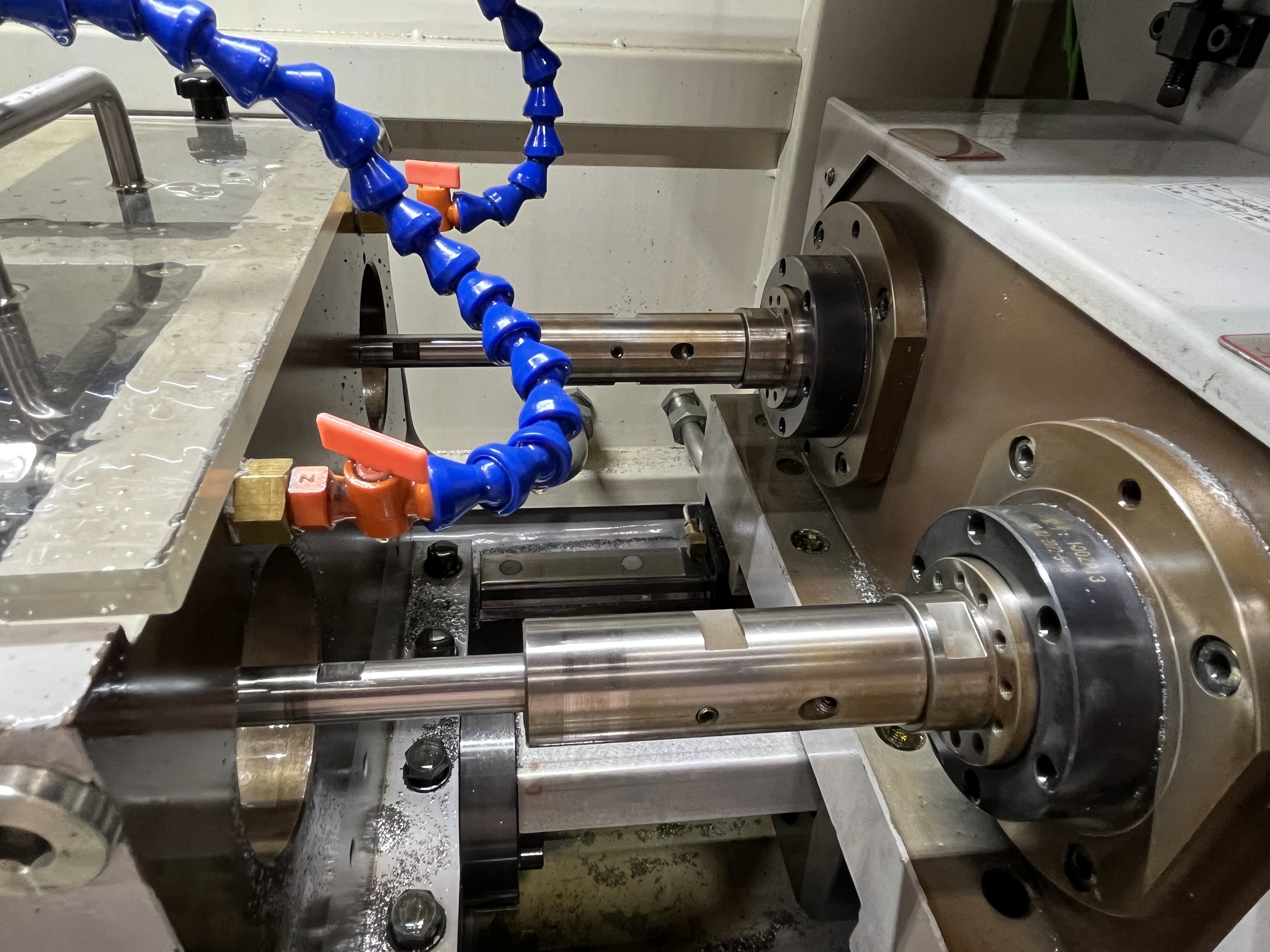
Excavator boom cylinders are among the largest hydraulic cylinders I work on. A cylinder for a 30-ton excavator might have a 160mm bore through 2.5 meters of barrel. The rod is typically 100mm diameter with a 40mm through-hole for weight reduction. These cylinders operate at 300-400 bar and see heavy shock loading. I have drilled cylinders for excavators ranging from 5-ton mini excavators up to 120-ton mining-class machines, and the scaling laws for drilling parameters are not linear. ...
June 16, 2026 · Engineer at the Deep Hole

Deep Hole Drilling for Brake and Coupling Components

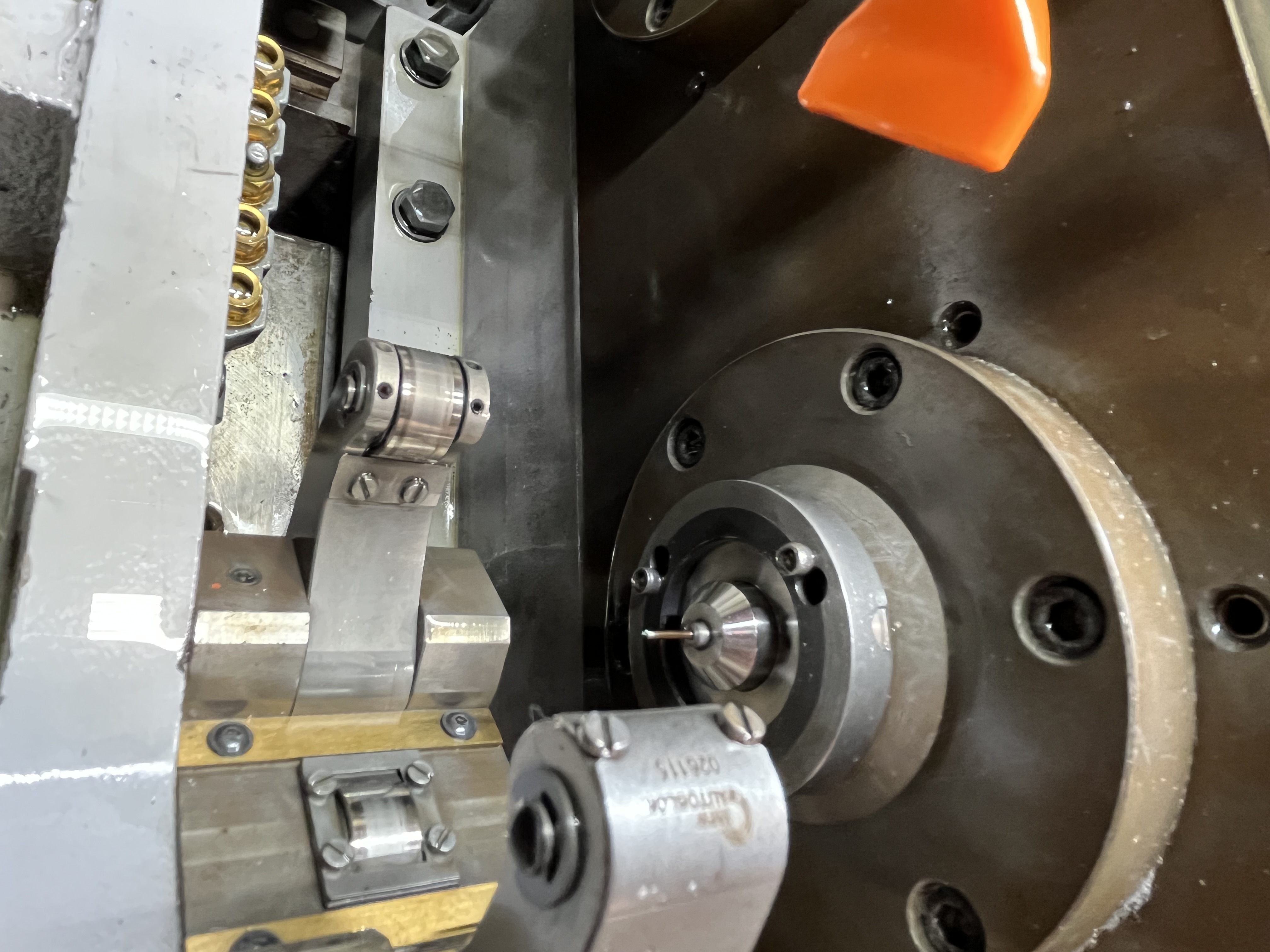
Brake components and couplings are not the first parts that come to mind when I think about deep hole drilling. But over the years, I have done a surprising amount of work on brake calipers, master cylinders, coupling hubs, and universal joints. These components share two characteristics: they need tight bore tolerances for fitment, and they are often made from castings or forgings that present unique drilling challenges. Brake Caliper Drilling A brake caliper has two critical bores: the piston bore and the fluid passage. The piston bore is 30-60mm in diameter and 50-100mm deep. The fluid passage is a smaller hole – 4-10mm – that connects the master cylinder to the caliper. ...

June 16, 2026 · Engineer at the Deep Hole

Deep Hole Drilling for Construction and Mining Equipment

Construction and mining equipment is built to survive extreme conditions. Excavators, bulldozers, drill rigs, haul trucks, and loaders all rely on hydraulic cylinders, boom arms, and structural components that need deep hole drilling. I have drilled thousands of holes in these parts over the years. The one thing that stands out is that consistency matters more than speed. A broken drill in a 3-meter-long cylinder barrel costs a full shift to extract. ...

June 16, 2026 · Engineer at the Deep Hole

Deep Hole Drilling for Heavy Equipment Components

Heavy equipment covers a broad range of machinery – cranes, excavators, bulldozers, mining trucks, forestry equipment, and material handlers. These machines operate under extreme loads, and the deep hole bores in their components carry those loads reliably for years. I have worked on everything from 200-ton mining truck suspension cylinders to 50-meter crane boom sections. The common thread is that the parts are large, the materials are tough, and the consequences of a bad bore are serious. ...

June 16, 2026 · Engineer at the Deep Hole

Deep Hole Drilling for Mining Hydraulic Cylinders: Big Bores, Tough Conditions

Mining cylinders are the biggest, heaviest deep hole drilling jobs I take on. Everything about them is oversize — the bore diameters, the stroke lengths, the raw material weights. A typical cylinder for a surface mining dump truck or a longwall roof support runs 200-350mm bore through 3-4 meters of barrel. That is a lot of steel to remove, and the machine time adds up fast. I have drilled cylinders for excavators, haul truck hoists, roof supports, and drill rig masts. The approach differs from standard hydraulic cylinder work because the scale changes everything — tooling selection, machine setup, coolant delivery, and material handling all have to be rethought for the large-bore regime. Here is what I have learned. ...

June 16, 2026 · Engineer at the Deep Hole

Drilling Crane and Winch Drum Components

Crane and winch drums are large rotating components that spool cable or rope. They need several types of deep holes — a through-hole for the drum shaft, and cross-holes for cable anchoring and hydraulic fluid passages. Over the years I have drilled drums for crawler cranes, offshore winches, and mining draglines, and each application brings its own set of challenges around interrupted cuts and part handling. The drum is typically made from carbon steel (AISI 1020 or 1045) or low-alloy steel (AISI 4140). A medium-sized crane drum might be 1-3 meters long with a 100-200mm bore for the shaft. The wall thickness is usually 30-80mm. For a large off-shore winch drum I worked on last year, the bore was 320mm through 4.2 meters of 2.5-ton casting. ...

June 16, 2026 · Engineer at the Deep Hole

Underground Mining Equipment Cylinder Drilling

The Nature of Mining Cylinder Work Underground mining equipment uses heavy-duty hydraulic cylinders for roof supports, boom arms, and drilling rigs. These cylinders are built tough because the working conditions are harsh. I have drilled cylinders for roof support jacks that operate at 300 bar hydraulic pressure and see continuous duty cycles for years without replacement. The bore diameter is typically 100-250mm through 1-3 meters of barrel. I use BTA drilling with cutting speed at 60-80 m/min and feed at 0.12-0.18 mm/rev. The material is usually high-strength steel like 42CrMo4. This material has a tensile strength of 900-1100 MPa and machines well with carbide tooling. The challenge is that 42CrMo4 work-hardens if the feed drops below 0.08 mm/rev, so I keep the feed consistent through the entire bore. ...

June 12, 2026 · Engineer at the Deep Hole

Deep Hole Drilling for Oil and Gas Components: Big Parts, Tough Materials

Oil and gas deep hole drilling is a world of big parts and tough materials. Drill collars two meters long with a 50mm bore through the center. Valve bodies the size of a washing machine. Heat exchangers with tube sheets that need hundreds of holes drilled in a precise pattern. I’ve worked on oilfield components on and off for years. The work has its own pace and its own set of problems. ...

June 11, 2026 · Engineer at the Deep Hole