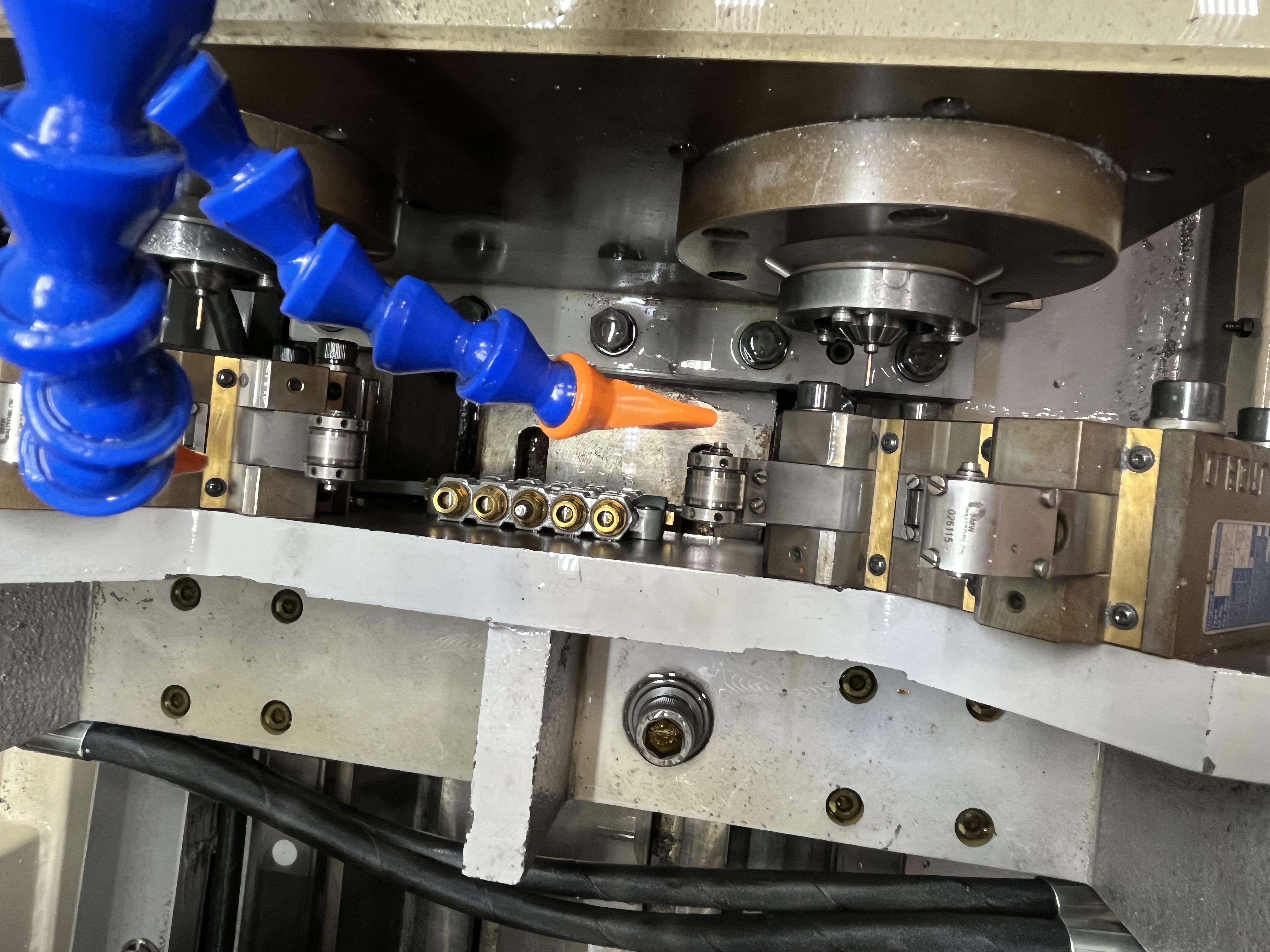
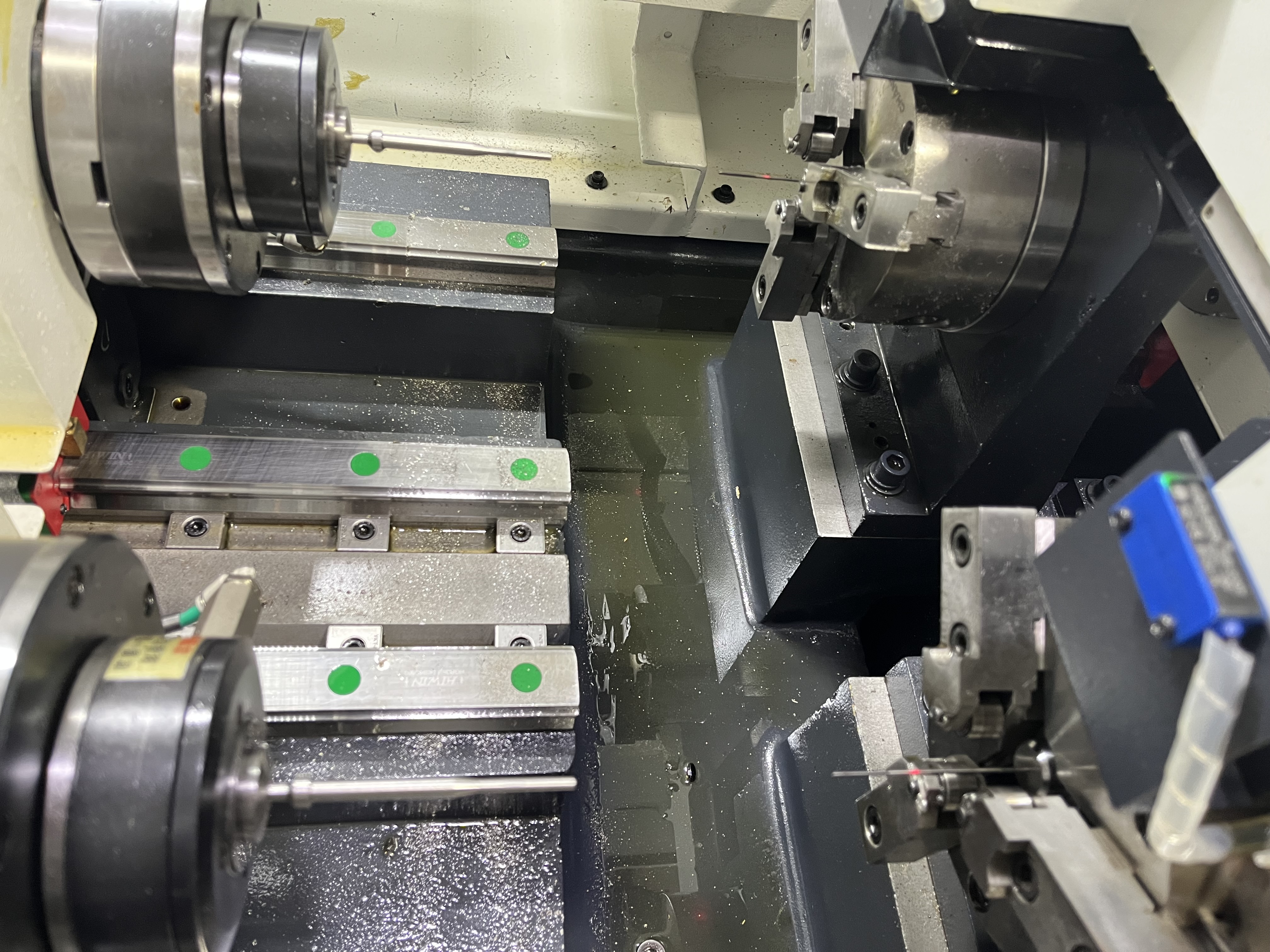
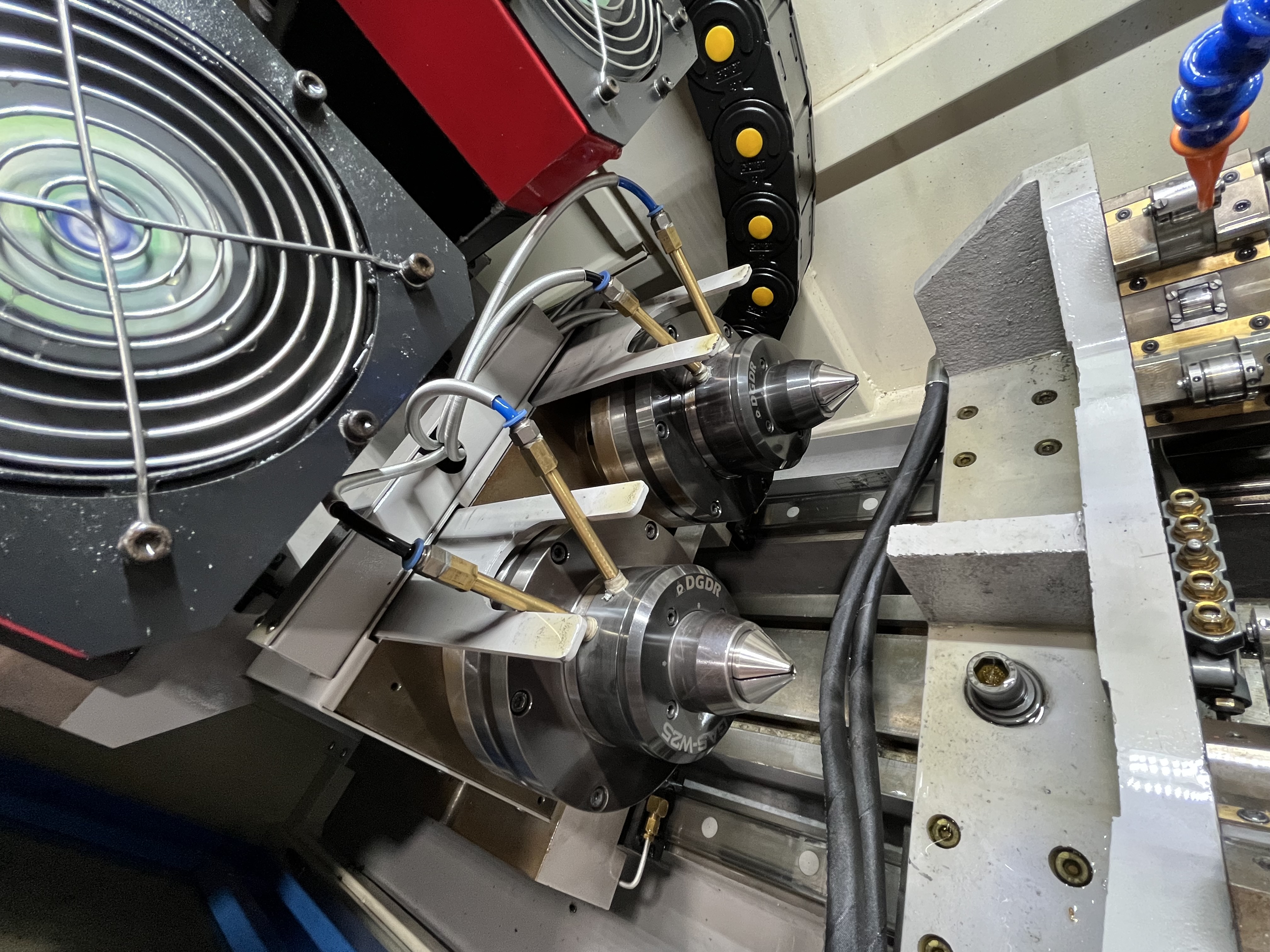
Evaluating Your Existing Machine for Gun Drilling: What to Check Before You Start

I get calls from shops that bought a gun drill and want to run it on their existing CNC lathe or manual mill. Half the time, the machine can handle it. The other half, they are fighting the machine’s limitations from day one. Here is how I evaluate whether a machine is suitable — and what to look for if it is not. Spindle Speed Range Gun drilling needs relatively low RPM compared to conventional drilling. For a 10mm gun drill running at 250 SFM, spindle speed is about 2400 RPM. Most lathes and mills can reach that easily. ...

June 16, 2026 · Engineer at the Deep Hole

Machine Specs That Actually Matter vs Marketing Numbers

Machine spec sheets for deep hole drilling machines are written by marketing departments. Some numbers are meaningful indicators of real performance. Others are chosen to make the machine look better than it is on paper. I have evaluated a dozen deep hole drilling machine brands over twenty years, and I have learned which specs predict actual drilling performance and which ones are just numbers on a page. Here is how I separate the two when I read a spec sheet for a deep hole drilling machine. ...

June 11, 2026 · Engineer at the Deep Hole

Running a Machine Capability Study on a Deep Hole Drill

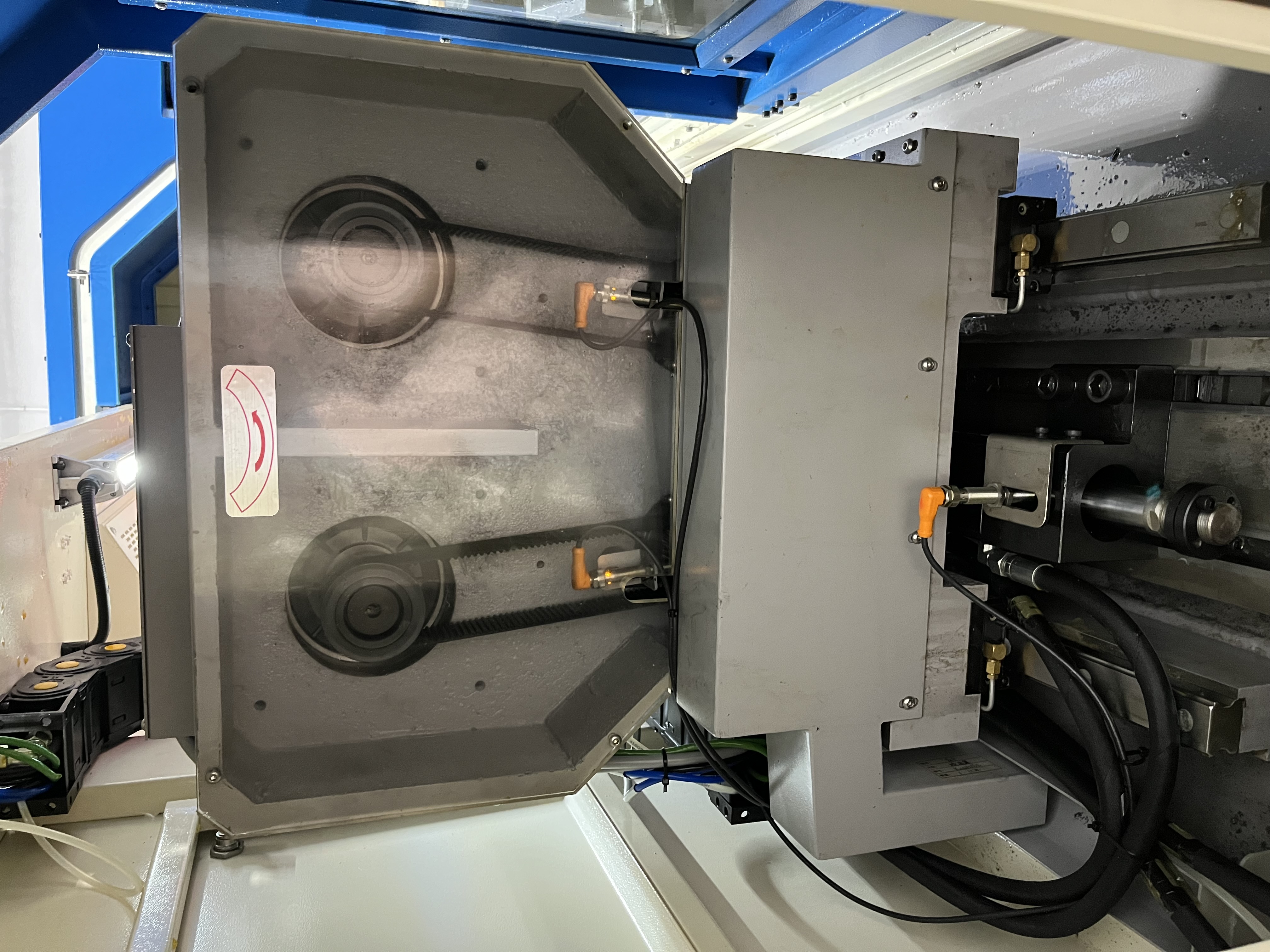
A machine capability study — also called a Cmk study — measures whether a machine can produce parts within the required tolerance. It’s a standard method for approving new machines or verifying existing ones. I run capability studies on deep hole drilling machines when setting up new jobs. The Process I follow this procedure for every machine capability study: Define the critical dimension — Select one feature to study (typically hole diameter at the mid-point) Set up the machine — Use the same tool, fixturing, and program that will be used in production Check machine condition first — Run a test bar alignment check and verify coolant pressure and spindle runout before starting Run the parts — Run 25 consecutive parts without any adjustments. No speed changes, no feed changes, no tool changes Measure every part — Use the same measurement method (air gage, bore mic, or CMM) for all 25 parts Plot the data — Create a run chart in the order the parts were produced to visualize any drift Calculate mean and standard deviation — Use the standard formula Calculate Cmk — Cmk = min((USL - mean) / 3sigma, (mean - LSL) / 3sigma) The Cmk value tells you whether the machine can hold the tolerance consistently. I also calculate Cm (process capability without centering) to see if off-center adjustment can fix a marginal Cmk. ...
June 11, 2026 · Engineer at the Deep Hole

What to Look for in a Deep Hole Drilling Machine

When I look at a deep hole drilling machine — whether for purchase or for a specific job — I check certain features that tell me whether the machine is capable of producing good holes consistently. Here’s what I look for. Spindle Condition The spindle is the most important component. I check: Runout at the tool interface. Should be under 0.005mm TIR for a good machine, under 0.01mm for an acceptable machine. Bearing noise. A quiet spindle has good bearings. A rumbling spindle needs bearing replacement. Speed range. The spindle should reach the speeds needed for the diameters you’ll drill. A machine with a 6000 RPM max is limited to drills over about 3mm diameter. Coolant union. Check for leaks at the rotating union. A leaking union means pressure loss at the tool. Coolant System The coolant system determines whether the machine can clear chips effectively. I check: ...

June 11, 2026 · Engineer at the Deep Hole