CNC Lathe vs Dedicated Gun Drill: Cost Comparison

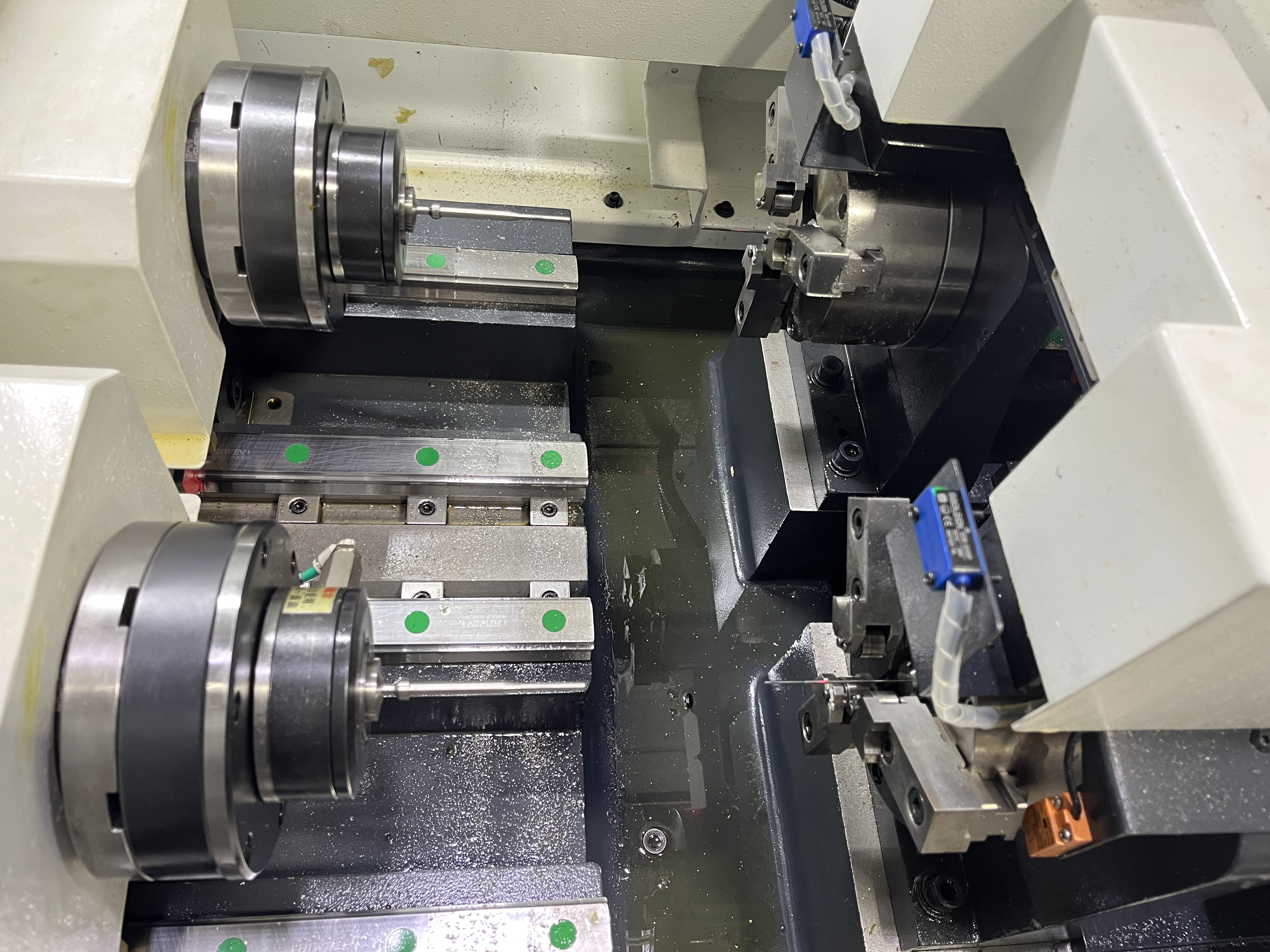
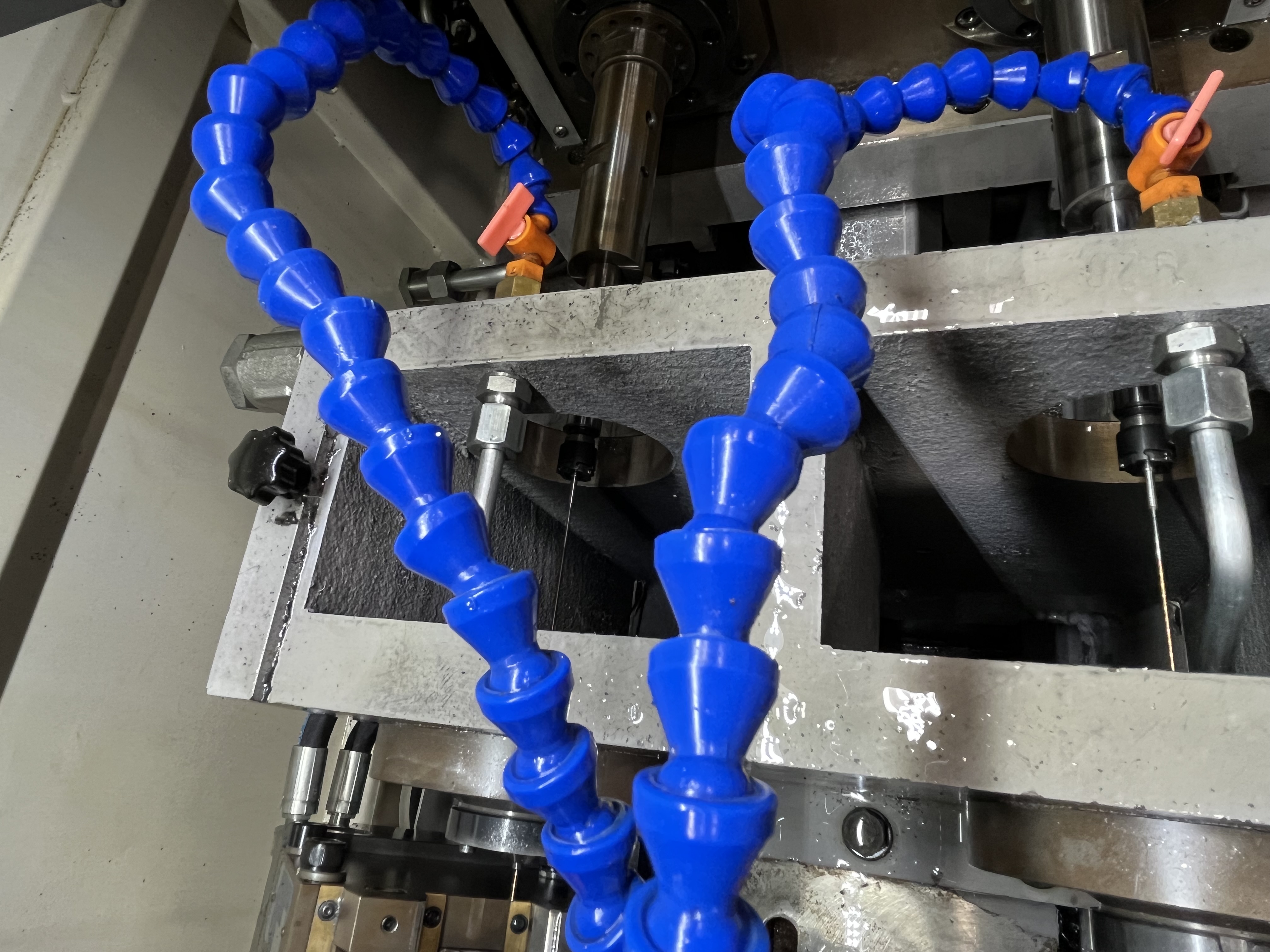
Shops often ask me whether they should use a CNC lathe for gun drilling or buy a dedicated machine. The answer depends on the volume, the hole requirements, and the depth-to-diameter ratio. I’ve used both approaches on hundreds of jobs, and each has its place. When a CNC Lathe Works A CNC lathe with live tooling and through-coolant capability can handle shallow gun drilling work up to about 10:1 L/D ratio. The main limitations are coolant pressure — typically 300-500 psi — and the lack of a guide bushing support for the drill entry. ...
June 16, 2026 · Engineer at the Deep Hole

Spindle Power vs Torque: What Matters for Deep Hole Drilling

Spindle power and torque are related but different specifications. Power determines how fast material can be removed. Torque determines how much cutting force the spindle can deliver at low RPM. For deep hole drilling, misunderstanding these two specs leads to undersized spindles that stall in the cut. I have seen a 35 kW spindle stall out on a 60 mm BTA drill because the machine peaked at high RPM and delivered only 80 Nm at the feed rate needed for BTA parameters. ...

June 16, 2026 · Engineer at the Deep Hole

5-Axis Deep Hole Drilling: When It Helps and When It Doesn't

I’ve run both 3-axis and 5-axis deep hole drilling machines. The 5-axis machines cost more — sometimes significantly more — and they’re more complex to program and maintain. But for certain types of work, they’re the only practical option. Here’s how I think about the decision. What the Extra Axes Give You A standard 3-axis deep hole drilling machine (X, Y, Z) can position the drill at any point in a plane and drill straight down. The drill axis is fixed vertically or horizontally. ...

June 11, 2026 · Engineer at the Deep Hole

Choosing a Deep Hole Drilling Machine for Automotive Production

I’ve worked with a fair range of deep hole drilling machines in automotive settings — single-spindle job shop machines, multi-spindle production lines, and everything in between. Each type has its place. The question is matching the machine to the production volume and the part complexity. Automotive parts have specific requirements that set them apart from general deep hole drilling. The volumes are higher, the tolerances are tighter, and the cost per part matters more. I have seen a 0.01 mm difference in hole position scrap an entire batch of transmission valve bodies. ...

June 11, 2026 · Engineer at the Deep Hole

How to Calculate Power Requirements for Deep Hole Drilling

I calculate power requirements before selecting a machine for any deep hole drilling job. The machine spindle must have enough power to drive the drill at the required speed and feed without stalling or bogging down in tough material. Underpowered machines produce inconsistent hole quality and short tool life. The Basic Power Formula The standard formula I use every time is Power (kW) = Torque (Nm) x RPM / 9550. For a 10 mm gun drill in mild steel running at 3000 RPM with 10 Nm of torque: Power = 10 x 3000 / 9550 = 3.1 kW. That gives me the power at the tool tip, not at the motor. ...

June 11, 2026 · Engineer at the Deep Hole

How to Read a Deep Hole Drilling Machine Spec Sheet

Machine spec sheets list dozens of numbers. Not all of them are equally important. Here’s how I read a spec sheet and what I focus on. Critical Specs These specs determine whether the machine can do the job: Drilling diameter range. The minimum and maximum diameter the machine can drill. The effective range is narrower than the spec range because tooling availability limits the actual range. Drilling depth. The maximum depth the machine can drill in one pass. This is determined by the feed axis travel and the drill tube length. ...

June 11, 2026 · Engineer at the Deep Hole

Selecting the Right Deep Hole Drilling Machine for Your Shop

I get asked pretty often by shops that are thinking about buying their first deep hole drilling machine — especially after they land a job like EV motor shafts or mold cooling channels. The question is usually: what should I buy? The answer depends on the work, the volume, and the budget. But there are some patterns I’ve seen across dozens of shops. Start With the Parts The single biggest mistake I see is buying a machine first and figuring out the parts later. The machine needs to match what you’re actually going to drill. ...

June 11, 2026 · Engineer at the Deep Hole

What to Look for in a Deep Hole Drilling Machine

When I look at a deep hole drilling machine — whether for purchase or for a specific job — I check certain features that tell me whether the machine is capable of producing good holes consistently. Here’s what I look for. Spindle Condition The spindle is the most important component. I check: Runout at the tool interface. Should be under 0.005mm TIR for a good machine, under 0.01mm for an acceptable machine. Bearing noise. A quiet spindle has good bearings. A rumbling spindle needs bearing replacement. Speed range. The spindle should reach the speeds needed for the diameters you’ll drill. A machine with a 6000 RPM max is limited to drills over about 3mm diameter. Coolant union. Check for leaks at the rotating union. A leaking union means pressure loss at the tool. Coolant System The coolant system determines whether the machine can clear chips effectively. I check: ...

June 11, 2026 · Engineer at the Deep Hole

Deep Hole Drilling Machine Selection: An ROI Framework for Choosing the Right Machine

I have been through enough machine purchases to know how easy it is to get the decision wrong. A deep hole drilling machine is a six-figure capital investment that will shape your shop’s capacity, quality, and cost structure for the next decade. Over the years I have been involved in several acquisitions – some that paid for themselves in eighteen months and others that became expensive lessons. The difference was almost always how rigorously we evaluated the options before signing. This article walks through the framework I now use every time. ...

Engineer at the Deep Hole