Ball Screw Maintenance for Deep Hole Drilling Machines

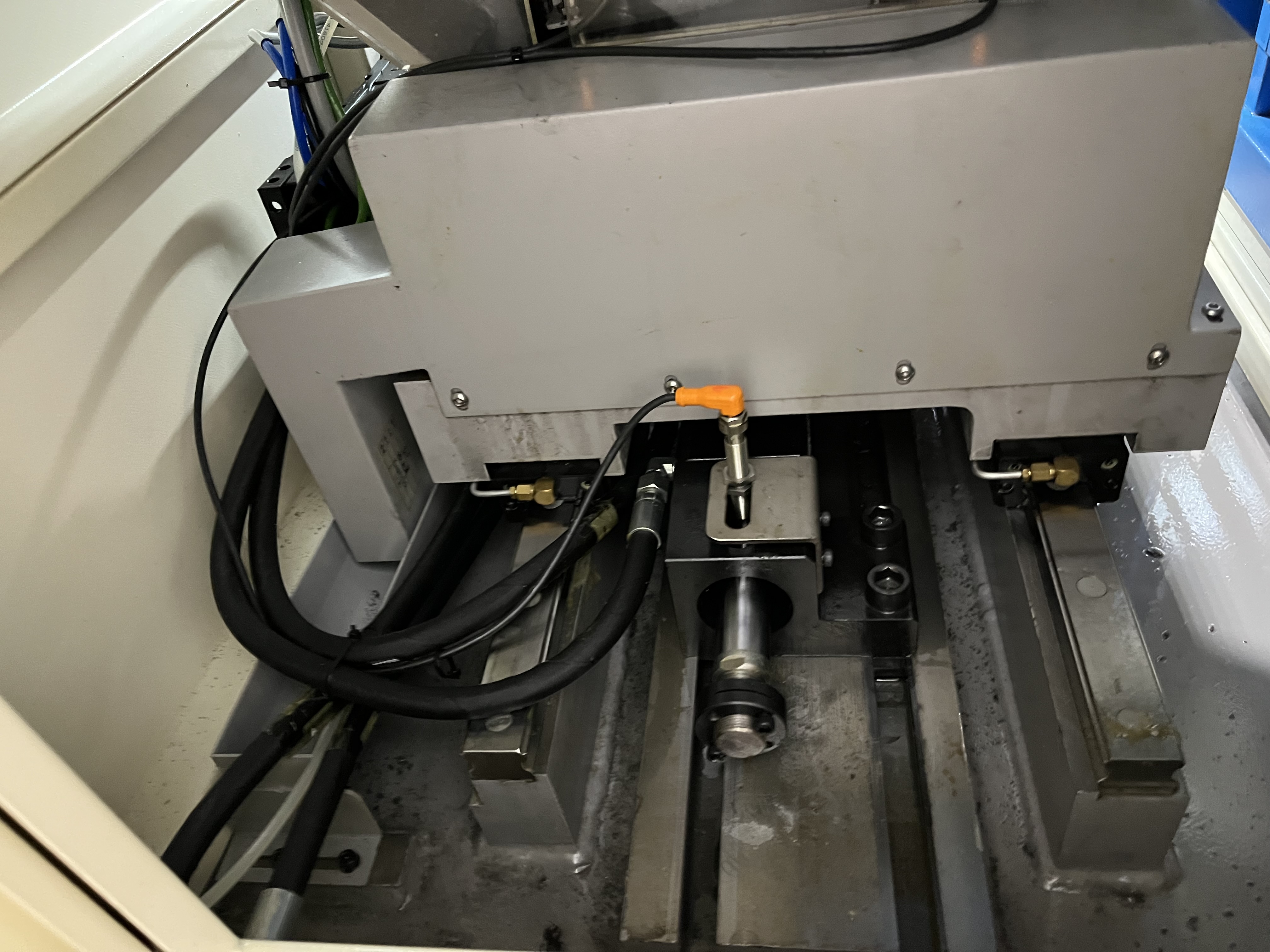
The ball screw drives the feed axis on a deep hole drilling machine. It converts motor rotation into linear movement of the spindle carrier or workpiece. A worn ball screw causes inconsistent feed rate and poor hole quality. I have replaced enough ball screws to know that preventive maintenance is far cheaper than dealing with a failure during production. Ball Screw Inspection and Condition Assessment I check ball screw condition by measuring the backlash annually. Backlash is the play between the ball nut and the screw, and it indicates wear in the recirculating ball tracks. The measurement procedure is straightforward but requires careful technique to get consistent readings. ...
June 16, 2026 · Engineer at the Deep Hole

Coolant Pressure Trending for Predictive Maintenance

Coolant pressure trending tracks the coolant pressure over time to predict when maintenance is needed. A gradual pressure decrease indicates a developing problem. A sudden pressure drop indicates a failure. I started doing this after a surprise pump failure cost me 16 hours of unplanned downtime in the middle of a rush job a few years ago. Since implementing the system, I have caught every developing problem before it became a breakdown. ...

June 16, 2026 · Engineer at the Deep Hole

Coolant System PM Schedule for Deep Hole Drilling Machines

Why a PM Schedule Matters The coolant system on a deep hole drilling machine operates under high pressure and continuous duty. A gun drilling machine runs at 40-120 bar coolant pressure for every second of the cut. BTA systems run at 15-40 bar with flow rates up to 400 L/min. Components wear, filters clog, and coolant degrades. A regular PM schedule catches these changes before they cause downtime or part defects. ...

June 16, 2026 · Engineer at the Deep Hole

Coolant Tank Dump, Clean, and Recharge: A Step-by-Step Procedure for Deep Hole Drilling

Deep hole drilling puts more demand on coolant than any other machining process. High pressure, high flow, and continuous chip load mean coolant degrades faster. I have found that a systematic dump-clean-recharge (DCR) procedure every 6-12 months doubles coolant life and prevents most contamination problems before they start. Here is the procedure I use. When to Do a DCR I do not wait for a fixed schedule. I watch for these triggers: ...

June 16, 2026 · Engineer at the Deep Hole

I Took a Coolant Pump Apart and Found a Rag

We had a machine that had been losing coolant pressure for about three months. Not dramatically, but steadily. The pressure at the tool had gone from 1200 psi down to about 900 psi, and it kept dropping a little more every week. I had changed the filter elements. I had checked the pump motor current. I had inspected the pressure relief valve. Nothing helped. The machine was still making good parts, so the slow pressure loss got treated as a low priority. The operators adjusted their peck cycles to compensate for the reduced chip clearing. The production schedules got padded to account for the longer cycle times. Everybody just worked around it. ...

June 16, 2026 · Engineer at the Deep Hole

The Saturday I Ran Out of Filter Paper

It was a Saturday night in August, about 11 PM. The shop was running a skeleton crew, just three of us on the floor to keep the machines running through the weekend. I was running a UNISIG BTA system on a job drilling 18mm holes through 700mm of 4140. The job was going well, chips were looking good, and I was on track to finish the batch by Sunday afternoon. ...

June 16, 2026 · Engineer at the Deep Hole

Automatic Lubrication Systems for Deep Hole Drills

I retrofitted automatic lubrication on a deep hole drilling machine that was having way wear problems. The operators were supposed to grease the ways every morning, but it was not happening consistently. Some ways were dry, some were over-greased, and the machine was losing accuracy over time. The automatic system solved all of those problems. Here is what I learned from the retrofit and from installing systems on three machines since then. ...

June 12, 2026 · Engineer at the Deep Hole

Coolant Testing Kits and How to Use Them

I test coolant regularly because I learned the hard way what happens when you do not. A batch of hydraulic cylinders came out with stained bores because the coolant pH had dropped too low. The coolant had gone acidic and was etching the steel surface. The customer rejected the whole batch — 45 parts scrap at $80 each. That loss was $3,600 from a $50 testing kit I had on the shelf but was not using. I test religiously now. Here is exactly what I use and how often. ...

June 12, 2026 · Engineer at the Deep Hole

Drill Tube Selection and Maintenance for BTA Drilling

I select drill tubes based on diameter and length for the job. The drill tube connects the BTA cutting head to the machine spindle. It must be straight, rigid, and properly maintained to produce straight holes. A bad tube produces a bad bore no matter how good the cutting head is. Tube Diameter Selection The tube diameter is determined by the hole size and the coolant flow requirement. The tube OD needs to be about 8-12mm smaller than the bore diameter to allow coolant to flow through the annulus between the tube and the bore wall. If the tube is too small, the coolant flow is restricted and chip evacuation suffers. ...

June 12, 2026 · Engineer at the Deep Hole

Lockout/Tagout Procedures for Deep Hole Drilling Machines

Why LOTO Is Critical on Deep Hole Drills Lockout/tagout is standard safety on any machine tool. Deep hole drilling machines add two hazards that make LOTO especially critical: trapped high-pressure coolant and separately-powered coolant pumps. A deep hole machine can hold 500-1000 psi of residual coolant pressure after the pump shuts off. The pressure is trapped in the filter housing, the rotating union, and the supply lines. Opening a fitting without bleeding the pressure first releases a jet of coolant that can inject through skin. ...

June 12, 2026 · Engineer at the Deep Hole