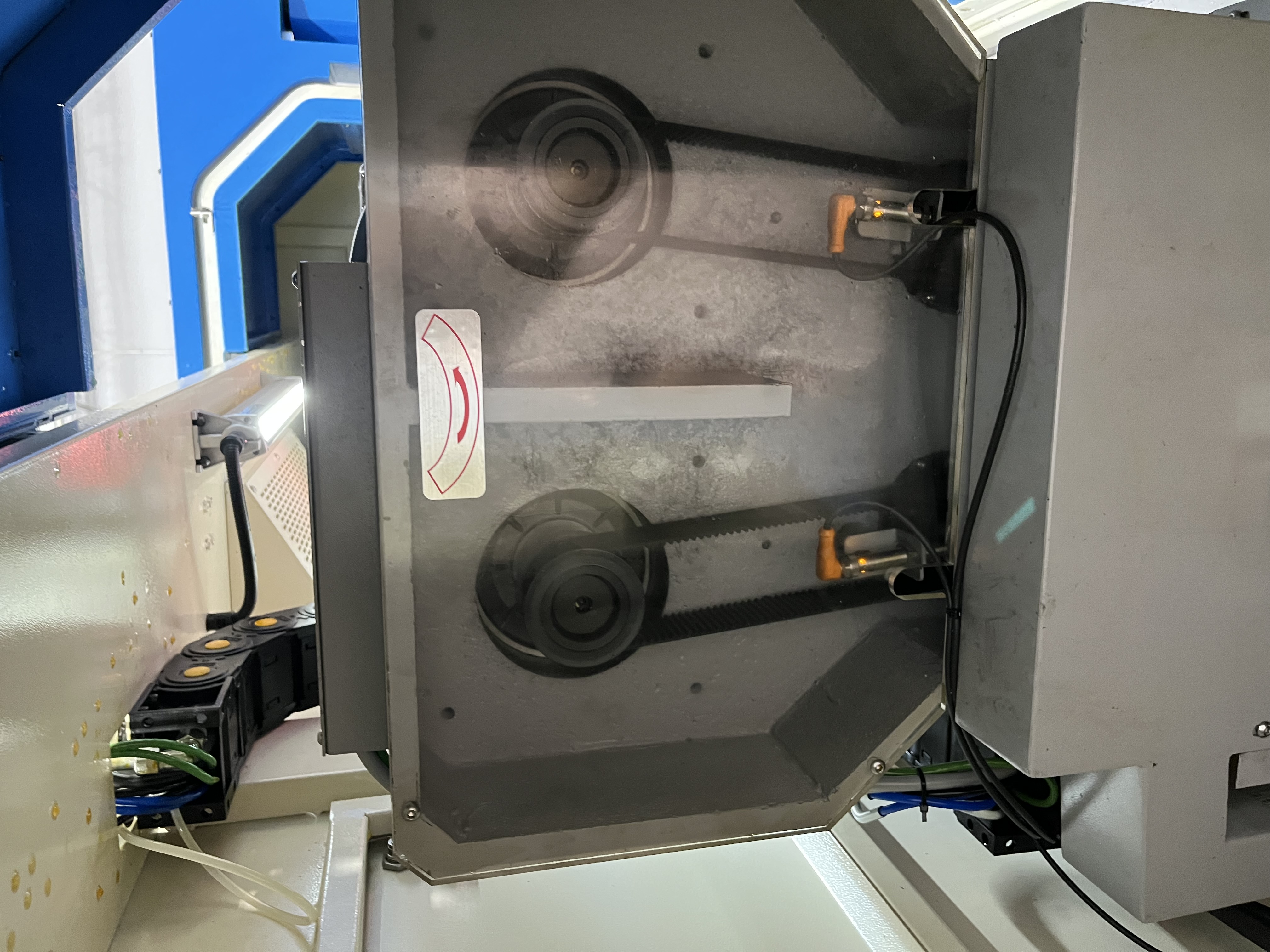
Drilling Heat Exchanger Tube Sheets: Patterns, Precision, and Production

Tube sheets are one of those jobs that look simple but reward careful planning. The concept is straightforward: drill a grid of holes in a thick steel plate. But when the plate has 500 holes and each one needs to be within 0.1mm of its design position, the job is harder than it looks. The oil and gas industry uses the most tube sheets — for shell and tube heat exchangers, condensers, and coolers — but I’ve also seen them in power generation and chemical processing. The principles are the same regardless of the end use. ...
June 16, 2026 · Engineer at the Deep Hole

Choosing a Deep Hole Drilling Machine for Automotive Production

I’ve worked with a fair range of deep hole drilling machines in automotive settings — single-spindle job shop machines, multi-spindle production lines, and everything in between. Each type has its place. The question is matching the machine to the production volume and the part complexity. Automotive parts have specific requirements that set them apart from general deep hole drilling. The volumes are higher, the tolerances are tighter, and the cost per part matters more. I have seen a 0.01 mm difference in hole position scrap an entire batch of transmission valve bodies. ...

June 11, 2026 · Engineer at the Deep Hole

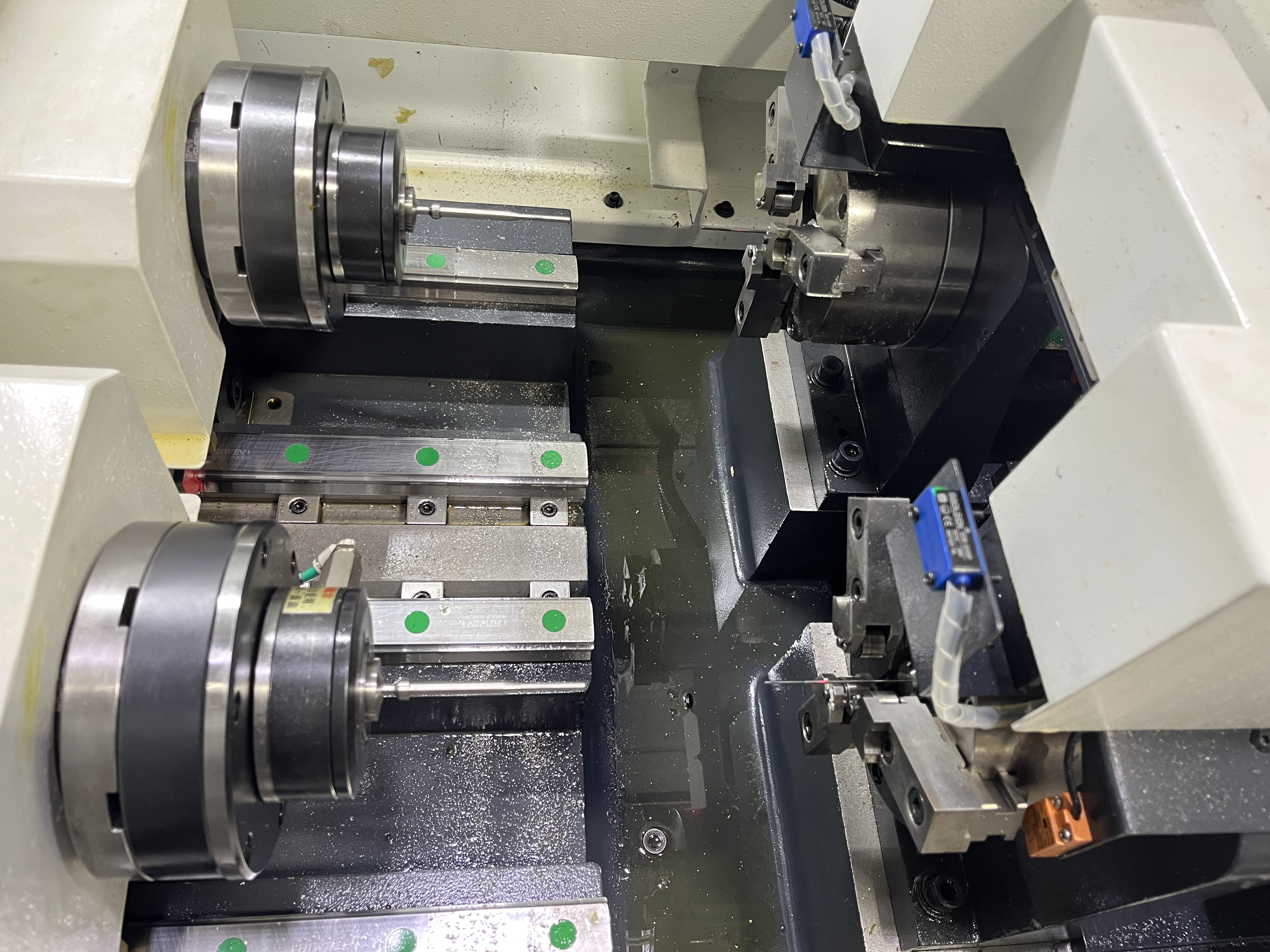
Multi-Spindle Deep Hole Drilling: When More Is Better

The simplest way to increase deep hole drilling output is to add more spindles. Two spindles drilling at once theoretically doubles the throughput. Four spindles quadruple it. But multi-spindle machines aren’t simple. The spindles need to be synchronized, the tooling needs to be matched, and the setup is more complex than a single-spindle machine. Here’s what I’ve learned running them. When Multi-Spindle Works Multi-spindle drilling makes sense when three conditions are met: ...

June 11, 2026 · Engineer at the Deep Hole