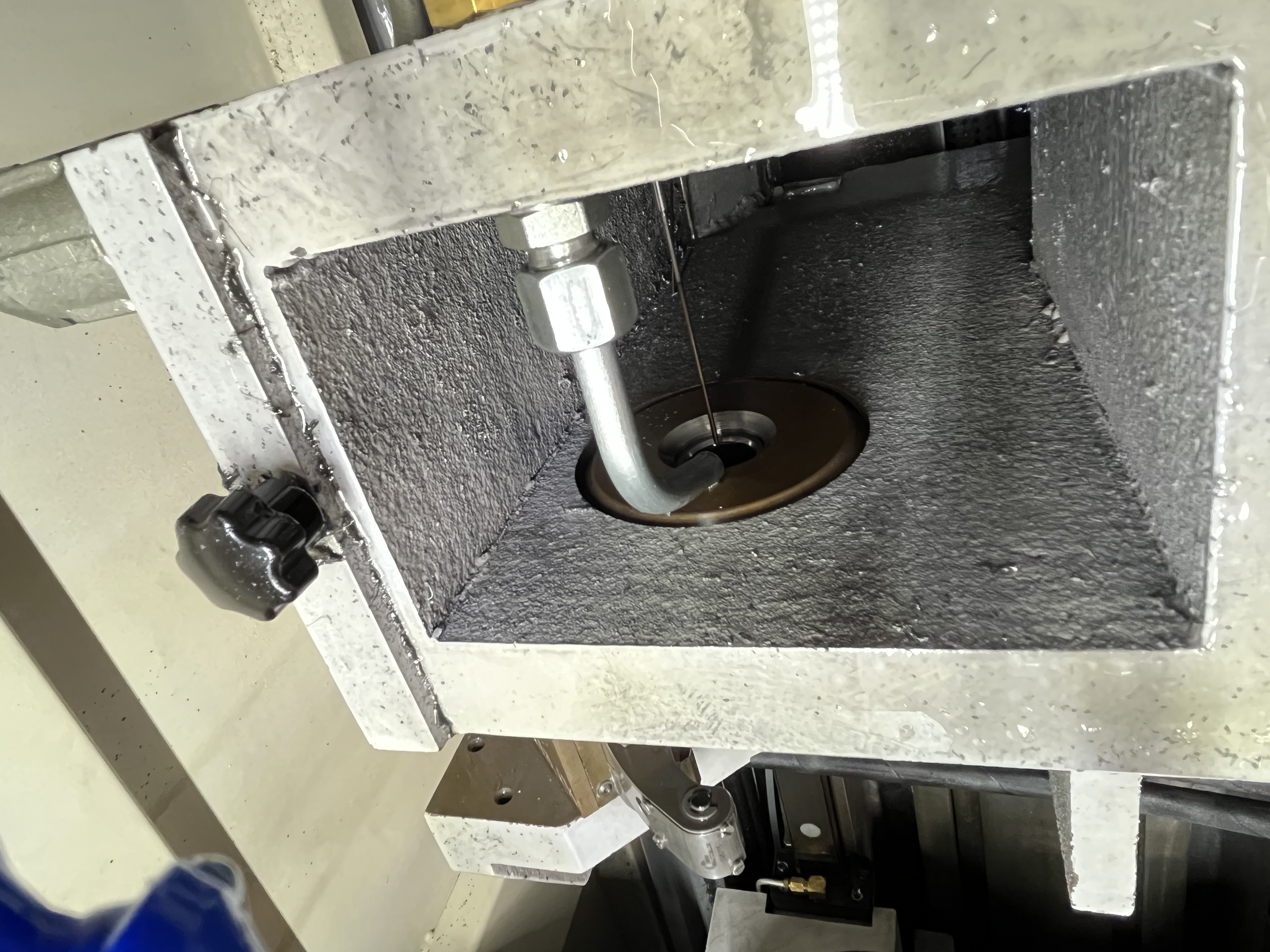
Drilling Beryllium Copper: Safety and Parameters

Beryllium copper is a high-strength copper alloy used in tools, electrical components, and oilfield equipment. It machines differently from standard copper alloys and requires specific safety precautions that I take very seriously. The material is harder than standard copper — about 35-45 HRC in the heat-treated condition. It produces short, brittle chips that evacuate easily. The cutting forces are higher than for standard copper but lower than for steel. I have drilled beryllium copper for oilfield instrument housings and electrical connector components. The material drills well but the safety requirements demand respect. ...
June 16, 2026 · Engineer at the Deep Hole

The Night a Gun Drill Fire Almost Burned Down the Shop

July in Houston is brutal. The shop had to be a hundred and ten degrees that night, even with the big industrial fans running at full speed. The air conditioning had given up around three in the afternoon, and by the time the night shift rolled in at six, the whole building felt like a convection oven. Sweat was dripping off the end of my nose onto the machine controls. ...

June 16, 2026 · Engineer at the Deep Hole

Lockout/Tagout Procedures for Deep Hole Drilling Machines

Why LOTO Is Critical on Deep Hole Drills Lockout/tagout is standard safety on any machine tool. Deep hole drilling machines add two hazards that make LOTO especially critical: trapped high-pressure coolant and separately-powered coolant pumps. A deep hole machine can hold 500-1000 psi of residual coolant pressure after the pump shuts off. The pressure is trapped in the filter housing, the rotating union, and the supply lines. Opening a fitting without bleeding the pressure first releases a jet of coolant that can inject through skin. ...

June 12, 2026 · Engineer at the Deep Hole

Risk Assessment for Deep Hole Drilling Operations

I do a risk assessment before every new job setup. It takes 30 minutes and identifies hazards that might otherwise be overlooked. In my experience, the jobs where I nearly skipped the assessment are the ones that would have bitten me. I use a structured hazard register rather than a mental checklist because it leaves a record that can be reviewed later if something does go wrong. Hazard Identification The main hazards on a deep hole drilling machine fall into six categories. I walk through each category systematically during the risk assessment: ...

June 12, 2026 · Engineer at the Deep Hole

Safety Inspection Checklist for Deep Hole Drilling Machines

I use a tiered safety inspection checklist for every deep hole drilling machine in the shop. The inspections are divided into daily, weekly, monthly, and quarterly checks. Each level covers different aspects of machine safety, and the total time investment is about five minutes per day plus 30 minutes per week. The time is well spent — I have caught loose hoses, failing interlocks, and low coolant levels before they caused injuries or damage. ...

June 12, 2026 · Engineer at the Deep Hole

Deep Hole Drilling Machine Safety Standards and CE Certification

Deep hole drilling machines have specific safety requirements due to the high-pressure coolant, rotating parts, and cutting forces involved. I’ve worked with machines that met modern safety standards and with older machines that had minimal safety features. Here’s what I’ve seen matter in practice. The Main Hazards Deep hole drilling machines present several hazards: High-pressure coolant. Coolant at 2000 psi can inject through the skin. This is the most serious hazard specific to deep hole drilling. Rotating parts. The spindle, drill tube, and workpiece rotate at high speeds. Entanglement is a risk. Chips. Hot, sharp chips with enough force to cause burns and cuts. Heavy parts. Workpieces can weigh hundreds of kilograms. Handling them requires proper lifting equipment. Noise. Machines running at high RPM and high coolant flow generate significant noise. Safety Features I Look For Feature Purpose Required? Interlocked doors Prevent access to the work zone while the machine is running Yes Coolant pressure relief Prevents over-pressurization of the coolant system Yes Emergency stop Stops all machine motion immediately Yes Light curtain Stops the machine if the operator reaches into the work zone Recommended Chip shield Protects the operator from flying chips Yes Coolant splash guard Contains high-pressure coolant spray Yes Spindle brake Stops the spindle quickly after an emergency stop Recommended Fire suppression Extinguishes coolant mist fires Recommended The most important safety feature for deep hole drilling is the interlocked door and the coolant pressure monitoring. A machine that runs with the door open is a danger to the operator. ...

June 11, 2026 · Engineer at the Deep Hole

Machine Guarding and Interlocks for Deep Hole Drills

The Guarding Hazards Specific to Deep Hole Drilling Standard machine shop hazards like rotating spindles and flying chips exist on every machine. Deep hole drilling adds two specific guarding challenges: high-pressure coolant containment and chip projectiles from the bore exit. Coolant at 1000-2000 psi creates a fine mist that penetrates any gap in a guard. A pinhole in a chip shield turns into a cutting jet that can sever a finger or inject coolant into an arm. I treat every guard on a deep hole machine as a pressure containment device. ...

June 11, 2026 · Engineer at the Deep Hole