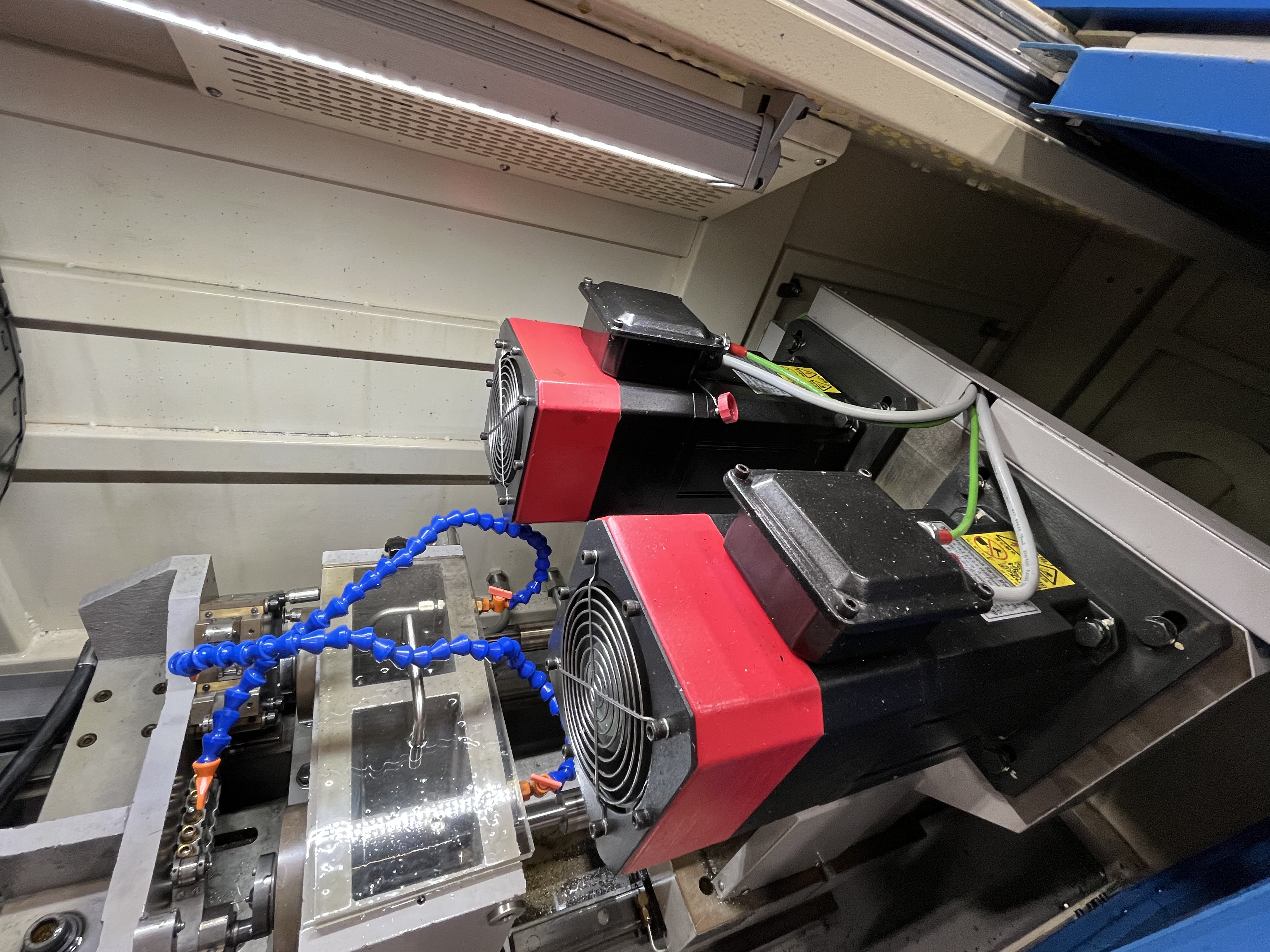
Roll Form Tapping After Deep Hole Drilling

What Is Roll Form Tapping Roll form tapping (also called thread forming or cold forming) creates threads by displacing material rather than cutting it. The tap has no cutting edges or flutes. Instead, it has lobes that push the material into the thread form as the tap rotates and advances into the hole. This process is particularly useful after deep hole drilling because there are no chips to evacuate from the bore. In deep holes, a conventional cut tap produces long stringy chips that pack in the flutes and can seize the tap. Roll form tapping eliminates this problem entirely. ...
June 16, 2026 · Engineer at the Deep Hole

Thread Milling After Deep Hole Drilling

Problem Description Threading deep holes is risky with conventional taps. A broken tap stuck at the bottom of a 300 mm deep bore means hours of EDM work or scrapping the part. I’ve had to reclaim several high-value hydraulic cylinder bodies after taps snapped at the bottom of M16 threads in 4140 steel. Each reclamation job cost more in labor than the original threading operation. The tap also has to reach the full thread depth, which means extended shanks that are prone to deflection. A standard tap stretched out on a 200 mm extension doesn’t track straight. The threads come out bell-mouthed or tapered, and the pitch diameter drifts along the hole length. I’ve measured 0.08 mm of pitch diameter variation in tapped deep holes versus 0.03 mm in thread-milled holes. ...

June 12, 2026 · Engineer at the Deep Hole