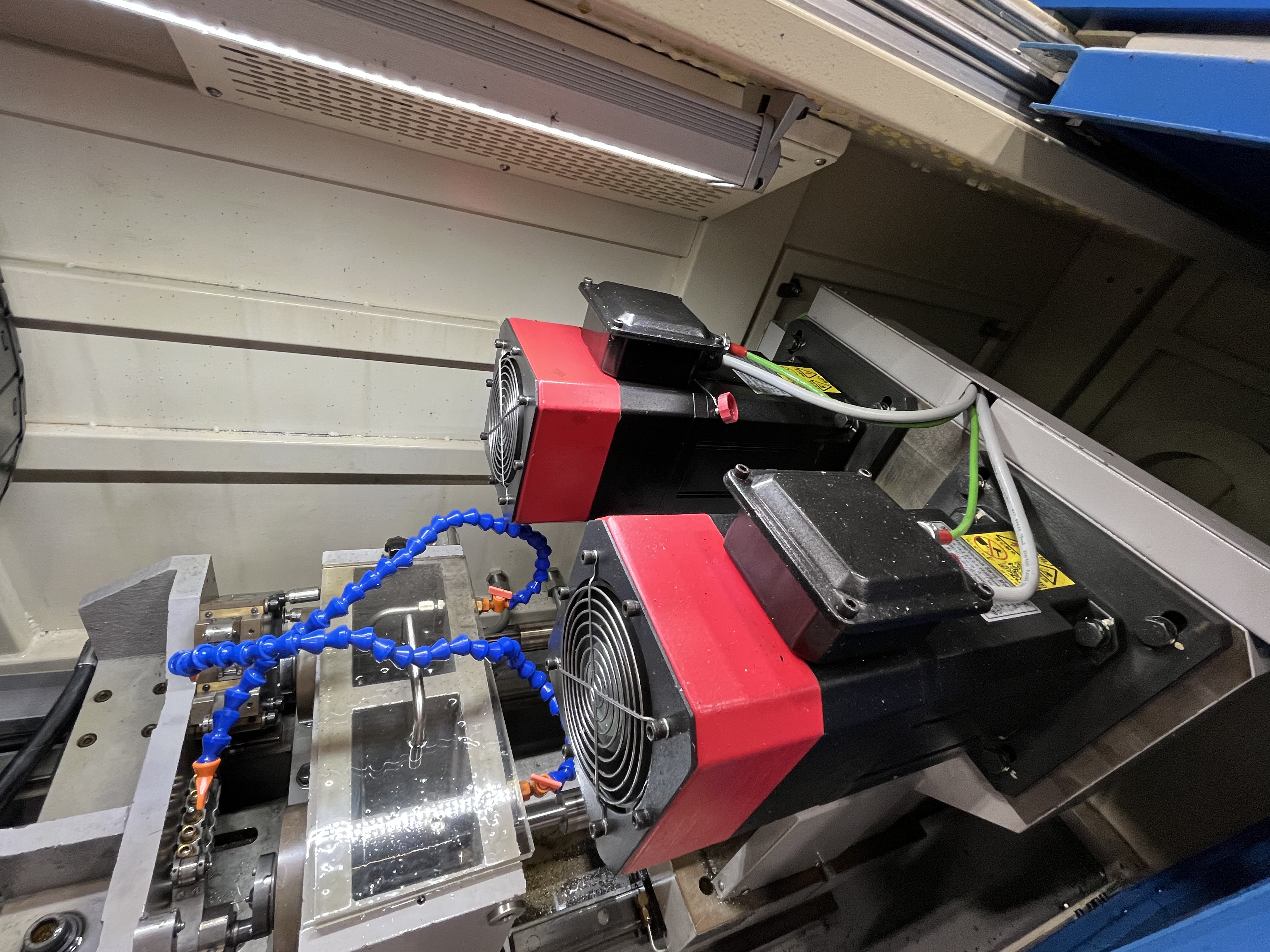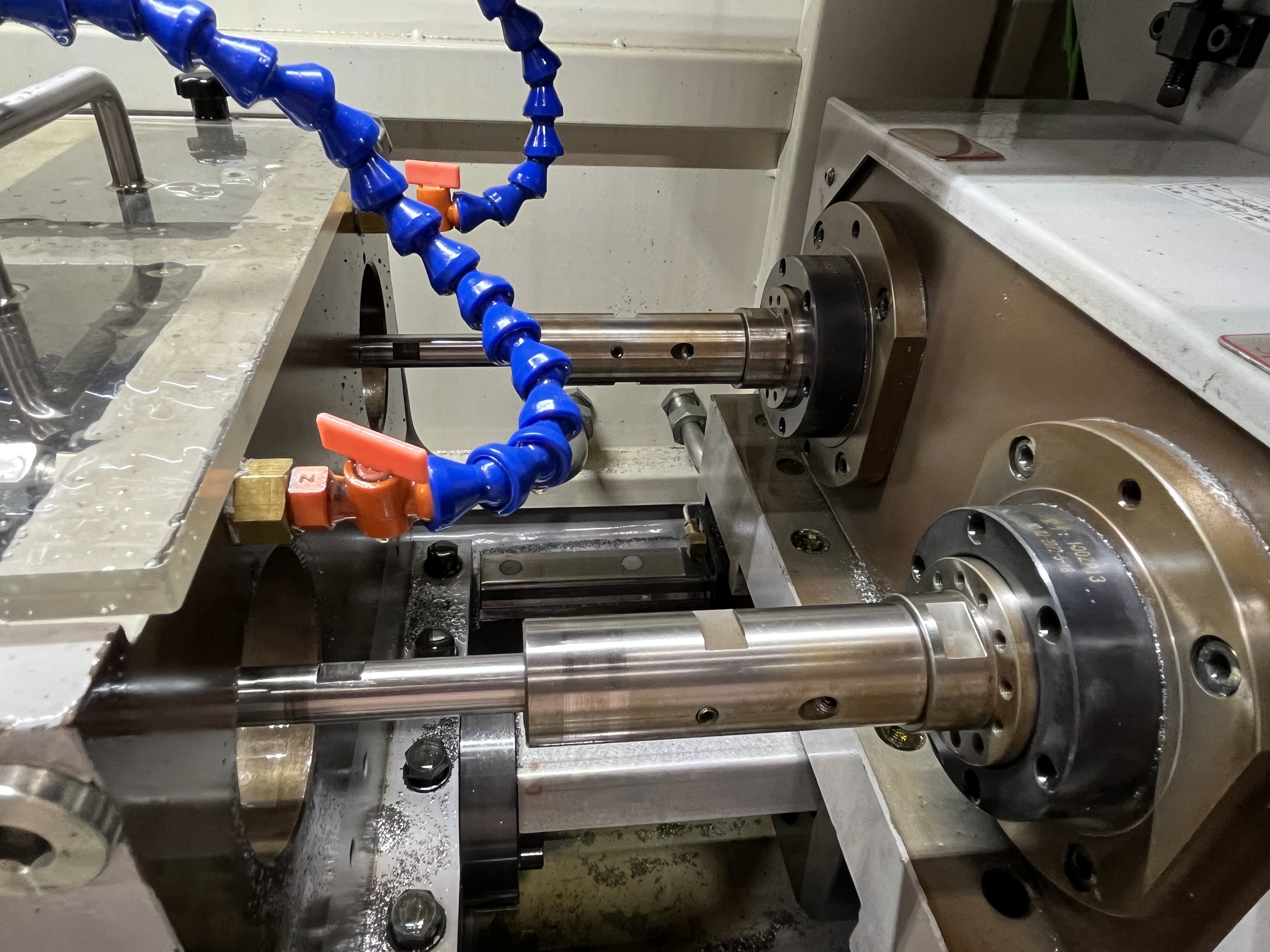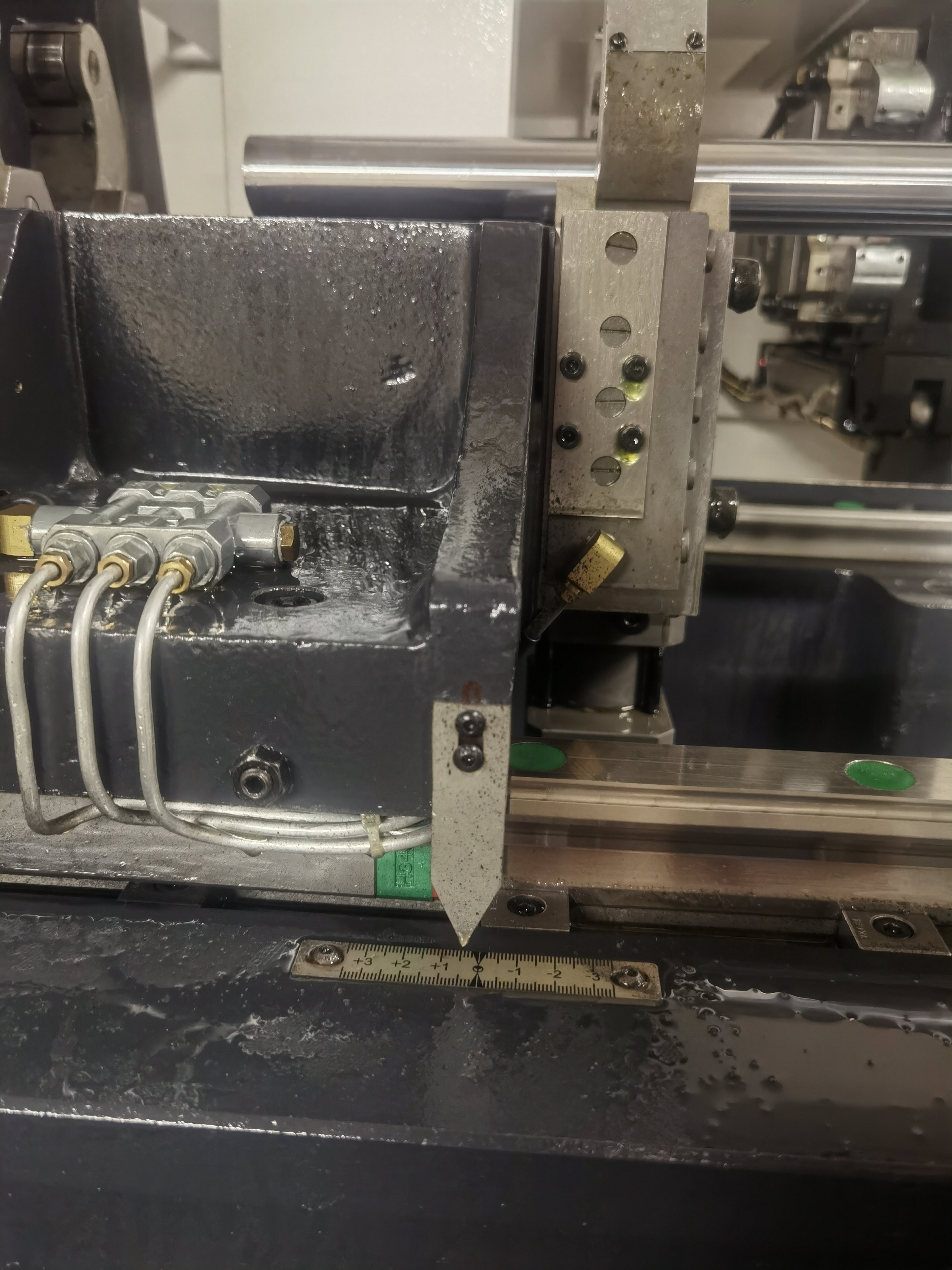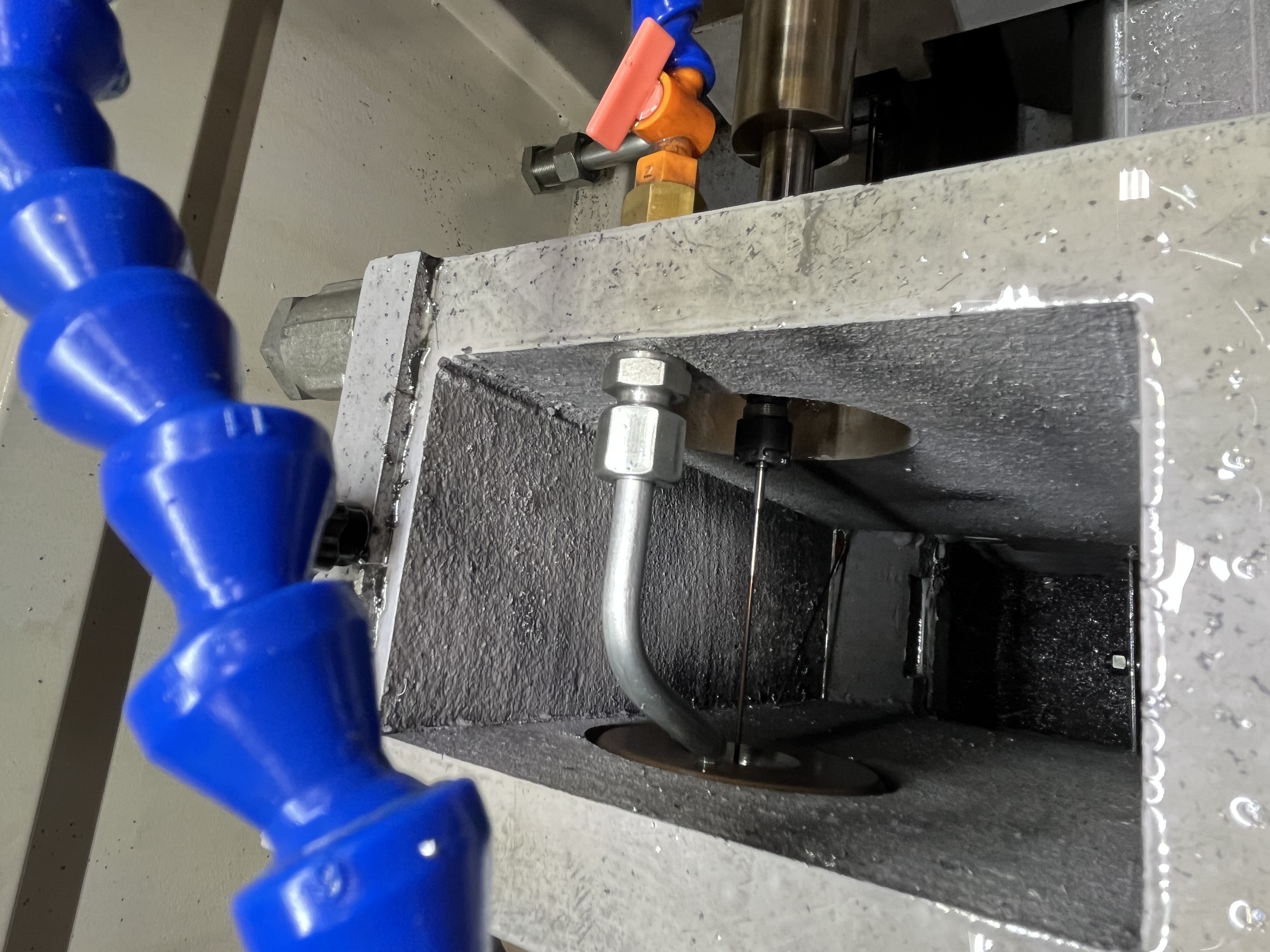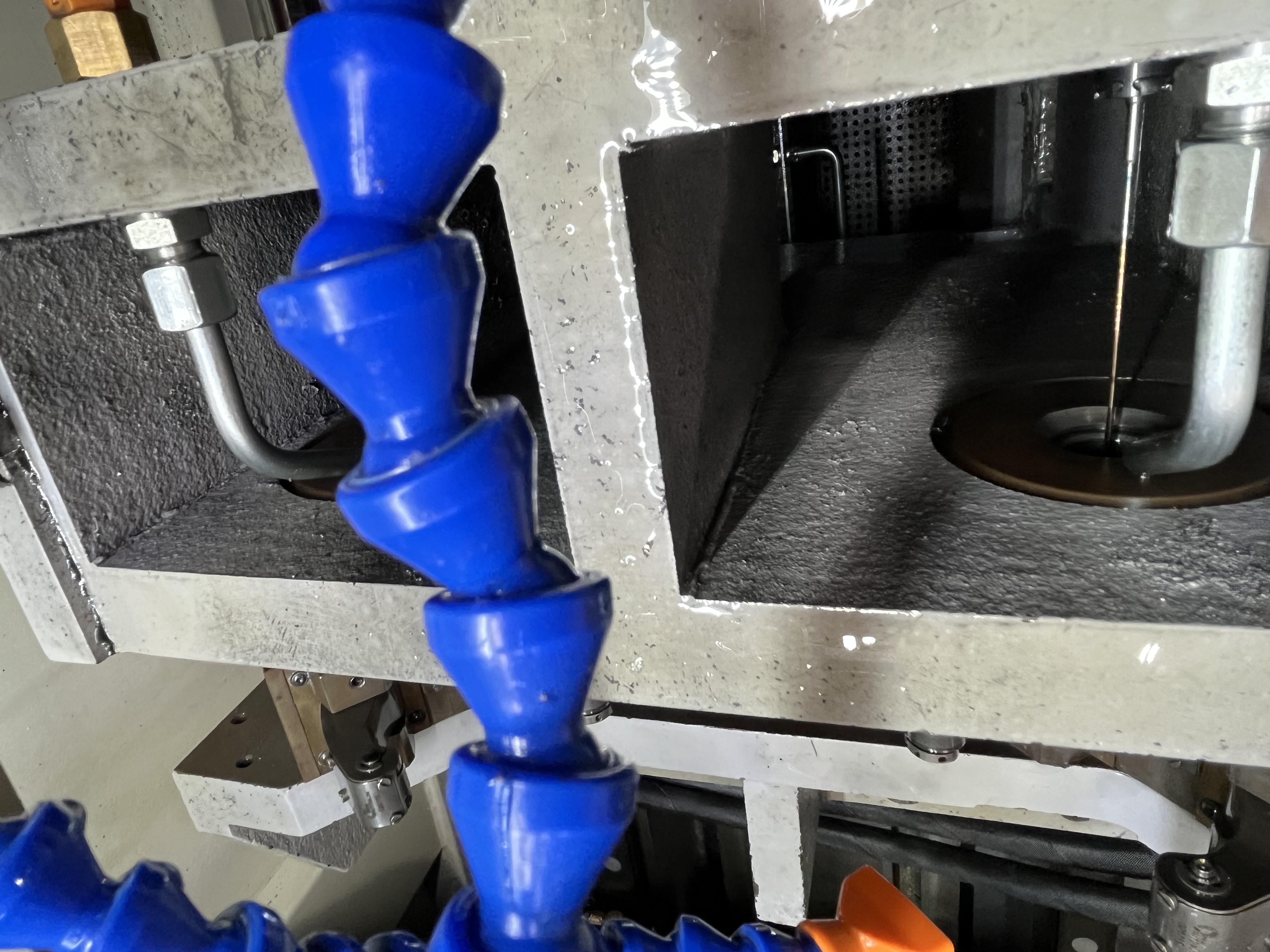
Deep Hole Drilling for Semiconductor Equipment Components

Semiconductor equipment might be the most demanding application for deep hole drilling outside of the medical industry. The components that go into wafer fabrication machines must meet extreme tolerances for cleanliness, dimensional accuracy, and material compatibility. I have drilled components for chemical vapor deposition chambers, physical vapor deposition systems, and wafer handling robots. The materials are almost always specialty grades of stainless steel, titanium, or aluminum, and every part must be contaminant-free. The precision requirements overlap with medical implant deep hole drilling in terms of cleanliness and tolerance, though the materials differ. ...
June 16, 2026 · Engineer at the Deep Hole

Deep Hole Drilling in Titanium: Parameters, Tool Life, and Coolant Strategies

Titanium is the material that separates experienced deep hole drilling shops from the rest. I have drilled more titanium holes than I can count — here is what I have learned about making them consistently. Every titanium alloy behaves differently. Get the parameters wrong on one alloy and you lose the tool, the part, or both. Get them right across the board and titanium becomes predictable. I cover the broader aerospace deep hole drilling landscape in another article. This one is specifically about titanium parameters, tool life, and coolant — the three things that matter most when the material is titanium. ...

June 16, 2026 · Engineer at the Deep Hole

Deep Hole Drilling Titanium: A Practical Guide

Titanium alloys – particularly Ti-6Al-4V (Grade 5) and Ti-6Al-4V ELI (Grade 23) – are widely used in aerospace, medical, and marine applications. They offer an excellent strength-to-weight ratio and corrosion resistance. Unfortunately, they also happen to be one of the most challenging materials to deep hole drill. I have spent years dialing in titanium drilling parameters for everything from aircraft landing gear components to medical implants. What follows is what I have found works consistently. ...

June 16, 2026 · Engineer at the Deep Hole

Deep Hole Drilling for Aircraft Structural Components

When Aircraft Structures Need Deep Holes Aircraft structural components like wing spars, bulkheads, and floor beams sometimes need through-holes for wiring harnesses, fluid lines, or fastener access. I have drilled these on CNC gun drilling machines with standard parameters. The holes are usually not structural themselves — they are pathways for systems that need to pass through the structure. But the parts they go through are highly stressed, so the drilling process cannot introduce stress risers or heat-affected zones. ...

June 12, 2026 · Engineer at the Deep Hole

Deep Hole Drilling for Aerospace: Titanium, Inconel, and Tight Tolerances

Aerospace deep hole drilling is the most demanding work I’ve done. The materials are expensive, the tolerances are tight, and the cost of a scrapped part can be five figures. Every hole needs to be right the first time. The main applications I’ve seen are landing gear components, engine shafts, and hydraulic actuators. They all have the same challenge: deep holes in tough materials with no margin for error. The Material Challenge Aerospace parts are typically titanium (Ti-6Al-4V), Inconel (718 or 625), or high-strength steel like 300M. All of them are harder to drill than standard engineering materials. ...

June 11, 2026 · Engineer at the Deep Hole

Deep Hole Drilling for Medical Implants: Small Diameters, Tight Tolerance

Medical implant drilling is a specialized corner of deep hole drilling. The diameters are small — 1mm to 6mm — and the depth-to-diameter ratios can go to 400:1. The materials are titanium and surgical stainless steel. And the tolerance requirements are tighter than anything else I’ve worked with. The parts I’ve worked on are bone screws, trauma nails, and surgical instruments. They all need a straight, clean hole through the full length. A bone screw that’s 4mm in diameter and 120mm long needs a hole through the center that’s maybe 1.5mm. The wall thickness around that hole is about 1.25mm. There’s no room for error. ...

June 11, 2026 · Engineer at the Deep Hole

Deep Hole Drilling in Difficult Materials: Stainless, Titanium, Inconel

Difficult materials need different parameters than standard steel. I have drilled all three of these materials extensively. Each one presents unique problems that require specific solutions. The common thread across all difficult materials is heat management and work-hardening. Here is my detailed approach for stainless steel, titanium, and Inconel. Material Difficulty Rating Before I get into the specifics, I want to lay out a difficulty framework. Not all difficult materials are equally hard to drill, and the ranking matters for quoting and tooling decisions. I rate materials on a 1-10 scale based on tool wear rate, achievable penetration rate, and coolant pressure requirements. ...

June 11, 2026 · Engineer at the Deep Hole

Troubleshooting Deep Hole Drilling in Titanium: Specific Problems and Solutions

I have drilled more titanium deep holes than I care to count, and I learned the hard way that titanium is not “tough steel.” It is a different animal. The thermal conductivity is roughly one-fifth that of steel. The chips are not chips – they are razor-edged bands that carry all the heat out of the cut. The work-hardening rate is aggressive enough to ruin a new gun-drill in seconds if you let the tool rub instead of cut. Every fix I learned on steel had to be re-learned for titanium. This article covers the specific failure modes I encounter in titanium deep hole drilling and the adjustments that actually work. ...

Engineer at the Deep Hole