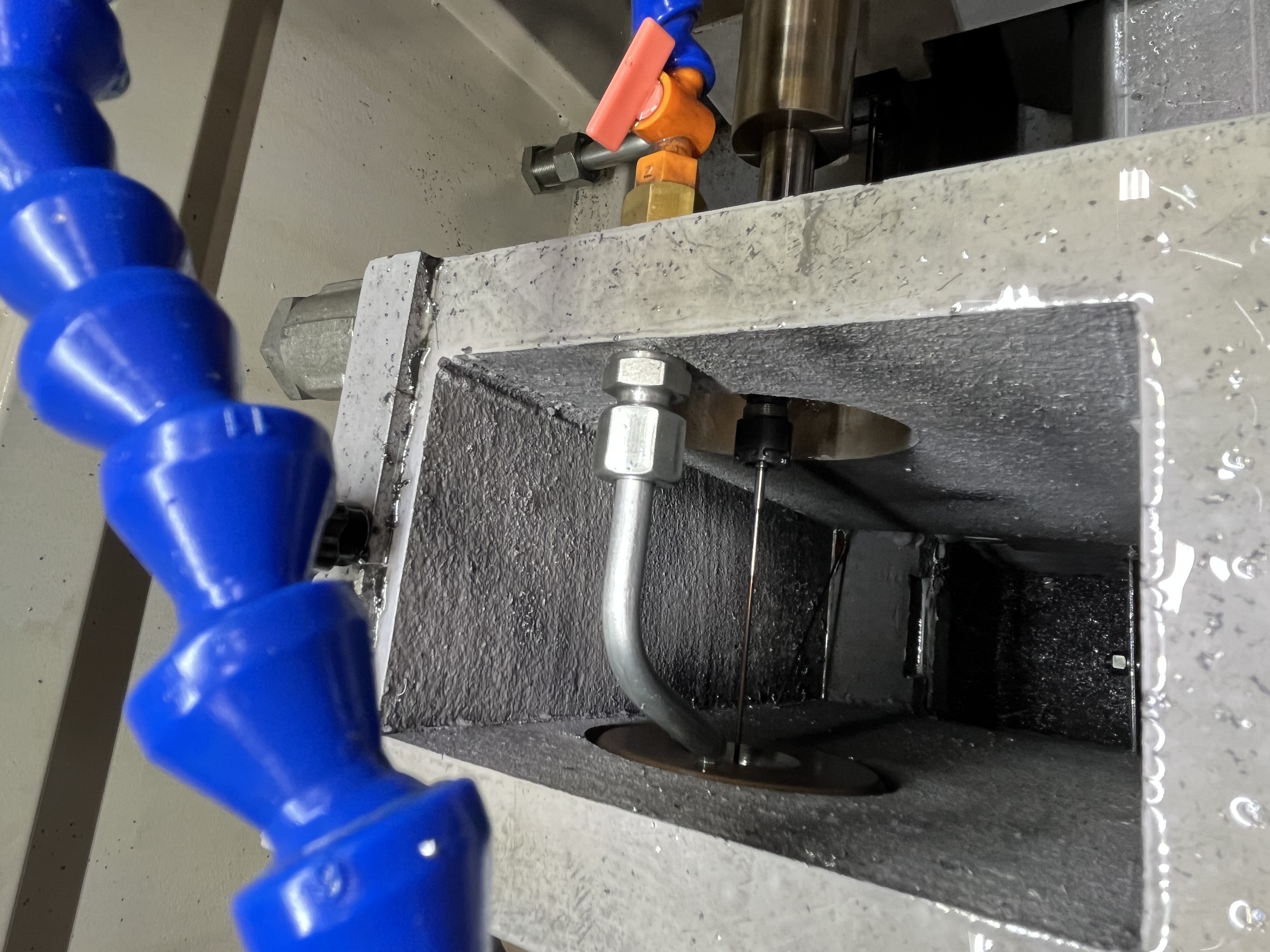
Problem Description
Foaming in high-pressure coolant systems is a persistent issue in deep hole drilling. I have watched a perfectly good 80-bar coolant system turn into a frothy mess that could not clear chips from a 12 mm hole. The air bubbles compress under the high pressure and expand at the nozzle, reducing the effective cooling and lubrication at the cutting zone. When the coolant aerates, chip evacuation is the first thing to fail.
When foam fills the coolant tank, the high-pressure pump starts cavitating. I have measured flow drops of 30-40% when foaming is severe in a deep hole drilling system. Chip evacuation suffers immediately — the chips do not flush out of the bore and start packing. That is when drills break. I have lost more tools to foam-related chip packing than to any other coolant problem.
Types of Anti-Foam Additives for Deep Hole Drilling
I have used three main categories of anti-foam additives over the years in high-pressure deep hole drilling coolant systems. Each type has its place depending on the coolant formulation and the application requirements.
Silicone-Based Defoamers
Silicone-based anti-foam additives are my default choice for emulsion coolant systems operating above 60 bar in deep hole drilling. The active ingredient is polydimethylsiloxane (PDMS), which spreads rapidly across the liquid surface and destabilizes foam bubbles. The effectiveness is outstanding at very low concentrations — I typically use 10-20 ppm for most high-pressure emulsion systems.
The main limitation of silicone defoamers is that excess dosage causes wetting problems. Above 50 ppm, I have seen the coolant lose its ability to wet the cutting edge, which increases tool wear by about 20%. Silicone can also plate out on machine surfaces over time and cause coolant separation issues in the sump.
Non-Silicone (Polyacrylate and Mineral Oil) Defoamers
Non-silicone anti-foam additives use polyacrylates, fatty alcohols, or mineral oil derivatives. They are less effective at foam knockdown than silicone types — I typically need 50-200 ppm to match the performance of 10-20 ppm of silicone. However, they are essential when the shop has discharge limits on silicone in wastewater, or when the workpiece goes through painting or plating after machining.
I have run non-silicone defoamers at 150 ppm on jobs where the customer required zero silicone residue. The foam control was acceptable but not as robust as silicone. A sudden foam spike during a deep hole drilling cycle could overwhelm the non-silicone additive, while the silicone type would handle it without issue.
Oil-Based Defoamers
Oil-based anti-foam additives work only in straight oil (neat oil) coolant systems. They are useless in water-miscible emulsions. I keep these on hand for the few deep hole drilling machines that run on straight oil for specific material applications, but they have no place in the emulsion systems that dominate modern deep hole drilling.
Detailed Comparison Table
| Defoamer Type | Effective Dose | Foam Knockdown Speed | Best For | Key Drawback |
|---|---|---|---|---|
| Silicone (PDMS) | 10-20 ppm | Instant | High-pressure emulsions >60 bar | Wetting issues above 50 ppm; silicone residue |
| Polyacrylate | 50-200 ppm | Moderate | Coolant systems with discharge limits | Less effective, needs higher dose |
| Mineral oil | 100-300 ppm | Slow | Low-pressure systems only | Ineffective above 40 bar |
| Polyether-modified silicone | 50-100 ppm | Fast | Sensitive applications needing balance | Higher cost than straight silicone |
| Oil-based | 100-500 ppm | Slow | Straight oil systems only | Useless in water-miscible coolants |
When to Use Each Type
The choice depends on the coolant system and the downstream requirements:
- Use silicone-based when you need maximum foam knockdown at minimum dosage and silicone residue is acceptable. This covers most deep hole drilling shops running emulsion coolants.
- Use non-silicone (polyacrylate) when the coolant drains to municipal treatment that limits silicone, or when the workpiece is painted or plated after deep hole drilling.
- Use polyether-modified silicone when you want silicone-level performance but need better compatibility with the coolant formulation. These hybrid additives cost more but cause fewer side effects.
- Use oil-based only when the machine runs straight oil coolant — typically on specialized deep hole drilling applications for certain aerospace alloys.
Application Method for Deep Hole Drilling Coolant
I add anti-foam in small increments rather than dumping the full dose into the coolant tank. My procedure is:
- Start at half the recommended concentration from the manufacturer.
- Circulate the coolant for 30 minutes at full operating pressure.
- Check the foam height in the tank — if it is below 50 mm, the dose is adequate.
- If foam is still above 50 mm, add another quarter of the recommended dose.
- Repeat until foam is controlled — never add more than the full recommended dose in a single shift.
Too much anti-foam causes its own problems. I have seen over-treated coolant in a deep hole drilling system lose wetting ability, which increased tool wear measurably. The coolant stopped spreading at the cutting edge and the chips came out dry instead of coated in fluid. In extreme cases, excess silicone anti-foam can plate out on machine surfaces and cause the coolant emulsion to separate in the sump. I keep a log of each addition so I do not overshoot the effective concentration.
Concentration Quick Reference
Here is the concentration guide I keep posted on my coolant maintenance board:
| Coolant Type | Silicone Dose | Non-Silicone Dose | Max Before Problems |
|---|---|---|---|
| Emulsion (5-10%) | 10-20 ppm | 100-200 ppm | 50 ppm silicone, 500 ppm non-silicone |
| Semi-synthetic | 15-30 ppm | 150-300 ppm | 40 ppm silicone |
| Full synthetic | 20-40 ppm | 200-400 ppm | 30 ppm silicone |
| Straight oil | Not recommended | N/A | N/A — use oil-based instead |
Preventing Foam Without Additives
Before reaching for an anti-foam additive, I always check the mechanical causes first. A loose return line fitting that is sucking air into the coolant will create foam regardless of what chemistry is in the tank. I have wasted anti-foam more than once by treating a mechanical air ingestion problem with chemistry.
Mechanical and Chemical Causes Checklist
| Issue | What to Check | Fix |
|---|---|---|
| Air ingestion | Return line fittings, pump seal, suction line | Tighten fittings, replace pump seal |
| Low coolant concentration | Refractometer reading — target 8-10% | Top up with fresh concentrate |
| Tramp oil contamination | Oil layer on tank surface, skimmer | Run skimmer, drain and replace if severe |
| Low tank level | Sight glass — must cover pump inlet | Top up with fresh coolant mixture |
| Wrong coolant type | Verify coolant is rated for high-pressure deep hole drilling | Switch to high-pressure rated coolant |
| Old coolant | Coolant age over 6 months, high bacterial count | Full coolant change |
| Excessive fines | Coolant clarity — cloudy even after filtration | Upgrade filtration or replace coolant |
I replace coolant entirely if foaming persists after fixing mechanical issues and adding anti-foam. Old coolant loaded with tramp oil and fines simply will not behave regardless of what additive I use. I have seen a full coolant change fix foaming problems that no anti-foam additive could touch.
For more on how coolant quality affects deep hole drilling performance, see the coolant temperature and machine stability article. Also check the chip management article for how coolant quality ties into chip evacuation.
Key Takeaways
- Silicone-based anti-foam at 10-20 ppm works best for high-pressure emulsion systems over 60 bar in deep hole drilling.
- Non-silicone polyacrylate defoamers are necessary when silicone residue is prohibited for painting or plating post-processing.
- Add anti-foam in small increments — overshooting causes wetting problems and increased tool wear.
- Fix mechanical air ingestion before blaming the coolant chemistry — a loose fitting foams any coolant.
- Old coolant contaminated with tramp oil and fines foams no matter what additive you add.
- Track anti-foam additions in a log to avoid cumulative over-treatment and coolant separation.
- Maintain coolant concentration at 8-10% — low concentration causes foaming even with adequate defoamer.
- Check foam height after 30 minutes of circulation at full operating pressure before adding more.