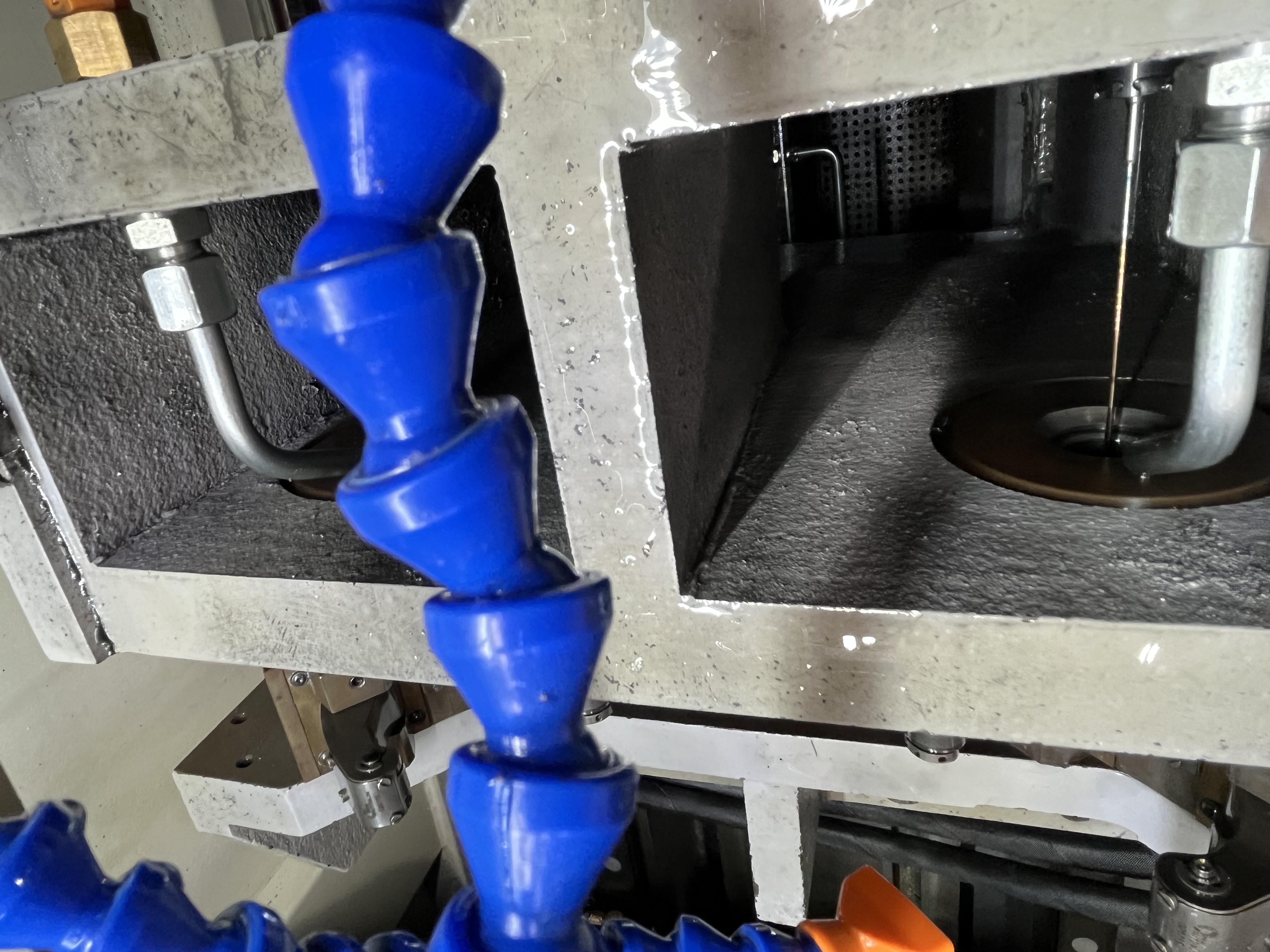
Why a PM Schedule Matters
The coolant system on a deep hole drilling machine operates under high pressure and continuous duty. A gun drilling machine runs at 40-120 bar coolant pressure for every second of the cut. BTA systems run at 15-40 bar with flow rates up to 400 L/min. Components wear, filters clog, and coolant degrades. A regular PM schedule catches these changes before they cause downtime or part defects.
I follow a schedule based on operating hours, not calendar days, because machine utilization varies. A machine running three shifts needs more frequent attention than a machine running one shift. The schedule below assumes a single-shift operation (8 hours per day, 5 days per week).
Weekly PM Tasks
| Task | Method | Target / Action |
|---|---|---|
| Check coolant level | Visual at tank sight glass | Maintain within marks |
| Check filter pressure drop | Read differential pressure gauge | Below 1.5 bar; change if higher |
| Check concentration | Handheld refractometer | 8-12% |
| Check pH | pH meter or strips | 9.0-10.0 |
| Check tramp oil layer | Visual at tank surface | Remove if visible layer present |
The filter pressure drop is the most important weekly check. A clean filter typically shows 0.2-0.5 bar pressure drop. When the drop reaches 1.5 bar, the filter is partially clogged and approaching the point where it will restrict coolant flow. I change the filter elements before they reach 2.0 bar.
I check the coolant level at the same time every day, typically at the start of the first shift. A sudden drop in coolant level between weekly checks indicates a leak. I track down the leak immediately.
Monthly PM Tasks
| Task | Details | Frequency Trigger |
|---|---|---|
| Check coolant temperature | Read tank thermometer or chiller display | Target below 40 degrees C |
| Inspect all hoses | Visual for chafing, cracks, bulges | Replace if damage found |
| Check pump motor current | Clamp ammeter on each phase | Within 10% of nameplate rating |
| Check rotating union | Visual for drips during operation | Replace seal if leaking |
| Check tank bottom sludge | Dip a rod to bottom of tank | Clean if sludge depth exceeds 25 mm |
| Inspect chip conveyor | Visual for wear on chain/belt | Adjust tension if slipping |
Coolant temperature has a big effect on tool life in deep hole drilling. I target a coolant temperature below 40 degrees C (104 degrees F). Above 45 degrees, the coolant loses viscosity and the lubricity drops. I have measured a 20% reduction in tool life when coolant temperature went from 35 to 50 degrees C.
The rotating union on the drill spindle is a common wear point. It transfers coolant from the stationary supply line to the rotating drill. A leaking rotating union wastes coolant and can cause low pressure at the tool tip. I check for drips during operation, not when the machine is stopped. A seal that leaks only under pressure will not show drips when the pump is off.
Quarterly PM Tasks
| Task | Details |
|---|---|
| Change coolant filters | All filter elements replaced |
| Check pump coupling | Inspect rubber spider or jaw coupling for wear |
| Clean chip conveyor | Remove accumulated fines from conveyor trough |
| Check coolant tank lid seals | Replace if hardened or cracked |
| Test coolant system safety valves | Verify relief pressure setting |
| Inspect coolant nozzles | Clean or replace if flow pattern is uneven |
I change all filter elements on a quarterly schedule regardless of the pressure drop reading. This prevents the gradual flow restriction that occurs as filter elements age. A filter that shows 0.8 bar after one month will show 1.2 bar after three months. Changing on schedule keeps the system operating consistently.
The pump coupling (spider or jaw type) wears gradually. A worn coupling causes the pump to run rough and can damage the pump shaft seal. I inspect the coupling every quarter and replace it if the rubber spider shows any cracking or deformation. A replacement coupling costs about 20-50 USD. A pump rebuild costs 500-2000 USD.
Annual PM Tasks
| Task | Details |
|---|---|
| Change coolant | Full dump and refill |
| Inspect pump impeller | Check for wear on vanes and housing |
| Replace rotating union seals | Complete seal kit replacement |
| Check chiller operation | Clean condenser coils, check refrigerant |
| Inspect all coolant lines | Replace any hard lines with internal scale |
| Calibrate pressure gauges | Send out for calibration or replace |
| Clean coolant tank | Remove all sludge and scale from tank walls |
The annual coolant dump is the most effective preventive measure. No amount of concentration adjustment or biocide addition can restore coolant that has accumulated dissolved metals, tramp oil breakdown products, and bacterial byproducts over a year of operation. I plan the dump during a scheduled plant shutdown.
When I dump the coolant, I also clean the tank thoroughly. The tank bottom and walls accumulate a biofilm that harbors bacteria. I scrub the tank with an alkaline cleaner at 60 degrees C and rinse thoroughly before refilling.
Record Keeping
I keep a log of all PM activities in a binder at each machine. The log has columns for date, task performed, findings, and technician signature. The log helps me spot patterns (a specific machine that consistently shows low pH, for example) and plan the next PM cycle.
I also track coolant consumption per machine. Normal consumption is 5-10% per month from evaporation and dragout. If a machine starts consuming 20% or more per month, there is a leak that needs investigation.
Key Takeaways
- Check filter pressure drop weekly and change filters when drop exceeds 1.5 bar.
- Maintain coolant temperature below 40 degrees C for optimal tool life.
- Replace rotating union seals at the annual PM or sooner if leaking.
- Dump and replace coolant annually regardless of condition.
- Keep a PM log to spot trends and plan maintenance during planned downtime.