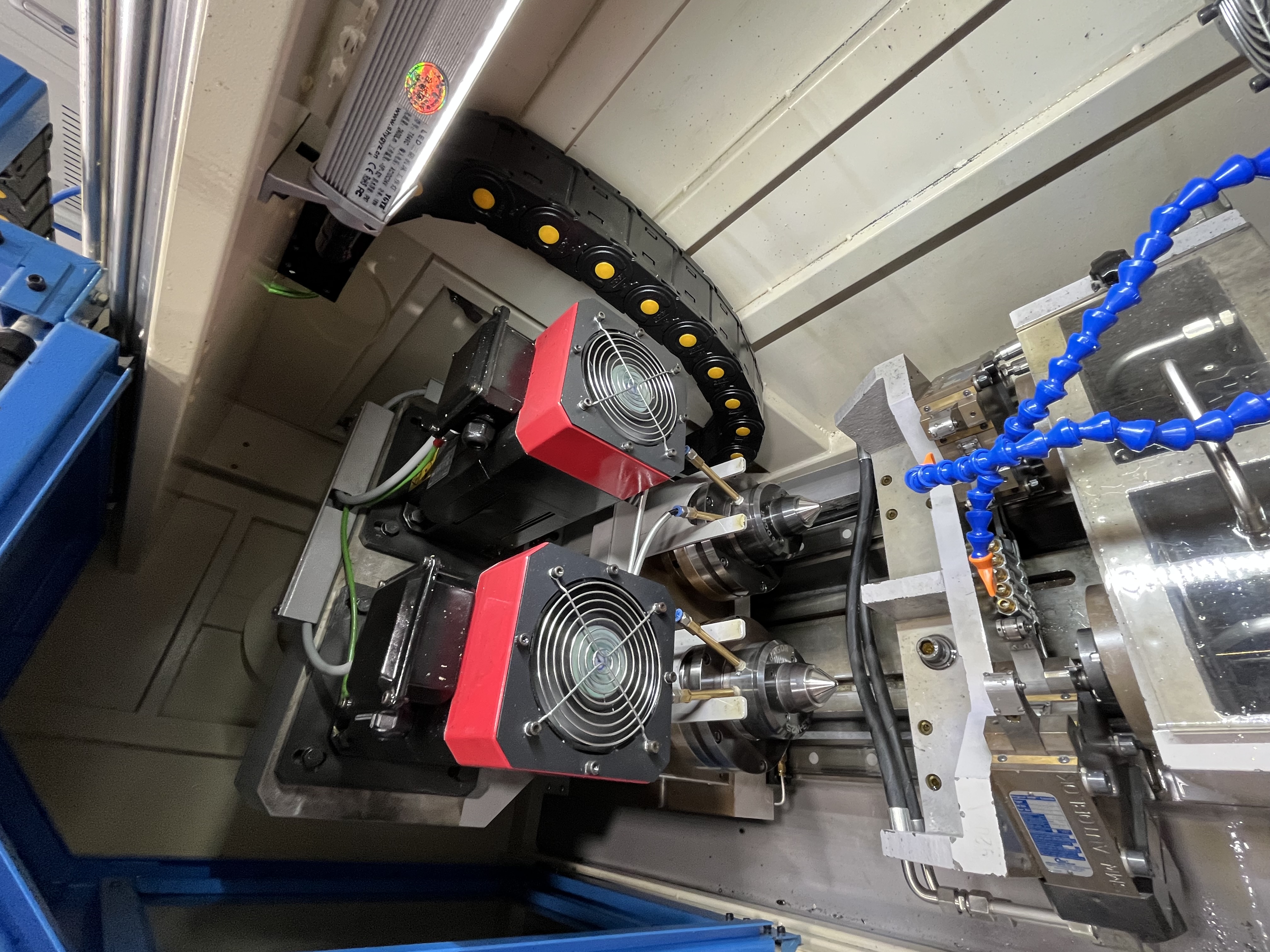
Coolant temperature affects drilling performance more than most operators realize. I have seen shops chase tool life problems and hole position issues for months before discovering the root cause was nothing more than coolant running 10 degrees hotter at the end of the shift than at the start. Temperature control is not optional for consistent deep hole drilling.
Problem Description
Coolant temperature changes throughout the day as the machine runs. A machine that starts at 22 degrees in the morning can be circulating coolant at 38 degrees by the afternoon if the system has no chiller. The temperature rise affects three things directly: coolant viscosity, machine structure alignment, and tool life.
A coolant temperature swing of 15 degrees across a shift causes measurable changes in hole quality. The first hole of the day measures differently from the last hole because the machine structure has expanded. Bore position drifts by 0.02-0.05mm depending on the machine size and the temperature rise. For parts with tight positional tolerances, this drift causes scrap.
Effects of Overheating
Viscosity drop is the first effect I notice. Coolant at 30 degrees has roughly 20% lower viscosity than at 20 degrees. At 40 degrees, the viscosity drops by 40%. Thin coolant does not lubricate the cutting edge effectively and does not carry chips as well. The tool edge runs hotter because the lubricating film breaks down, leading to accelerated flank wear.
| Temperature | Viscosity (relative) | Lubrication Quality | Chip Transport |
|---|---|---|---|
| 20°C | 100% | Excellent | Excellent |
| 30°C | 80% | Good | Good |
| 40°C | 60% | Marginal | Fair |
| 50°C | 45% | Poor | Poor |
Thermal expansion of the machine structure is the second effect. The spindle housing, column, and base all expand as the machine warms up. The spindle centerline rises relative to the worktable. On a large deep hole machine with a 1-meter column, a 10-degree temperature rise can shift the spindle centerline by 0.03-0.05mm upward.
Tool life is the third effect. I have run controlled tests comparing tool life at 25 degrees versus 40 degrees using the same tool, material, and parameters. Tool life at 40 degrees was 35% shorter. The higher temperature accelerated edge wear and increased built-up edge formation on aluminum and low-carbon steel.
Coolant Temperature Measurement
I measure coolant temperature at two points: at the machine return line (before the chip tank) and at the machine supply line (after the chiller or heat exchanger). The difference between these two readings tells me how much heat the cutting process is adding to the coolant.
| Measurement Point | Expected Temperature | What It Tells Me |
|---|---|---|
| Supply line (after chiller) | Target +/- 2 degrees | Chiller performance |
| Return line (before tank) | Target + 3-8 degrees | Heat load from cutting |
| Tank reservoir | Target +/- 3 degrees | Overall system balance |
A return temperature more than 10 degrees above the supply temperature means the coolant flow rate is too low for the heat load. I increase the flow rate or add an additional coolant circuit. I have seen this on deep holes over 500mm where the coolant absorbs heat along the full bore length.
I record the temperature readings daily in the maintenance log. A gradual upward trend in the supply temperature over weeks means the chiller is losing capacity. A sudden spike means the chiller has stopped working or a coolant valve is closed.
Coolant Chiller Selection
A coolant chiller is essential for production deep hole drilling. I size the chiller to handle the total heat load from the cutting process and the coolant pump. The chiller capacity in kilowatts should match or exceed the sum of the spindle cutting power and the pump motor power.
| Machine Type | Cutting Power | Pump Power | Recommended Chiller |
|---|---|---|---|
| Small gun drill (3-10mm) | 2-5 kW | 3-7 kW | 10 kW |
| Medium BTA (20-50mm) | 10-25 kW | 10-20 kW | 30-50 kW |
| Large BTA (50-150mm) | 25-75 kW | 20-40 kW | 50-100 kW |
I set the chiller to maintain coolant temperature within 2 degrees of the target. The target temperature should be close to the shop ambient temperature to minimize thermal gradients. For most shops, 25-28 degrees is a practical target.
Chiller sizing must account for the worst-case heat load. The cutting process generates heat proportional to the material removal rate. A BTA head removing 500 cubic cm per minute of steel generates roughly 15-20 kW of heat in the cutting zone. The coolant pump adds another 10-20 kW depending on the flow rate and pressure. The chiller must handle the sum of both.
I oversize the chiller by 20% to handle peak loads and ambient temperature swings. An undersized chiller runs continuously and cannot keep up during heavy cutting cycles. The chiller compressor short-cycles and fails prematurely.
Coolant Tank Design for Temperature Control
The coolant tank design affects temperature stability. A tank that is too small for the system volume heats up quickly because the coolant does not have enough residence time to shed heat. I recommend a tank capacity of at least 5 times the pump flow rate per minute.
For a pump flowing 100 L/min, the tank should hold at least 500 liters. A tank this size gives the coolant time to cool between the return and the pump suction. Smaller tanks cause rapid temperature cycling as the coolant returns hot and is immediately pumped back to the machine.
| Pump Flow Rate | Minimum Tank Size | Heat Rise at Full Load |
|---|---|---|
| 50 L/min | 250 liters | 8-12 degrees without chiller |
| 100 L/min | 500 liters | 6-10 degrees without chiller |
| 200 L/min | 1000 liters | 5-8 degrees without chiller |
Tank insulation also helps. I insulate the tank walls with 25mm foam insulation board. The insulation reduces heat exchange with the shop floor and keeps the coolant temperature more stable during winter months when the floor is cold.
Monitoring and Maintenance
I check the coolant temperature at the machine return line every morning. The reading tells me whether the chiller is working correctly. A temperature reading that is 5 degrees above the set point means the chiller is running at reduced capacity.
Chiller filters need cleaning monthly in my experience. Dirty condenser coils reduce heat transfer and cause the chiller to run longer. I clean the coils with compressed air and check the refrigerant sight glass for bubbles, which indicate low charge.
For shops without chillers, I schedule the heaviest cutting jobs for the morning when the coolant is coolest. I also keep the coolant tank in a shaded area and add tank insulation to slow the temperature rise during the day.
Key Takeaways
- Coolant temperature swings of 10-15 degrees across a shift cause measurable hole position drift.
- Tool life drops by approximately 35% when coolant temperature rises from 25°C to 40°C.
- Size the chiller to handle the combined heat load from the cutting process and the coolant pump.
- Set the chiller to maintain coolant within 2 degrees of a target near shop ambient temperature.
- Clean chiller condenser coils monthly and check the refrigerant sight glass for bubbles.