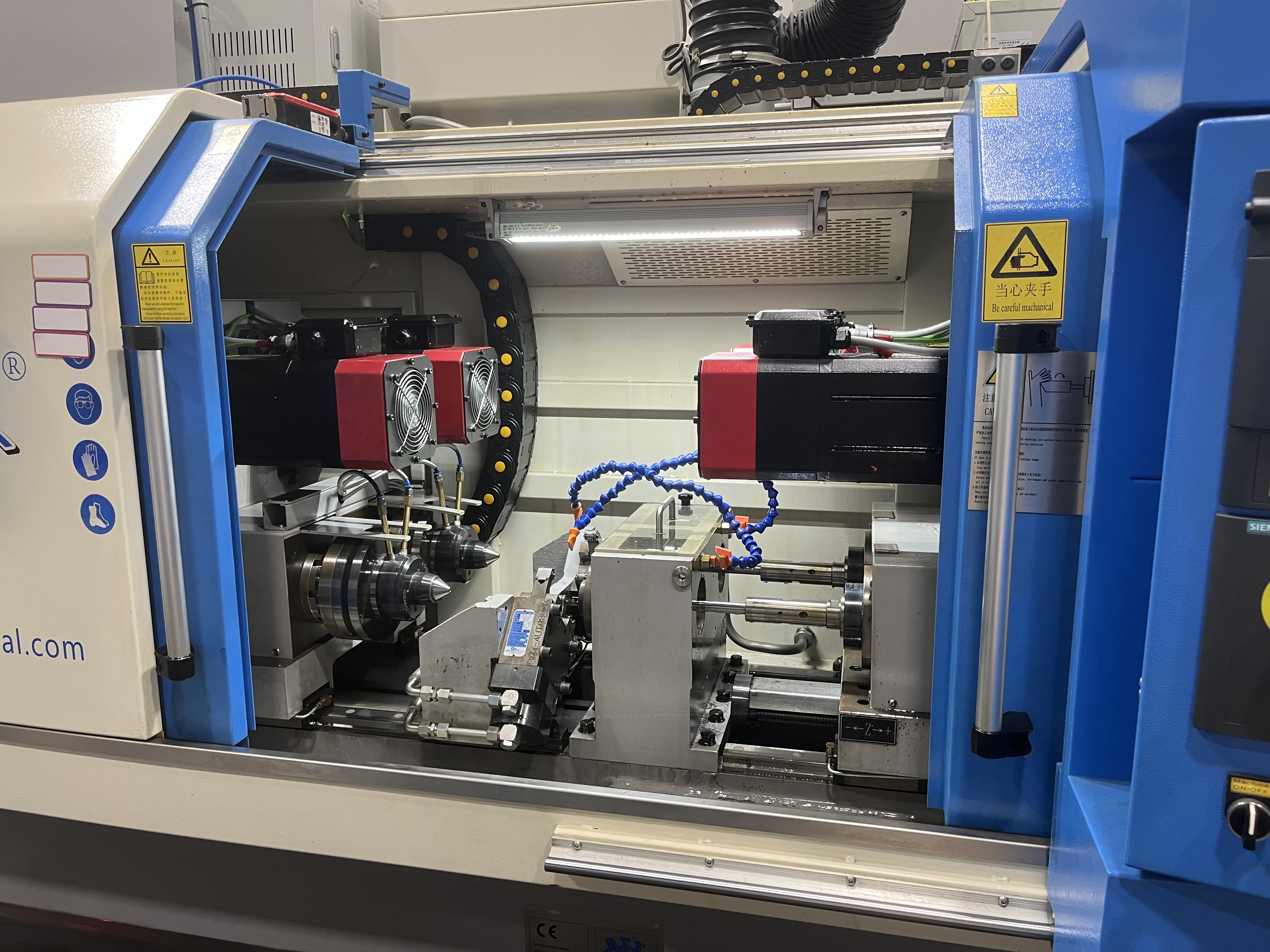
I have developed this maintenance schedule over years of running deep hole drilling machines. Regular maintenance prevents most unexpected downtime, and the cost of a skipped check is usually measured in broken tools and scrapped parts. The schedule divides into daily, weekly, monthly, quarterly, and annual tasks.
Problem Description
Deep hole drilling machines combine rotating spindles, high-pressure coolant systems, hydraulic feeds, and precision guide bushings in a single integrated system. A failure in any subsystem stops production. The most expensive downtime I have dealt with came from neglected items — a rotating union that failed because the seal was never inspected, a coolant hose that burst internally from age and pressure, and a spindle bearing that ran hot for weeks before it seized.
A structured maintenance program catches these issues before they cause failures. I have found that 80% of unexpected machine downtime comes from 20% of the machine components, and those components are all on the daily and weekly checklists.
Daily Checks (5-10 minutes)
| Item | What to Check | Threshold for Action |
|---|---|---|
| Coolant pressure at tool tip | Compare to job setup reading | Drop of more than 3 bar |
| Coolant tank level | Sight glass or dipstick | Below 50% requires top-off |
| Guide bushing condition | Visual inspection for scoring or galling | Any visible damage |
| Spindle load during operation | Compare to baseline reading | Increase of more than 10% |
| Chip shape | Visual check at chip tank | Stringy chips need parameter change |
These five checks take me about 5 minutes at machine startup. I record the readings on a paper log sheet or in a spreadsheet. A consistent daily check catches coolant leaks, pump problems, and tool wear before they affect hole quality.
I also listen to the machine during the first cycle. A change in sound — squealing from the rotating union, knocking from the spindle, or surging from the coolant pump — is often the first sign of a problem. I have caught rotating union seal failures this way before they caused a coolant leak into the spindle bearings.
Weekly Checks (15-20 minutes)
| Item | What to Check | Threshold for Action |
|---|---|---|
| Coolant concentration | Refractometer reading | Below 5% or above 12% |
| Coolant pH | pH meter or test strips | Below 8.5 or above 9.5 |
| Coolant filter condition | Pressure drop across filter | +10 psi over clean baseline |
| Coolant hoses | Visual for leaks, bulges, or wear | Any damage requires replacement |
| Way lubrication | Oil level in lubricator | Below 50% requires refill |
Coolant concentration and pH are the most important weekly checks in my experience. Coolant that is too weak (below 5%) does not provide enough lubricity and allows rust to form on the machine ways. Coolant that is too strong (above 12%) can cause skin irritation and foaming problems.
I also grease the linear guide fittings on machines with manual lubrication systems. Each fitting gets two pumps of grease. Over-greasing is as bad as under-greasing on ball screws, so I follow the machine manual exactly.
Monthly Checks (30-45 minutes)
| Item | What to Check | Threshold for Action |
|---|---|---|
| Machine alignment | Test bar in spindle, check with indicator | More than 0.02mm deviation |
| Spindle bearing temperature | Infrared thermometer | Above 55 degrees C |
| Steady rest rollers | Visual for flat spots or wear | Any flat spots require replacement |
| Rotating union seal | Check for coolant leakage at weep hole | Any leakage requires seal replacement |
| Electrical cabinet | Visual for coolant contamination | Any signs of moisture or coolant |
Machine alignment with a test bar is the most revealing monthly check. I mount a 300mm test bar in the spindle and check the runout at the bar end. If the reading has changed by more than 0.02mm since the previous month, I check the spindle bearings and the column alignment.
Spindle bearing temperature tells me about bearing condition. I take the temperature at the bearing housing with an infrared thermometer after the machine has been running for 30 minutes. A reading above 55 degrees means the bearing preload is too tight or the bearing is failing.
Quarterly and Annual Checks
| Interval | Item | Action |
|---|---|---|
| Quarterly | Coolant filters | Replace regardless of pressure drop |
| Quarterly | Hydraulic oil filter | Replace |
| Quarterly | Electrical connections | Check torque on power connections |
| Quarterly | Way covers | Inspect for cracks, clean debris |
| Annually | Hydraulic oil | Sample and test, replace if needed |
| Annually | Spindle bearing grease | Regrease per machine manual |
| Annually | Coolant tank | Drain, clean, and refill |
I replace coolant filters quarterly even if the pressure drop is acceptable. The filter media degrades over time and can collapse at high flow rates. A collapsed filter lets all the accumulated debris flush through the system in one shot.
Documentation
I keep a maintenance log for each machine in a three-ring binder. The log has columns for the date, the task performed, the readings taken, and any notes. The log shows me when tasks were done and helps plan the next maintenance cycle.
The log is also useful for warranty claims and for justifying capital replacement requests. A machine with a complete maintenance history is worth more on the resale market and runs better in production.
Key Takeaways
- Daily checks take 5 minutes and catch 80% of developing problems.
- Coolant concentration and pH are the most important weekly checks.
- Run a test bar monthly and check alignment — 0.02mm deviation needs investigation.
- Spindle bearing temperature above 55 degrees means bearing preload or damage issues.
- Keep a maintenance log for each machine with readings, dates, and notes.