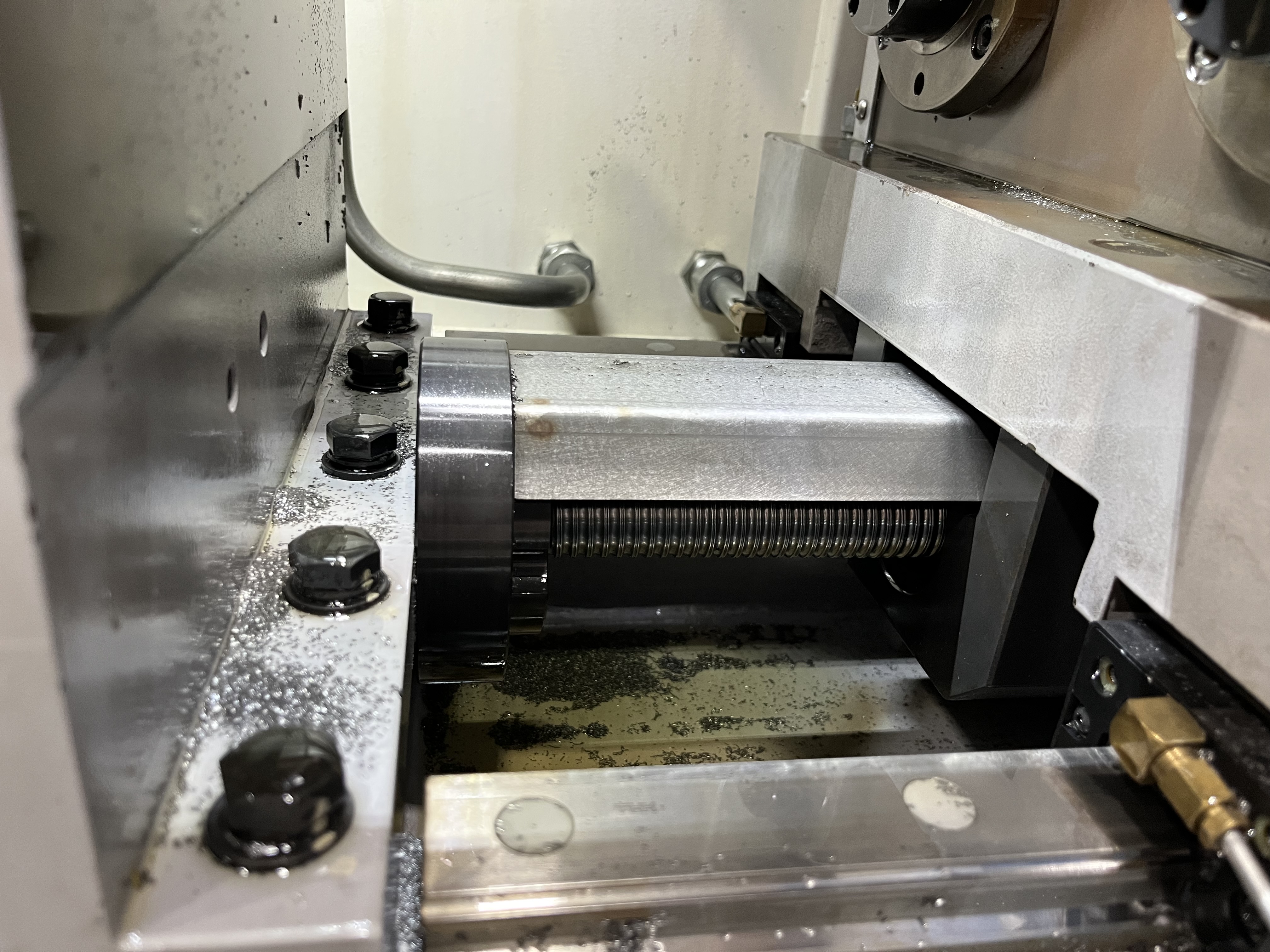
When a deep hole comes out crooked, the natural instinct is to blame the machine alignment. I have learned the hard way that misalignment is often not the problem. Before I pull out the alignment laser, I check three things first. Nine times out of ten, the cause is one of them.
How I Diagnose Drill Walking
I start by asking two questions about the hole:
Is the deviation consistent from the first part to the last? If every hole drifts the same direction by the same amount, the root cause is likely fixed — alignment, bushing wear, or entry geometry. If the deviation changes from part to part, the cause is likely variable — material hardness variation, coolant fluctuation, or chip packing.
Does the deviation start at the entry or develop deeper? A hole that starts off-center and stays that way points to an entry problem. A hole that starts straight and progressively drift points to a support or parameter problem.
These two questions cut the diagnosis time in half.
The Three Most Common Causes I See
| Root Cause | How Often I See It | Signature |
|---|---|---|
| Guide bushing worn or misaligned | About 40% | Consistent drift, same direction, starts at entry |
| Poor entry condition | About 30% | Hole walks in first 5-10mm, then stabilizes |
| Feed rate too high for setup | About 20% | Progressive drift that increases with depth |
The remaining 10% is a mix of machine alignment, spindle bearing wear, material variation, and tool geometry issues.
Guide Bushing Problems — The #1 Cause
The guide bushing does two jobs: it supports the drill at entry and seals the coolant. When either function degrades, the drill walks.
Clearance is the key number. For a gun drill under 20mm diameter, I want bushing clearance between 0.003mm and 0.008mm over the drill diameter. At 0.01mm, I start seeing drift in longer holes. At 0.015mm, the hole will be visibly off within the first 50mm.
I check bushing clearance with a pin gauge or by measuring the drill and bushing ID separately. If the clearance is over 0.01mm, I replace the bushing before looking anywhere else.
Concentricity between the bushing and the spindle axis should be within 0.02mm. I check this with a test bar in the spindle and a dial indicator on the bushing ID. A misalignment of 0.05mm at the bushing will produce a hole that drifts approximately 0.5mm per meter.
I wrote more about bushing selection and wear limits in Gun Drill Entry Bushings Guide.
Entry Condition Problems
The first 5mm of the hole determine the straightness of the next 500mm. If the drill does not start straight, it will not get straight.
Surface perpendicularity matters. If the workpiece face is not square to the spindle, the drill tip contacts one side first and deflects. I check this with a dial indicator on the face before I start.
Gap between bushing and workpiece. There should be no gap. Even a 1mm gap allows the drill to deflect on entry. I have fixed several “straightness problems” by simply pulling the bushing closer to the work.
For rough surfaces like as-cast or torch-cut faces, I spot face the entry before drilling. A 120-degree spot drill creates a clean starting surface. I cover this in more detail in Center Drilling vs Spot Drilling.
Feed Rate and Its Effect on Straightness
This is the most common parameter-related cause I see. The relationship is straightforward: higher feed increases thrust, which increases drill shaft bending, which increases deviation.
I use this rule of thumb: if the hole is drifting progressively and the feed rate is at the high end of the recommended range for that diameter, reducing feed by 20% will reduce drift noticeably.
| Drill Diameter | Max Feed (mm/rev) Before Drift Risk |
|---|---|
| Under 6mm | 0.015 |
| 6-12mm | 0.025 |
| 12-20mm | 0.035 |
| 20mm+ | 0.050 |
These are conservative numbers. If your setup is rigid and your bushing is fresh, you can push higher. But when diagnosing a drift problem, I drop to these values first.
I have a full speed/feed reference in Gun Drilling Speeds and Feeds.
A Systematic Troubleshooting Sequence
When a job comes off the machine with a crooked hole, this is the order I check things in:
- Inspect the guide bushing. Measure ID clearance. If over 0.01mm, replace. Check for visible wear, scoring, or bell-mouth shape.
- Check entry condition. Is the workpiece face square to the spindle? Is the bushing contacting the work? Is there a spot face or chamfer?
- Reduce feed by 20%. Run one test part. If deviation improves, the original feed was too high for that setup.
- Check bushing concentricity. Dial indicator on bushing ID with spindle rotated. If over 0.02mm TIR, realign.
- Check spindle alignment. Test bar and indicator. If the spindle itself is out, this is a machine repair job, not a process adjustment.
- Check tool condition. Is the gun drill geometry correct? Any signs of uneven wear or regrind quality issues? See How to Read a Worn Gun Drill.
I rarely need to go past step 3. Steps 1-3 catch about 90% of drill walking problems.
When It Actually Is Machine Alignment
True machine alignment problems are rare — maybe once a year in my experience. But they have a distinct signature: the hole drift correlates with the machine axis direction, not with the tool or bushing condition.
If the spindle centerline is out of parallel with the way axis by 0.02mm per meter, the hole will drift approximately that same amount regardless of what bushing or feed rate you use. Fixing this means scraping ways, adjusting the headstock, or shimming the spindle. I wrote about this in Machine Alignment for Straight Holes.
Key Takeaways
- Check the guide bushing first — it causes 40% of drill walking problems. Measure clearance, do not guess.
- Entry condition is the second most common cause. The first 5mm determine the next 500mm.
- High feed rate amplifies every other problem. Drop feed by 20% as a diagnostic step.
- True machine alignment failure is rare. Do not reach for the alignment laser until you have ruled out bushing and entry issues.
- A systematic sequence — bushing → entry → feed → concentricity → alignment → tool — solves most cases in the first three steps.